


Listen to the article
Bulgaria’s government announced Tuesday it is withdrawing a controversial budget proposal following massive protests that initially remained peaceful before later devolving into isolated clashes between police and a small group of masked demonstrators.
The announcement came after tens of thousands of Bulgarians took to the streets Monday night in Sofia and other major cities to protest the proposed budget. Organizers estimated that 50,000 people gathered in the capital alone, with many young Bulgarians demanding the government either revise the draft budget or resign.
“We will not allow ourselves to be lied to; we will not allow ourselves to be robbed,” chanted protesters in Sofia, many carrying banners with slogans like “Young Bulgaria without the Mafia.”
The center-right government of Prime Minister Rosen Zhelyazkov had initially promised to withdraw the draft budget for thorough revision after earlier protests, but later backtracked, igniting Monday’s larger demonstrations.
Business groups and opposition parties had strongly criticized the proposed budget, warning that plans for higher taxes, increased social security contributions, and spending hikes could harm investment and expand the shadow economy. The controversy comes at a particularly sensitive time as Bulgaria prepares to join the eurozone at the beginning of 2025.
Bulgarian President Rumen Radev, a political opponent of the current government, publicly sided with the protesters in a televised address Tuesday evening. “The government is disgraced. Resignation is urgent. Early elections are the only way forward,” Radev declared, calling for “unity, will and wisdom to preserve peace from provocations.”
Earlier Tuesday, Prime Minister Zhelyazkov outlined several planned changes, including a review of the investment program. He did not rule out the possibility of entering 2026 with an extended budget from this year.
“We will do what is necessary to ensure that the budget is consensual,” Zhelyazkov stated after a government meeting, adding that while the government is ready for compromises, it would not bow to demands to step down.
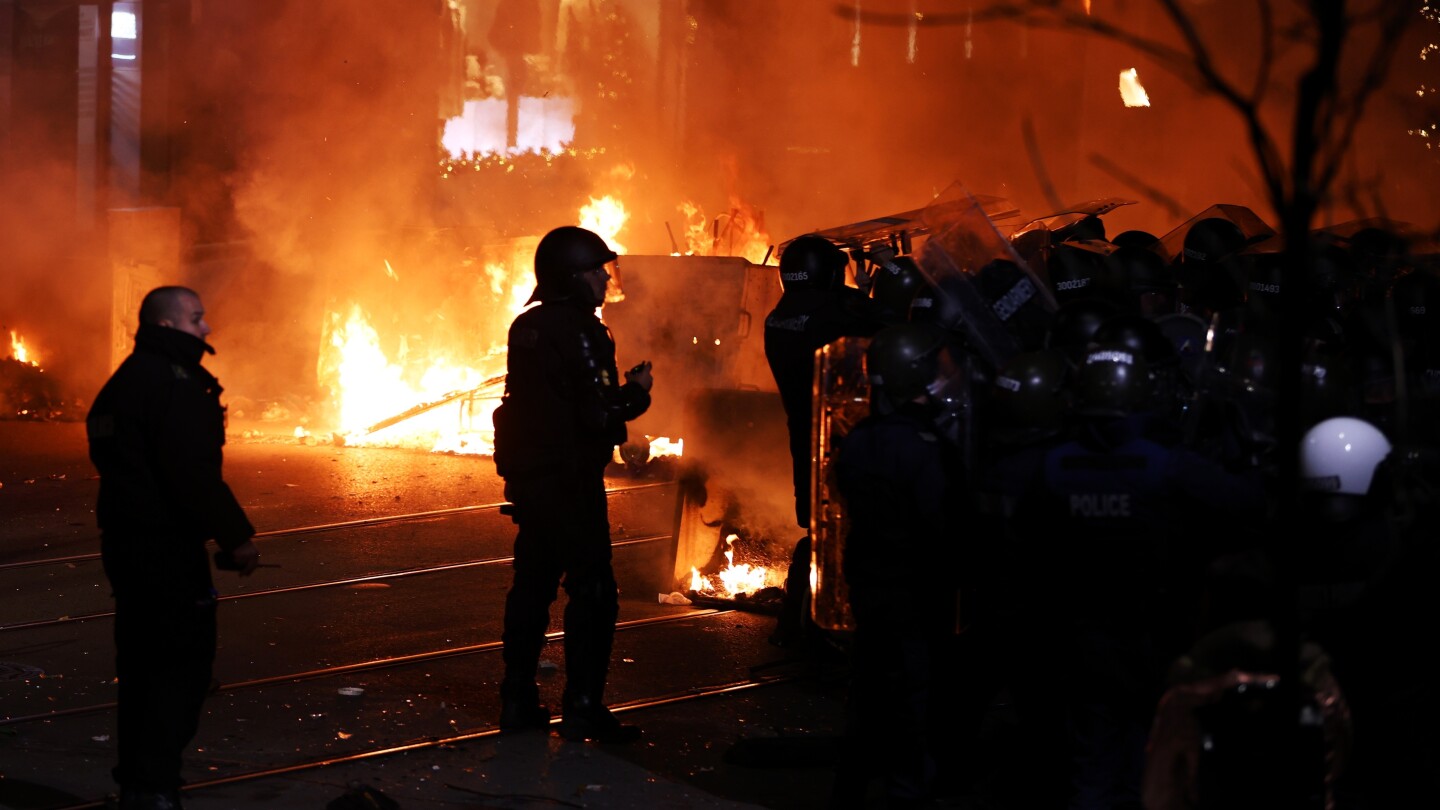
Monday’s demonstration remained largely peaceful as organizers had urged, but tensions escalated later when small groups of protesters moved toward the offices of the main ruling parties. Some individuals in black hoodies and masks began throwing plastic and glass bottles, firecrackers, and stones at buildings and police officers. The confrontation led to garbage containers being burned and police vehicles vandalized, with officers in riot gear using pepper spray against protesters.
Sofia police chief Lyubomir Nikolov reported Tuesday that 71 people had been detained in connection with the violence. “The protest proceeded peacefully, quietly, and calmly, and I congratulate the citizens for that,” Nikolov told reporters, explaining that the escalation was caused by “individuals who had been organized in advance.”
Emergency services reported that several injured people were taken to hospitals, while many more were treated at the scene.
The leader of the opposition We Continue the Change party, Assen Vassilev, announced Tuesday that his party plans to submit a no-confidence motion in Parliament “if the government does not resign this week,” declaring that “this government does not have the moral right to govern the country any longer.”
Mario Bikarski, senior Eastern and Central Europe analyst at risk intelligence company Verisk Maplecroft, predicted that redoing the budget “will be rocky with increased scrutiny from unions, business groups and the public.” While noting that “there is broad consensus about the need for fiscal prudence,” he warned that “repeated attempts to increase taxes are likely to inflame social tensions further.”
Bikarski also suggested that increased public pressure could cause the collapse of Bulgaria’s fragile governing coalition and trigger another early election – potentially the eighth since 2021 – which would undermine investor confidence.
“Such a scenario would risk negating some of the operational advantages that businesses were hoping to enjoy from joining the euro area,” Bikarski noted, highlighting the significant economic stakes of the current political crisis as Bulgaria navigates its path toward eurozone membership.
Fact Checker
Verify the accuracy of this article using The Disinformation Commission analysis and real-time sources.

11 Comments
While the government’s decision to withdraw the budget is welcome, it will need to carefully rework its fiscal plans to address the concerns of both citizens and the business community. Transparency and compromise will be key.
Agreed. Building trust through an inclusive process is crucial for the government to develop a budget that meets the country’s needs.
Protests over economic policies are common in transitional democracies. Bulgaria should use this experience to improve transparency and responsiveness in its policymaking process.
It’s good to see the government responding to the people’s concerns. A transparent budget process and fiscal responsibility are important for economic stability and investment.
The public backlash against the proposed budget changes highlights the delicate balance governments must strike between raising revenue and maintaining popular support. Bulgaria’s leaders have more work ahead.
This situation underscores the importance of fiscal prudence and inclusive policymaking, especially during challenging economic times. Bulgaria must chart a course that serves both the public and private sectors.
The public protests show the strength of civil society in Bulgaria. It’s encouraging to see the government backtracking on an unpopular budget proposal. Healthy democratic debate is crucial.
Withdrawing the controversial budget proposal is a positive step, but Bulgaria still has work to do to build public confidence and create a stable, business-friendly environment.
Absolutely. The government needs to engage more meaningfully with stakeholders to understand their concerns and find a balanced approach.
This budget controversy highlights the ongoing challenges Bulgaria faces in balancing economic reforms, social welfare, and public trust. A constructive dialogue between the government and citizens is needed.
Agreed. Compromise and compromise will be key to finding a sustainable solution that addresses the concerns of both the public and business community.