


Listen to the article
Building trade unions have emerged as key allies of tech giants in America’s rapidly expanding artificial intelligence economy, taking on a dual role as both the workforce behind massive data center construction and vocal advocates for the industry’s interests.
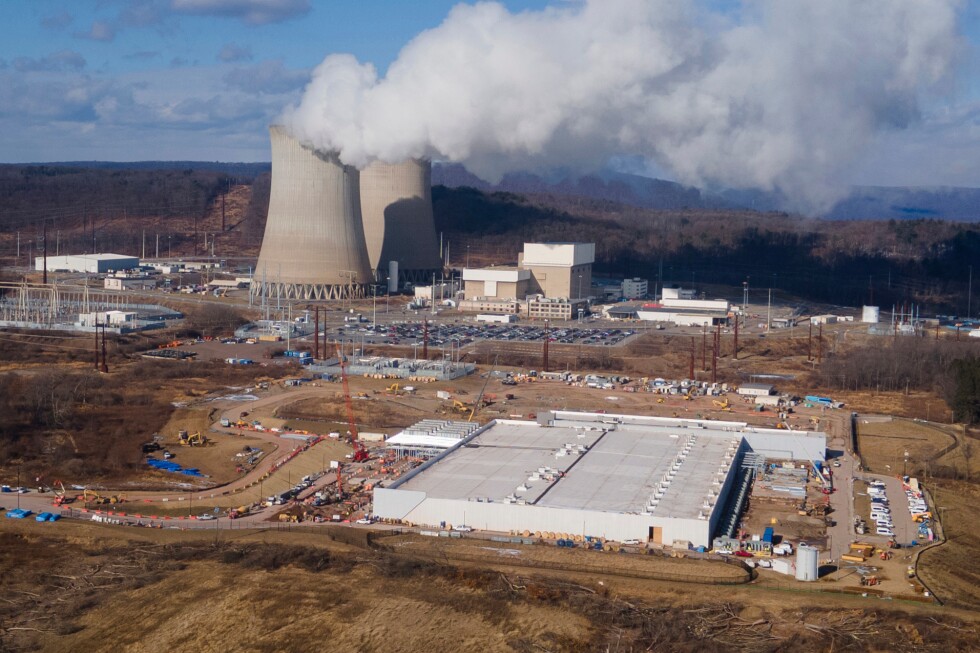
Across the United States, union members are working on an unprecedented number of data center projects, helping construct the physical infrastructure that powers AI development. The partnership has led to skyrocketing work hours and membership growth for many unions, reminiscent of the building trades expansion during the 1950s.
“When people say, you know, ‘data centers are the root of all evil,’ we’re just saying, ‘look, they do create a hell of a lot of construction jobs, which we live and work in your communities,'” said Rob Bair, president of the Pennsylvania Building and Construction Trades Council.
This alliance represents a notable shift in traditional labor politics, with unions frequently aligning with tech corporations against community opposition and legislative restrictions. Union representatives have become visible participants at municipal meetings, sometimes serving as the only public supporters of controversial data center projects.
The construction boom has been transformative for many unions. In Columbus-Central Ohio, data centers consume approximately 40% of work hours for building trade council members, according to executive Dorsey Hager. For the International Brotherhood of Electrical Workers Local 26 in the Washington, D.C. area, that figure reaches 50%.
North America’s Building Trades Unions (NABTU) reported reaching record membership and apprenticeship enrollment in 2023. NABTU President Sean McGarvey attributes this growth to data center construction, power plant development, and Biden administration initiatives that subsidized semiconductor factories, EV battery plants, and grid improvements.
The relationship has proven mutually beneficial. Tech giants are investing significantly in training programs to address skilled labor shortages. Google noted that the majority of its data center construction workforce is unionized and pointed to its $10 million grant for an electrician training program aimed at expanding the workforce pipeline by 70%.
“Across the country, highly skilled union construction workers are laying the foundation for the AI economy,” said OpenAI CEO Sam Altman in a joint statement with NABTU earlier this year.
The Boilermakers Local 154 in southwestern Pennsylvania exemplifies this resurgence. After recruiting zero apprentices for four years amid power plant closures, the union is now assembling a class of over 200 members—with demand for more. Data centers’ enormous energy requirements are driving a power plant construction boom that benefits unions involved in energy infrastructure.
Mark McManus, general president of the United Association of Union Plumbers and Pipefitters, acknowledges criticism that organized labor is aligning with powerful corporations but considers such objections unrealistic.
“If we chose as a union to have a moratorium on building the data centers because we didn’t believe it was right for America, the data centers would still be getting built,” McManus said. “They’re not stopping because of organized labor.”
His union reports members working on over 90% of U.S. data center projects—a market share unmatched in many other industries. While the exact union participation rate in data center construction is difficult to establish, the Associated General Contractors of America estimates it likely mirrors commercial construction, which is approximately one-third union.
This alliance has political implications, particularly at the state and local levels. Union representatives have opposed legislation in Maine, Illinois, and Virginia that would restrict data center development through moratoriums, strict energy requirements, or elimination of tax breaks.
Pennsylvania State Senator Katie Muth noted the challenge of gathering Democratic support for data center regulations when competing with union-backed alternatives. “The unions don’t want to promote anything that would impede data center development,” Muth said.
The unions’ advocacy extends to high-profile announcements, such as when Bair stood alongside Pennsylvania Governor Josh Shapiro and Amazon executives to announce the tech giant’s $20 billion investment in data centers in the state.
Union representatives frequently advise communities to negotiate benefits from tech companies rather than rejecting projects outright. As Bair put it, “If you don’t ask, you’re never gonna get.”
The building trades unions, once primarily viewed as the voice of the American worker, now find themselves intertwined with some of the world’s wealthiest corporations—creating an alliance that is reshaping both the physical landscape of American technology and the political dynamics surrounding it.
Fact Checker
Verify the accuracy of this article using The Disinformation Commission analysis and real-time sources.

14 Comments
The data center boom is certainly creating a lot of construction jobs, which is great news for union workers. However, I hope the unions are also closely considering the potential environmental and community impacts of these projects, and not just serving as advocates for the tech industry’s interests.
Agreed. The unions need to be vigilant in ensuring the tech companies are being responsible corporate citizens and addressing any local concerns, rather than just rubber-stamping these data center projects for the sake of job creation.
The rapid growth of data centers is certainly creating a lot of construction jobs, which is great news for union workers. However, I wonder if the unions are being too quick to align themselves with the tech industry without fully considering the potential community impacts. This could be a delicate balancing act.
Exactly. The unions need to make sure they’re not just serving as mouthpieces for the tech companies, but are actually advocating for the best interests of the local communities as well. It’s a complex issue without easy answers.
This is an interesting shift in the traditional labor-tech dynamic. While the construction jobs are undoubtedly valuable, I hope the unions are carefully weighing the tradeoffs and ensuring they’re not compromising their principles to serve the tech industry’s interests. Robust community engagement will be key.
Well said. The unions will need to strike a careful balance between supporting job creation and protecting the communities where these data centers are being built. Open and transparent dialogue with all stakeholders will be critical.
The data center boom is certainly creating a lot of construction jobs, which is great news for union workers. At the same time, I hope the tech companies are being responsible corporate citizens and addressing any community concerns about these projects.
Agreed. The unions seem to be acting as advocates for the tech industry, but they should also be looking out for the interests of the local communities where these data centers are being built.
It’s interesting to see the building trades unions aligning so closely with the tech industry on data center projects. On one hand, the job creation is undoubtedly valuable. But on the other, I hope the unions are carefully considering the potential tradeoffs and not just serving as advocates for the tech companies’ interests.
Good point. The unions will need to strike a delicate balance between supporting job growth and ensuring the tech companies are being responsible corporate citizens and addressing community concerns. Transparency and open dialogue will be crucial.
It’s an interesting dynamic to see unions teaming up with tech giants. On one hand, the jobs and economic activity are beneficial. But on the other, the unions may be compromising their traditional role as watchdogs against corporate interests. I’d be curious to hear more about the community perspectives on these data center projects.
Good point. The unions’ advocacy for the tech industry could potentially put them at odds with the communities they’re supposed to be representing. Transparency and open dialogue will be crucial to ensure these partnerships don’t come at the expense of local residents.
Interesting to see the building trades unions and tech giants partnering up on data center projects. Seems like a mutually beneficial arrangement – the unions get construction jobs, while the tech companies get the infrastructure they need. I wonder how the local communities feel about this alliance, though.
That’s a good point. The unions may be touting the job creation, but there could be concerns from residents about the environmental and community impacts of these large data centers.