


Listen to the article
Mexico City Sinks at Alarming Rate of Nearly 10 Inches Annually, NASA Data Shows
Mexico City is sinking at a rate of nearly 10 inches (about 25 centimeters) per year, making it one of the world’s fastest-subsiding metropolises, according to new satellite imagery released this week by NASA.
The sprawling Mexican capital, home to approximately 22 million people and covering roughly 3,000 square miles (7,800 square kilometers), was built atop an ancient lake bed. This geological foundation has created a chronic subsidence problem that is now visible from space.
“We have one of the fastest velocities of land subsidence in the whole world,” said Enrique Cabral, a geophysics researcher at the National Autonomous University of Mexico.
In some areas, the sinking occurs at an even more alarming pace. The city’s main airport and the iconic Angel of Independence monument are subsiding at about 0.78 inches (2 centimeters) per month, which translates to approximately 9.5 inches annually. Over less than a century, parts of the city have dropped more than 39 feet (12 meters), according to Cabral.
The primary cause of this dramatic subsidence is extensive groundwater pumping combined with urban development, which have significantly depleted the underlying aquifer. This ongoing issue has persisted for more than a century, leaving visible evidence throughout the city.
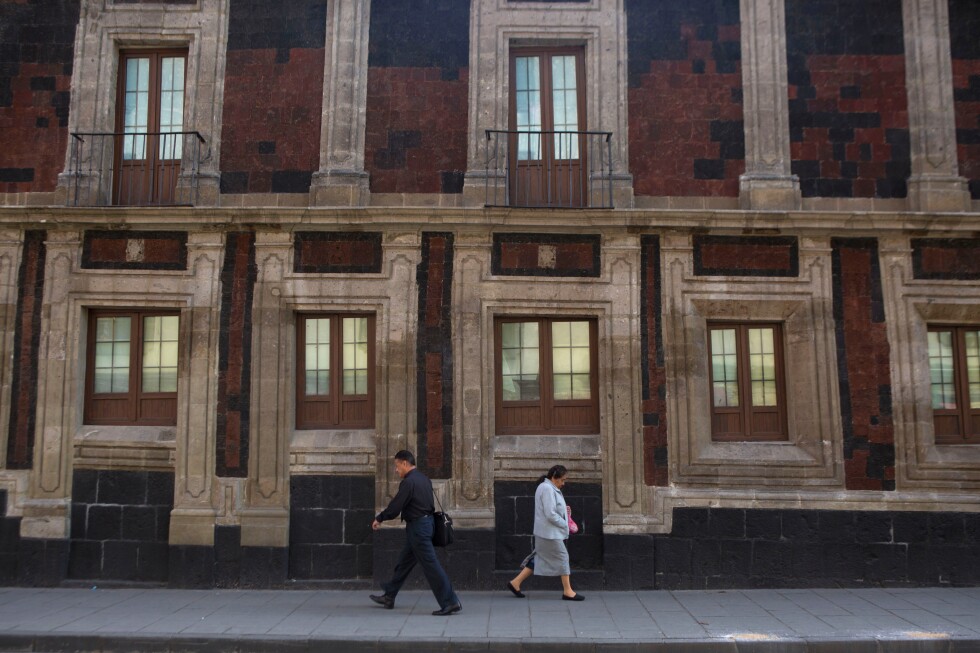
The Metropolitan Cathedral, where construction began in 1573, now noticeably tilts to one side, serving as a stark reminder of the city’s geological challenges. Many downtown streets that were once canals still reflect this aquatic heritage, with some canal traditions continuing in the rural fringes of the metropolitan area.
Beyond structural damage to historic buildings, the subsidence poses serious threats to critical infrastructure. “It damages part of the critical infrastructure of Mexico City, such as the subway, the drainage system, the water, the potable water system, housing and streets,” Cabral explained. “It’s a very big problem.”
The subsidence also contributes to Mexico City’s chronic water crisis, which experts predict will only worsen in coming years. As the aquifer contracts, access to clean water becomes increasingly difficult for the city’s massive population.
NASA’s newly released data comes from NISAR, a powerful satellite developed jointly with the Indian Space Research Organization. This advanced technology can track real-time changes on Earth’s surface with unprecedented precision.
“It’s basically documentation of all of these changes within a city,” said NISAR scientist Paul Rosen. “You can see the full magnitude of the problem.” He added that by capturing these details from space, the project reveals “something about what’s actually happening below the surface.”
The research team hopes to eventually refine their measurements to analyze subsidence on a building-by-building basis. This technology has broader applications worldwide, potentially tracking natural disasters, fault line changes, climate change effects in regions like Antarctica, and even enhancing early warning systems for volcanic eruptions.
For Mexico City, the NISAR satellite represents a significant advancement in studying and addressing its subsidence crisis. After decades of limited government action beyond stabilizing foundations under monuments like the cathedral, officials have recently begun funding more research following water crisis flare-ups.
“To do long-term mitigation of the situation,” Cabral noted, “the first step is to just understand.”
The satellite imagery and accompanying data will be crucial tools for scientists and officials as they develop comprehensive strategies to address one of the world’s most dramatic examples of urban subsidence.
Fact Checker
Verify the accuracy of this article using The Disinformation Commission analysis and real-time sources.

11 Comments
This is a concerning situation for Mexico City. With nearly 10 inches of annual sinking, the structural integrity of buildings and infrastructure must be a major concern. I wonder what mitigation efforts are already underway and what further steps may be needed to address this problem.
Wow, 10 inches of sinking per year is alarming! Mexico City’s rapid subsidence is clearly a major challenge. I wonder what long-term solutions are being explored to address this issue and prevent further damage to infrastructure and buildings.
You’re right, the rate of sinking is incredibly concerning. Sustainable groundwater management and land use planning will likely be crucial to mitigating this problem over time.
It’s fascinating to see the dramatic land subsidence in Mexico City from space. This just goes to show how advanced satellite imaging technology has become in monitoring environmental changes. I’m curious to learn more about the specific causes and potential remedies for this issue.
Agreed, the satellite data provides a powerful perspective on the scope of the problem. Addressing the root causes of groundwater depletion and unstable soil conditions will be critical to stabilizing the city long-term.
Mexico City’s sinking is a prime example of the challenges rapidly growing urban centers can face due to unsustainable resource use and development practices. I hope this prompts policymakers to prioritize more sustainable water management and land use planning strategies.
Mexico City’s sinking is a sobering reminder of the critical importance of sustainable resource management and urban planning. With 22 million people at risk, this issue deserves urgent attention from policymakers and urban planners. I hope innovative solutions can be found to stabilize the city long-term.
Well said. Addressing this challenge will require a comprehensive, forward-looking approach to ensure Mexico City’s residents and infrastructure are protected.
It’s remarkable that scientists can now monitor land subsidence in Mexico City from space. This advanced satellite technology provides valuable data to help address this growing problem. I’m curious to learn more about the specific policy and infrastructure changes needed to mitigate the sinking.
The rapid sinking of Mexico City due to groundwater depletion is a troubling example of the environmental challenges faced by megacities. I hope researchers and policymakers can work together to develop comprehensive solutions to stabilize the land and secure the city’s long-term future.
Absolutely, this issue requires a multi-faceted approach involving improved water management, geotechnical engineering, and urban planning. Finding the right balance will be critical.