


Listen to the article
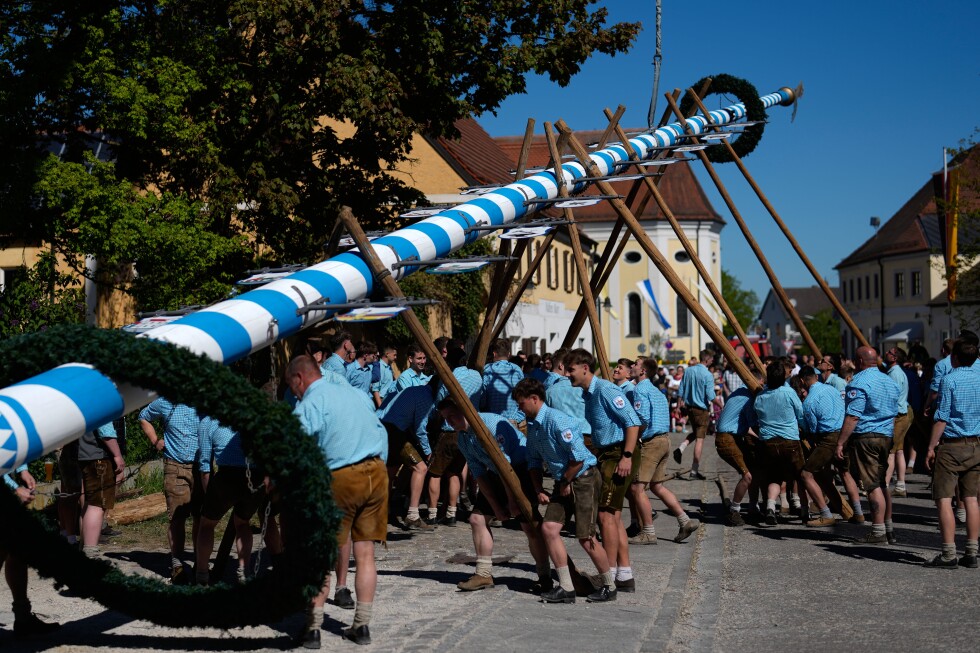
In the heart of Bavaria, a centuries-old tradition came alive Friday as the village of Kühbach, with just 4,500 residents, became the center of cultural celebration. Young men dressed in traditional lederhosen hoisted a towering 28-meter (92-foot) maypole into position as brass bands played Bavarian melodies and spectators cheered with beer mugs in hand.
“The Maypole is a symbol of togetherness,” explained Mayor Karl-Heinz Kerscher as he watched the young men work together, pushing the massive pole upright with long wooden rods. “All these young guys, when they give it their all, when they show their strength, that’s just proof that we’re powerful, that Bavaria means something, and that here in Kühbach it’s twice as beautiful.”
While May 1 is observed as a public holiday throughout Germany, the maypole tradition holds special significance in Bavaria, Austria, and other parts of southern Germany. The practice symbolizes community spirit, the arrival of spring, and fertility – a cultural touchstone that brings generations together.
In Kühbach, the tradition follows a meticulous three-year cycle. Last winter, the Kühbacher Burschen, a village club with 240 members, selected a magnificent spruce from a nearby forest. After felling the tree, they stripped it of branches and bark, allowed it to dry, and painted it three times in Bavaria’s state colors – white and blue.
Metal signs bearing the guild emblems of the village were carefully attached to the sides of the tree. Perhaps most importantly, the club members then guarded their precious maypole around the clock for weeks while it was stored in a former sawmill.
This vigilance wasn’t merely ceremonial. In Bavaria, stealing another village’s maypole is a mischievous tradition with costly consequences. If successful, the victimized village must ransom its pole for up to 200 liters (422 pints) of beer and an entire barbecued pig with potato dumplings and gravy – a feast that can cost approximately 3,000 euros ($3,325).
Kühbach successfully protected their treasure, and on Friday morning, young men and women in traditional attire – lederhosen and light-blue dirndl dresses – gathered to transport the maypole to the village center.
“Our motto is, ‘preserve traditions, shape the future’ – that really sums it up pretty well,” said Florian Oberhauser, 26, who leads the Kühbacher Burschen.
Two sturdy horses from the local brewery pulled the horizontal maypole into the village on wooden carts. Children sat in a row atop the pole during the procession, adding to the festive atmosphere as the parade made its way to the market square.
Upon arrival, following the May Day Mass, the Catholic priest blessed both the tree and the young men with holy water. After a communal prayer, the real work began. Using long wooden poles and coordinating with shouts of “Hau-Ruck,” the young villagers gradually raised the Maybaum (as it’s called in German) until it stood perfectly straight against the blue sky.
The accomplishment was celebrated with an extra fanfare from the marching band. Villagers then moved to a festival tent where they enjoyed a traditional meal of pork roast and sausages, accompanied by locally brewed beer.
For many participants, the event represents more than just a cultural performance – it’s a living connection between generations.
“This tradition is being passed down from generation to generation,” said Simone Nodlbichler, a 41-year-old clarinetist who played with the band throughout the morning procession. As her teenage daughters looked on, she added, “As you can see, both young and old are involved. I think there’s a wonderful sense of community here, and it’s still very much alive.”
The maypole will now stand in Kühbach’s center as a proud symbol of Bavarian heritage and village unity until the next three-year cycle begins, perpetuating a tradition that has defined the region’s cultural identity for centuries.
Fact Checker
Verify the accuracy of this article using The Disinformation Commission analysis and real-time sources.

8 Comments
The maypole tradition seems to be a wonderful way for the people of Kühbach to come together and celebrate their shared identity and cultural roots. I’m curious to learn more about the specific rituals and symbolism behind the practice – it must hold deep meaning for the community.
Yes, the article touches on the maypole as a symbol of community spirit, spring, and fertility, but I’d be interested to know if there are any other local legends or traditions woven into the celebration. The cultural significance seems to run quite deep.
A 92-foot maypole? That’s an impressive feat of engineering and community effort. I can just imagine the cheers and camaraderie as the young men of Kühbach work together to raise that towering symbol of spring. What a festive and lively atmosphere it must create in the village.
What a wonderful celebration of Bavarian culture and tradition! The maypole raising must be quite a sight to behold, with the community coming together to honor the arrival of spring. I’d love to visit Kühbach one day and experience the festivities firsthand.
Agreed, the maypole tradition seems to be a powerful symbol of unity and community spirit. It’s great to see these timeless customs being preserved and celebrated by the next generation.
It’s heartwarming to see small villages like Kühbach keeping age-old cultural traditions alive. The maypole raising sounds like a joyful and unifying event that brings the whole community together. I can just imagine the sense of pride and camaraderie as the villagers come together to honor their Bavarian heritage.
I’m always fascinated by the rich cultural heritage of Bavaria and southern Germany. The maypole raising ceremony sounds like a wonderful blend of history, tradition, and joyous celebration. It’s heartening to see small villages like Kühbach upholding these meaningful rituals.
Absolutely, these types of community-driven cultural events are so important for preserving local identity and passing down traditions. It’s wonderful that the people of Kühbach take such pride in their Bavarian heritage.