


Listen to the article
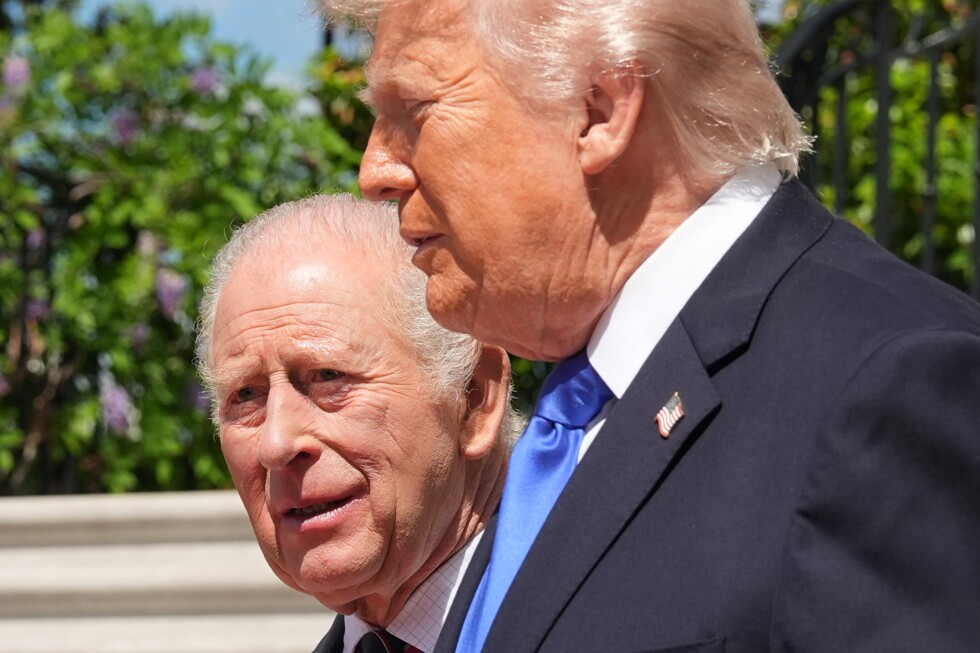
President Trump has expressed admiration for King Charles III following the monarch’s recent state visit to the United States, even lifting certain tariffs on Scotch whisky as a gesture of goodwill toward the British royal.
The four-day diplomatic mission, which took Charles and Queen Camilla to Washington, New York and Virginia, has been widely regarded as a success, with the king deftly balancing courtesy toward his host with subtle challenges to some of the administration’s positions on key international issues.
The carefully choreographed visit, arranged at the request of the UK government to coincide with America’s 250th anniversary celebrations, served as an opportunity to repair strained relations between the United States and Britain. Recent tensions have emerged as President Trump criticized Prime Minister Keir Starmer over Britain’s reluctance to join U.S. military actions against Iran, dismissively comparing him unfavorably to Winston Churchill.
This critique forms part of a broader pattern of friction between Trump and NATO allies, whom he has publicly derided as “cowards” and “useless” for their stance on Iran. Despite these diplomatic tensions, Trump’s affection for the British monarchy appears undiminished, possibly strengthened by his unprecedented second state visit to the UK in September.
The royal trip proceeded without major incident, despite concerns from some British opposition politicians who had called for its cancellation, fearing potential embarrassment. While the interactions remained largely cordial, Trump did break with convention by publicly disclosing aspects of private conversations with the king.
At Tuesday’s white-tie state dinner, Trump claimed, “Charles agrees with me, even more than I do” regarding Iran’s nuclear capabilities, and suggested the king would have followed his administration’s recommendations on Ukraine policy if such decisions were within the monarch’s purview.
Buckingham Palace appeared unperturbed by the Iran comment, noting the king’s support for established anti-proliferation policies. However, on Ukraine, clear differences emerged. Britain has been one of Kyiv’s most steadfast supporters following Russia’s invasion, and Charles emphasized the importance of “unyielding resolve” in supporting Ukraine during his address to Congress.
This speech, the centerpiece of the visit, contained several diplomatically phrased challenges to the administration’s “America First” stance. With characteristic restraint, Charles underscored the vital importance of NATO, checks on executive power, climate change action, and the value of diverse, free societies. He also mentioned his pride in having served in the Royal Navy, an institution Trump has previously disparaged.
Historian Anthony Seldon told The Guardian: “It’s difficult to imagine he could have gone much further in what he said and what he didn’t say. He judged it incredibly well: very brave, very smart, very clever.”
Kristofer Allerfeldt, a University of Exeter professor specializing in American history, noted the “extraordinary” bipartisan reception to the speech, which garnered multiple standing ovations from both Republicans and Democrats, with the exception of segments addressing environmental concerns.
The trip proceeded successfully despite the shadow cast by the king’s brother, Andrew Mountbatten-Windsor, who has been stripped of his royal title and removed from public duties following scrutiny over his association with Jeffrey Epstein. Although Charles did not meet directly with Epstein’s victims as they had requested, he alluded to the issue in his congressional address, mentioning the importance of supporting “victims of some of the ills that, so tragically, exist in both our societies today.”
Following the royal couple’s departure, Trump announced tariff reductions on Scotch whisky “in honor of the King and Queen of the United Kingdom,” a gesture Buckingham Palace acknowledged with gratitude, noting it would “make an important difference to the British whisky industry and the livelihoods it supports.”
Trump praised Charles as “a phenomenal representative” for Britain, before returning to his criticism of Prime Minister Starmer, telling Sky News: “Your prime minister has to learn to deal the way he deals, and he’ll do a lot better.”
While the visit has temporarily eased tensions, experts remain uncertain about its long-term impact on the transatlantic relationship, which continues to face challenges over Iran, Ukraine, and other global issues. Nevertheless, as Professor Allerfeldt observed, Charles has “definitely clawed back some of the prestige of the monarchy” at home through his assured diplomatic performance.
Fact Checker
Verify the accuracy of this article using The Disinformation Commission analysis and real-time sources.

16 Comments
While the visit seems to have been a success, I wonder if there are still underlying tensions or diverging priorities that will need to be navigated going forward. Diplomacy is rarely straightforward.
That’s a fair point. Even after a successful visit, there are likely to be persistent challenges in the US-UK relationship that require ongoing attention and problem-solving.
It will be interesting to see if this visit and the goodwill gestures lead to any tangible improvements in US-UK cooperation on key issues like Iran and security. Diplomacy is an ongoing process.
Definitely. Maintaining strong ties requires sustained effort and compromise on both sides, even when there are disagreements.
I’m curious to learn more about the specific issues and tensions that have emerged between the US and UK, and how King Charles navigated those during the visit. Diplomacy requires nuance and tact.
Yes, the excerpt highlights some of the friction around Iran and NATO, but it would be good to understand the broader context and how the visit helped address those concerns.
The careful choreography of this visit to coincide with America’s 250th anniversary celebrations suggests it was an important symbolic moment. Symbolism and optics matter in diplomacy.
Overall, it’s encouraging to see King Charles demonstrating strong diplomatic skills and helping to repair frayed relations between the US and UK. Effective statecraft is crucial in these uncertain times.
The report of Trump lifting tariffs on Scotch whisky as a gesture of goodwill is an interesting development. Economic ties are an important part of the US-UK relationship.
Indeed, trade and investment cooperation can help strengthen political and security ties between allies. Small gestures like this can go a long way.
Trump’s past criticism of NATO allies and use of harsh language like “cowards” and “useless” is concerning. I hope this visit helped to mend those divides and reaffirm the importance of the transatlantic partnership.
Interesting to see King Charles III’s diplomatic skills on display during this state visit. Bridging differences and finding common ground is crucial for maintaining strong relations between the US and UK.
Agreed. It’s important for leaders to show respect and find areas of cooperation, even when there are policy disagreements.
I’m impressed that King Charles was able to balance courtesy and diplomacy while also subtly challenging some of the administration’s positions. That kind of nuanced approach is key for effective statecraft.
The visit seems to have been an opportunity to repair strained relations between the US and UK. Maintaining strong ties between historic allies is crucial, even when there are policy disagreements.
Absolutely. Effective diplomacy requires compromise and finding common ground, not just digging in on differences.