


Listen to the article
U.S. President Donald Trump has rejected Iran’s latest proposal to end hostilities between the two countries, citing dissatisfaction with the terms while pointing to divisions within Iran’s leadership. The proposal was delivered to mediators in Pakistan on Thursday night, according to Iran’s state-run IRNA news agency.
“They want to make a deal, I’m not satisfied with it, so we’ll see what happens,” Trump told reporters at the White House on Friday, though he did not specify what aspects of the proposal he found lacking.
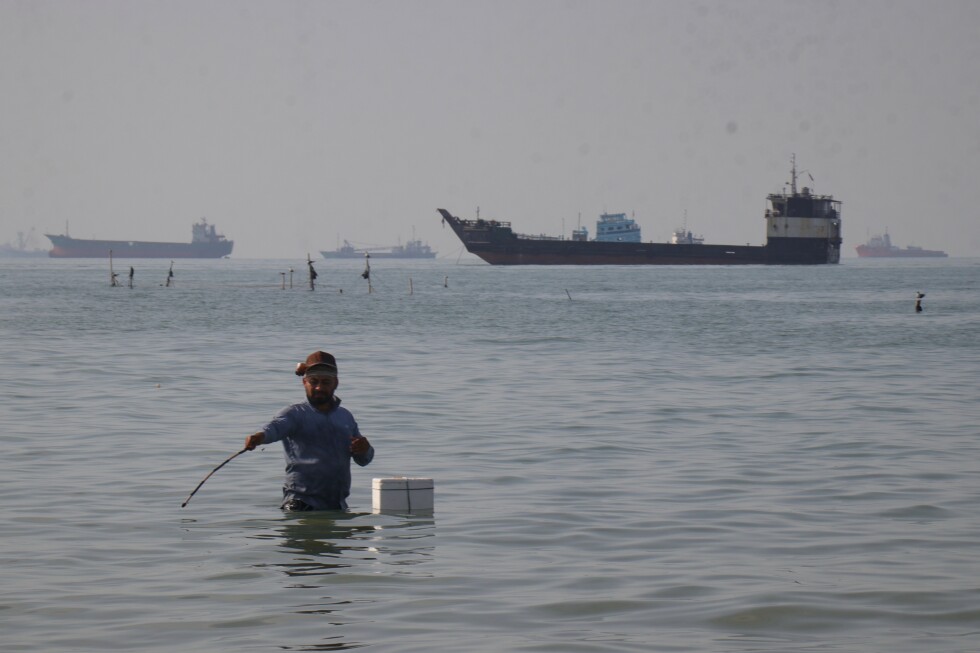
Despite the diplomatic setback, the fragile three-week ceasefire between the U.S. and Iran appears to be holding, though both sides have accused each other of violations. The current standoff centers on the strategically crucial Strait of Hormuz, a narrow waterway through which approximately 20% of the world’s traded oil and gas normally flows.
The U.S. Navy has implemented a blockade preventing Iranian tankers from accessing international waters, severely damaging Iran’s economy. Simultaneously, Iran’s restrictions on passage through the strait have created pressure on global energy markets and economic stability.
Trump revealed that negotiations have continued via telephone after he canceled his envoys’ planned trip to Pakistan last week. The president has recently proposed a new plan to reopen the vital maritime passageway used by America’s Gulf allies for oil and gas exports.
Expressing frustration with Tehran’s leadership, Trump characterized it as disjointed: “It’s a very disjointed leadership. They all want to make a deal, but they’re all messed up.”
The president outlined what he sees as just two options for dealing with Iran. “Do we want to go and just blast the hell out of them and finish them forever? Or do we want to try and make a deal? I mean, those are the options,” Trump said, adding that while Iran’s leadership had made some progress toward unity on resolving the conflict, he remained skeptical about their ability to reach consensus.
Meanwhile, Iran’s diplomatic efforts have intensified. Foreign Minister Abbas Araghchi conducted numerous calls on Friday with regional counterparts from Turkey, Egypt, Qatar, Saudi Arabia, Iraq, and Azerbaijan to discuss Iran’s latest peace initiatives.
European Union foreign policy chief Kaja Kallas also spoke with Araghchi about ongoing diplomatic efforts to reopen the Strait of Hormuz and establish long-term security arrangements in the region. Pakistani officials have confirmed that mediation efforts continue between the two nations.
Masood Khan, Pakistan’s former ambassador to Washington, suggested that the continued exchange of proposals indicates ongoing diplomatic engagement, despite both sides having previously exchanged some of their most severe threats, raising fears of renewed military action.
In a separate development highlighting internal tensions within Iran, Nobel Peace Prize laureate Narges Mohammadi has been urgently transferred from prison to a hospital in northwestern Iran after what her foundation described as a “catastrophic deterioration” of her health. The 53-year-old rights lawyer, who won the Nobel Peace Prize in 2023 while imprisoned, reportedly experienced two episodes of complete loss of consciousness and a severe cardiac crisis after what her foundation called “140 days of systematic medical neglect” since her arrest in December.
Adding to Iran’s challenges, an explosion of leftover bombs from earlier strikes killed 14 Revolutionary Guard members, according to Iranian media. The incident occurred near the northern city of Zanjan, marking the largest number of Revolutionary Guard casualties reported since the ceasefire began on April 7.
Since hostilities erupted on February 28, at least 3,375 people have been killed in Iran, and more than 2,600 in Lebanon, where fighting between Israel and the Iran-backed Hezbollah intensified shortly after the U.S.-Iran conflict began. The broader regional conflict has claimed 24 lives in Israel, more than 20 in Gulf Arab states, 17 Israeli soldiers in Lebanon, and 13 U.S. service members throughout the region.
Fact Checker
Verify the accuracy of this article using The Disinformation Commission analysis and real-time sources.

10 Comments
It’s disappointing to see the latest proposal from Iran rejected by the U.S. Maintaining open access to the Strait of Hormuz is vital, but a military confrontation would be disastrous. I hope both sides can find a way to compromise and de-escalate the situation through diplomacy and negotiation.
This is a high-stakes geopolitical issue with significant implications for global energy markets and economic stability. I’m concerned about the potential for further escalation, but I’m hopeful that the U.S. and Iran can find a diplomatic path forward that mitigates the risks and protects the free flow of trade through the Strait of Hormuz.
Trump’s rejection of Iran’s latest proposal suggests the path to de-escalation remains unclear. The U.S. blockade of Iranian tankers is clearly causing significant economic harm, but Iran’s restrictions on the Strait of Hormuz are also troubling. I hope both sides can find a way to ease tensions before the situation deteriorates further.
The situation in the Strait of Hormuz is a delicate one, with the strategic and economic importance of the waterway adding to the complexity. While I can understand Trump’s reluctance to accept Iran’s proposal, I hope the diplomats can find a way to broker a lasting peace agreement that addresses the concerns of all parties.
Interesting development in the ongoing tensions between the U.S. and Iran. It seems Trump is not satisfied with the latest Iranian proposal, though the ceasefire seems to be holding for now. The economic impact of the situation in the Strait of Hormuz is certainly concerning.
I agree, the strategic importance of the Strait of Hormuz makes this a very delicate situation. Maintaining open energy trade routes is crucial for global stability.
Given the divisions within Iran’s leadership, I’m not surprised the U.S. is skeptical of their latest proposal. Negotiating a lasting peace agreement will likely be challenging, but both sides have a strong incentive to avoid further escalation.
Absolutely. With oil prices and global trade at stake, the pressure is on both the U.S. and Iran to find a diplomatic solution if possible.
This is a complex geopolitical situation with high stakes for both sides. While I can understand Trump’s hesitation to accept Iran’s proposal, I hope the diplomats can continue working towards a mutually acceptable resolution. Maintaining open shipping lanes in the Strait of Hormuz is crucial for the global economy.
The ongoing dispute between the U.S. and Iran over the Strait of Hormuz is deeply concerning. Both sides appear to be taking hardline stances, which raises the risk of further escalation. I hope cooler heads can prevail and allow for a diplomatic solution that addresses the legitimate security concerns of all parties.