


Listen to the article
New Zealand’s Ambitious Effort to Return Kiwi Birds to Wellington
The kiwi, New Zealand’s sacred national bird, vanished from the hills around Wellington more than a century ago. Now the capital’s residents are waging an improbable citizen campaign to return the endangered flightless birds to the city.
“They are a part of who we are and our sense of belonging here,” said Paul Ward, founder of the Capital Kiwi Project, a charitable trust. “But they’ve been gone from these hills for well over a century and we decided as Wellingtonians that wasn’t right.”
On a mist-shrouded hill above the dark waters separating New Zealand’s North and South Islands, Ward and fellow conservationists recently carried seven crates under the cover of night, guided only by dim red torchlight. This special cargo contained the project’s 250th kiwi being relocated to Wellington since the initiative began.
The kiwi holds profound cultural significance for New Zealanders, who often adopt the bird’s name as their informal national nickname. With its distinctive whiskery face, underdeveloped wings, and shy nature, the bird may seem an unlikely national symbol, yet its image adorns everything from currency to the tails of Air New Zealand planes – ironic for a flightless bird.
Conservation experts estimate that 12 million kiwi once roamed New Zealand before human arrival. Today, only about 70,000 remain nationwide, with populations declining at approximately 2% annually, placing the species in serious jeopardy.
During the recent nighttime release, the only sounds accompanying the birds’ introduction to their new home were the distant whoosh of wind turbines and a softly chanted karakia, a traditional Māori prayer. As handlers gently tilted the transport crates, the birds cautiously extended their long, curved beaks before taking tentative steps into the shadows, then darting away into the darkness of their new territory.
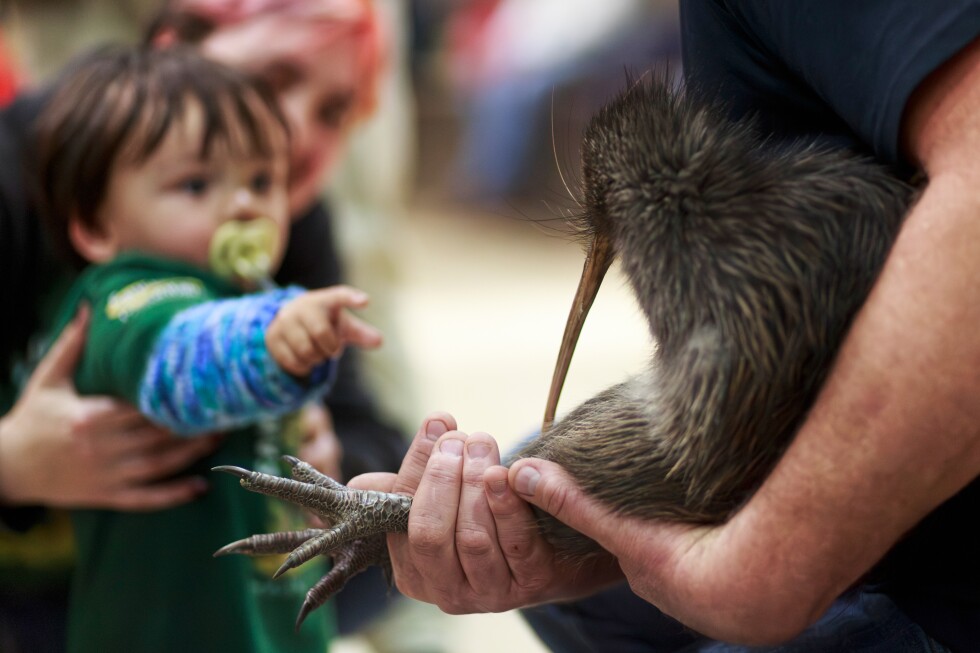
Hours before this hillside welcome, the birds made history with their first-ever visit to New Zealand’s Parliament. In the grand banquet hall, lawmakers and schoolchildren gathered to celebrate the milestone of the 250th kiwi’s arrival in Wellington. Conservation workers cradled the large birds like human infants, their knobby feet exposed, as visitors expressed hushed delight at seeing the nocturnal creatures up close.
“This animal has given us as a people so much in terms of our sense of identity,” Ward told The Associated Press. “We want to challenge our civic leaders, our politicians and say this is a relationship we need to honor.”
New Zealand’s approach to endangered bird conservation has evolved significantly. Previous decades saw surviving individuals of critically endangered species relocated to predator-free offshore islands or sanctuaries where they could be meticulously monitored but remained largely inaccessible to the public.
Ward’s vision differs fundamentally – he believes New Zealand’s iconic bird can thrive alongside humans in urban environments where they were once eradicated by development and introduced predators. “Where people are is also the places where we can bring them back because we’ve got the means to do that guardianship,” Ward explained.
The Capital Kiwi Project’s success stems from several managed wild bird sanctuaries that have become so effective at boosting kiwi populations that they’ve reached capacity, necessitating relocation programs to areas like Wellington. The birds are now occasionally spotted by late-night mountain bikers or captured on residential security cameras throughout the capital region.
Creating this urban-wildlife interface required extensive collaboration. Over the past decade, efforts between landowners, the local Māori tribe, and Ward’s organization have established a sprawling 24,000-hectare (59,300-acre) tract where kiwi can roam freely. The area is protected by more than 5,000 traps targeting stoats – the primary predator of kiwi chicks. These conservation measures have yielded impressive results, with the Wellington kiwi population achieving a 90% chick survival rate.
The kiwi reintroduction represents just one component of New Zealand’s ambitious nationwide goal to eliminate introduced predators – including feral cats, possums, rats, and stoats – by 2050. While this target, established in 2016, has faced skepticism regarding its feasibility, community groups have enthusiastically embraced the challenge.
Some Wellington neighborhoods have now been declared entirely free of mammalian predators, aside from household pets, resulting in flourishing native bird populations. Dedicated volunteers monitor suburban areas with remarkable precision, ready to respond at the first sign of a single rat.
“When I think of endangered species globally, for the most part you can’t do much other than campaign or donate money,” said Michelle Impey, chief executive of Save the Kiwi. “But we have this incredible movement throughout the country where everyday people are taking it on under their own steam to do what they can to protect a threatened species.”
Fact Checker
Verify the accuracy of this article using The Disinformation Commission analysis and real-time sources.

12 Comments
What an inspiring story of grassroots conservation! The Capital Kiwi Project’s success in relocating 250 kiwi birds to Wellington is a remarkable achievement. Restoring this iconic species to its historic home will be deeply meaningful for the local community.
The kiwi’s whiskery face and shy nature make it an endearing national symbol for New Zealand. I’m glad to see the Capital Kiwi Project working to bring this beloved bird back to its historic home in Wellington. Community-led conservation efforts like this are so important.
Kudos to the dedicated volunteers of the Capital Kiwi Project for their tireless efforts to return the kiwi to Wellington. Reestablishing this species in the capital is a wonderful way to reconnect the city with its natural and cultural heritage.
It’s wonderful to see the people of Wellington taking such an active role in reintroducing the kiwi to their city. This iconic bird holds deep cultural significance for New Zealanders, so restoring its presence in the capital is a meaningful step.
Fascinating to learn that the kiwi had vanished from the Wellington area for over a century. I’m glad the local residents are so passionate about bringing back this cherished national symbol. Careful, thoughtful reintroduction efforts are crucial for the kiwi’s long-term survival.
Absolutely. Relocating 250 kiwi birds to Wellington is no small feat. It will be exciting to see how the population grows and the impact it has on the local ecosystem and community.
The kiwi’s significance as a cultural icon for New Zealanders is clear. Restoring this unique flightless bird to the capital is a fitting way to celebrate the nation’s identity and natural heritage. I admire the dedication of the Capital Kiwi Project volunteers.
What an incredible conservation success story! Returning the kiwi to Wellington after over a century is a remarkable achievement. This initiative will surely inspire others to undertake similar efforts to revive threatened native species in their own regions.
What an inspiring effort to restore the kiwi, New Zealand’s iconic national bird, to its historic home in Wellington. It’s heartening to see citizens taking such an active role in conservation and reconnecting their capital with this beloved species.
Yes, the Capital Kiwi Project is a wonderful example of community-driven conservation. Reintroducing the kiwi to Wellington will help strengthen the city’s cultural identity and appreciation for this unique flightless bird.
The kiwi’s absence from Wellington for over a century is truly a loss, so I’m glad to see the community coming together to bring this cherished bird back. Careful, thoughtful reintroduction efforts are key to ensuring the kiwi’s long-term survival in the capital.
It’s heartening to see the people of Wellington taking such an active role in conservation and reclaiming their city’s natural history. Restoring the kiwi population will undoubtedly strengthen the community’s sense of identity and pride in their unique national icon.