


Listen to the article
Syria Emerges as Rare Island of Calm in Expanding Regional Conflict
Ahed Badawi never expected to return to Syria seeking safety. After living in Bahrain for more than a decade to escape Syria’s brutal civil war, she found herself fleeing back to her homeland as the U.S.-Israeli war with Iran put Gulf nations in the crosshairs of Tehran’s missiles.
“Nothing at all ever happened there,” Badawi said of Bahrain. “I mean, the Bahrainis don’t even know what war is.”
The irony isn’t lost on Badawi and many others who are witnessing a remarkable reversal of fortunes. Syria, devastated by 14 years of civil war, has emerged as an unexpected safe haven amid the Middle East’s latest conflagration.
Since December 2024, when President Bashar Assad was ousted by rebel forces who installed a new government, Syria has been working diligently to rebuild relationships with Arab and Western nations that had previously shunned it. The U.S.-Israeli conflict with Iran and subsequent closure of the strategically vital Strait of Hormuz has offered Damascus an unexpected diplomatic opportunity.
“Syria has presented itself as the solution to strategic crises in the region,” explained Obayda Ghadban, an official with the Syrian Foreign Ministry. This positioning reflects a dramatic shift in Syria’s international standing.
The conflict’s regional impact has been severe. Iran has targeted not only Israel but also Gulf countries hosting U.S. military bases. In Lebanon, dormant hostilities between Israel and the Iran-backed Hezbollah have reignited. Iraq, home to both Iran-backed militias and American installations, has found itself caught dangerously in the middle.
Syria, however, has managed to stay on the sidelines despite missiles occasionally flying overhead or even landing on its territory. Interim Syrian President Ahmad al-Sharaa emphasized this new role during a recent meeting with European leaders in Cyprus.
“Syria, which was once an arena for others’ conflicts, has today chosen, through the will of its people and institutions, to be a bridge to security and a fundamental pillar of the solution,” al-Sharaa declared, positioning his country as “the alternative and secure artery connecting Central Asia and the Gulf to the heart of the European continent.”
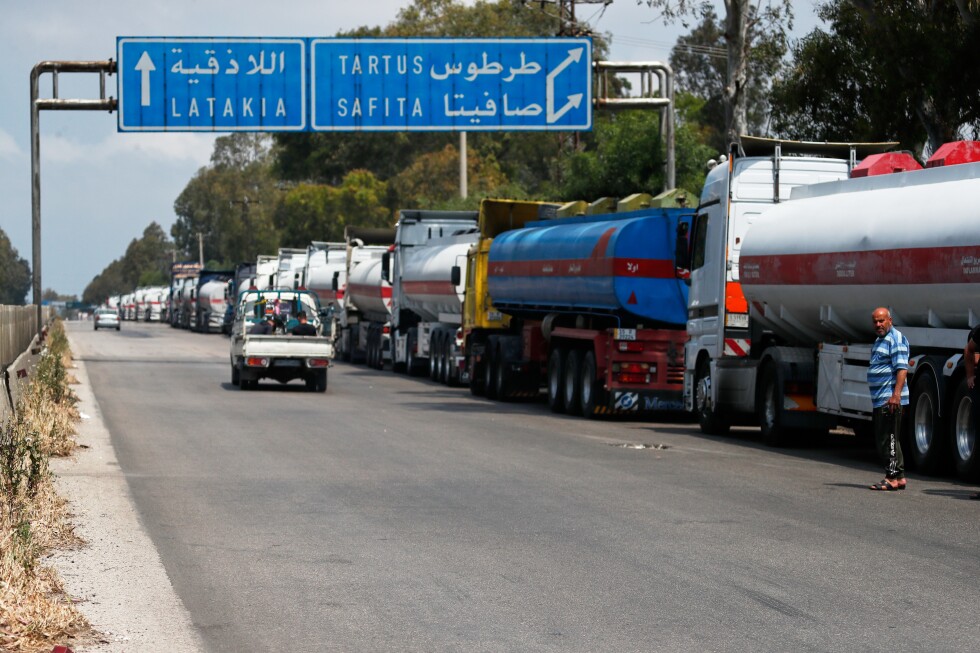
This is more than rhetoric. With Iran blocking access to the Strait of Hormuz, oil shipments are now being trucked from Iraq into Syria and exported to European markets via Syria’s Baniyas port. A key border crossing between northern Iraq and Syria reopened last month after being closed for more than a decade, creating an additional route for energy exports.
While this overland route is less efficient and more expensive than shipping through the strait, it provides a crucial workaround as long as Iran maintains its blockade on the vital waterway.
Syria’s ability to remain neutral stems from its complicated relationship with both sides of the conflict. “The parties participating in it are strategic enemies of Syria, whether we talk about Iran and its affiliates, or if we talk about Israel and its aggressive expansionist policy in Syria,” Ghadban explained. “Both parties have an interest in weakening Syria.”
The current dynamic represents a significant shift in regional alliances. Iran was once a key ally of Assad and came to his aid during the civil war, along with Hezbollah and allied Iraqi militias. This put them at odds with the Islamist-led groups now ruling in Damascus.
Meanwhile, Israel has remained suspicious of Syria’s new leadership. After Assad’s fall, Israeli forces seized control of a UN-patrolled buffer zone in southern Syria and continue to occupy it.
Early in the conflict, some analysts speculated that Syria might join the fray against Hezbollah to settle old scores. However, the Syrian military has made no such moves, with al-Sharaa and other officials consistently stating they have no interest in intervening in Lebanon.
Noah Bonsey, senior adviser on Syria with the International Crisis Group, notes that Syria’s ability to stay out of the conflict was partly due to fortuitous timing. The U.S. had significantly reduced its military presence in eastern Syria before the war with Iran began.
“Because the withdrawal had gone so far by the time the war started, there were very few U.S. assets and personnel still in the country that could have drawn Iranian fire,” Bonsey said.
Despite potential diplomatic gains, Syria will still face economic challenges. Damascus had been counting on reconstruction investment from wealthy Gulf Arab countries, but these nations now have “less bandwidth to spare for lower-priority issues” as they focus on their own defense and economic recovery.
While Syria could benefit in the long term from proposed infrastructure projects like rail lines and gas pipelines connecting the Gulf to Turkey and European markets, such developments would take years to materialize, if they happen at all.
In the meantime, Syria’s new government faces growing public discontent over the country’s struggling economy. But for Ahed Badawi and others who have returned, there’s still comfort in being home.
“There’s nothing like being in your own country,” she said. “When you’re in your own country, you feel a different kind of security.”
Fact Checker
Verify the accuracy of this article using The Disinformation Commission analysis and real-time sources.

10 Comments
The idea of war-torn Syria becoming a safe corridor in the Middle East is certainly intriguing. I wonder what specific measures the government has taken to rebuild infrastructure, improve security, and foster regional cooperation. This could be an important strategic development worth watching closely.
That’s a good question. Rebuilding Syria’s damaged transportation networks and ensuring the safety of commercial traffic will be critical if they want to establish themselves as a reliable transit hub. It will be a significant challenge, but the potential rewards could be substantial.
This is a rather unexpected turn of events. Syria emerging as a potential safe haven amidst the ongoing tensions in the Middle East is quite remarkable, given its recent turbulent history. I’m curious to see how the international community responds to these overtures from Damascus.
Agreed, it will be interesting to see if Syria can capitalize on this geopolitical shift and position itself as a reliable partner in the region. Their ability to provide stability and security for transit routes could be a key factor.
Fascinating to see Syria positioning itself as a ‘safe corridor’ amid the regional turmoil. I wonder what steps the government has taken to rebuild trust and security after the devastating civil war. Curious to learn more about their diplomatic outreach efforts.
You raise a good point. Repairing Syria’s international reputation after years of conflict will be a major challenge, but the prospect of becoming a strategic transit hub could provide strong incentives.
This is a surprising and somewhat counterintuitive development. Syria, a country that has endured years of brutal civil war, now positioning itself as a safe corridor in the region? I’m skeptical, but also intrigued to learn more about their efforts to rebuild trust and security.
I share your skepticism. Syria’s track record on human rights and regional stability has been poor, so it remains to be seen whether the international community will be willing to embrace this new role for Damascus. Cautious optimism may be warranted, but there are certainly many hurdles to overcome.
This is an unexpected development, but one that could have significant geopolitical implications if Syria is able to successfully position itself as a safe transit corridor. I’m curious to learn more about the specific steps the government has taken to rebuild infrastructure and security, and how neighboring countries are responding to these overtures.
Absolutely. The regional dynamics at play here will be crucial. Syria’s ability to coordinate with its neighbors and demonstrate its reliability as a transit hub will be key to determining whether this strategy is viable in the long term. It’s certainly an interesting development worth following closely.