


Listen to the article
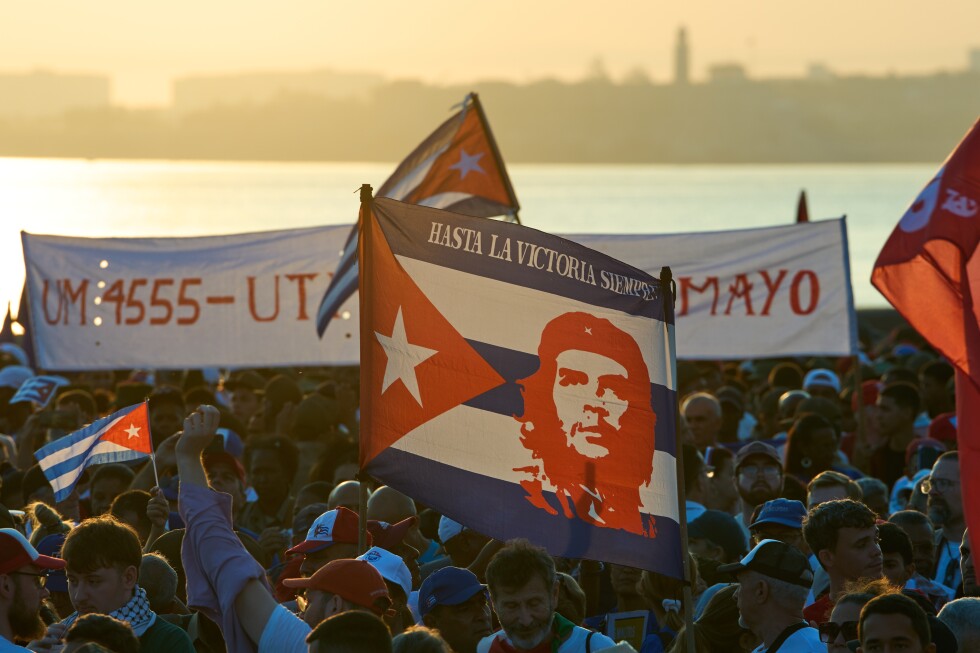
Tens of thousands of Cubans gathered along Havana’s iconic seawall Friday to celebrate International Workers’ Day, with special recognition given to those maintaining the nation’s struggling power system during an unprecedented energy crisis.
Workers from Cuba’s Electric Union have been working around the clock as the island’s deteriorating power grid continues to cause widespread blackouts. These outages have been exacerbated by severe fuel shortages, which officials attribute to U.S. sanctions restricting oil imports.
“We are living through difficult times,” said Yunier Meriño Reyes, an accountant with the Electric Union who participated in Friday’s march. “We are carrying out a very tough, arduous and relentless effort — day and night — to provide electricity to the people who need it.”
Cuba’s energy situation deteriorated sharply in early January when oil shipments from Venezuela, a critical supplier, were interrupted. The crisis deepened when the U.S. reportedly threatened tariffs against any country providing oil to Cuba, effectively cutting off the island from its main energy sources.
For more than three months, Cuba received no oil shipments whatsoever, forcing the country to rely solely on limited domestic resources including natural gas, minimal solar power, and aging thermoelectric plants. Vicente de la O Levy, Cuba’s energy and mines minister, described this period as “brutal” in recent statements to reporters.
Relief came in late March when a Russian tanker carrying 730,000 barrels of oil docked in Cuba, though the fuel required approximately two weeks of refining before it could be utilized.
“We have been working eight hours a day without stopping,” said Rafael Martínez, a worker at Cuba’s Petroleum Union. Recalling the arrival of the Russian tanker, he expressed the relief felt throughout the industry. “Our job is to push ahead, that’s all you can do,” he added as colleagues celebrated around him with cowbells and drums during the May Day festivities.
The petroleum sector’s critical role in Cuba’s economy was highlighted by driver José Antonio Báez in a recent video released by the Cuban Petroleum Union. “Our work generates the entire economy of the country. We drive the country’s economy,” he stated.
The shutdown of refineries for four months created significant technical challenges. Pedro Luis López Manzano, maintenance director at the Cienfuegos refinery, explained that extensive preparations were needed to restart operations. “It’s a challenge, but we always thought it was possible,” he said.
Some workers have been openly critical of U.S. policy. Gustavo Rodríguez Cordero, an engineer and director general at Cuba’s Petroleum Union in Villa Clara, stated in a company video that “no one has the international right to oppress a people in this manner,” referring to the energy restrictions.
Once refined, the government strategically allocated the limited fuel to essential sectors. De la O Levy explained that agriculture and food production were prioritized, enabling irrigation for critical crops including tobacco, corn and soybeans. This decision meant accepting longer power outages for residential areas to prevent production facilities from remaining idle.
Approximately 6,000 tons of the petroleum was converted to diesel and fuel oil specifically for powering hospitals, generators and transportation. Starting April 17, the situation showed modest improvement, with the government distributing 800 tons of fuel daily, still only half of the 1,600 tons actually needed.
The minister acknowledged this difficult balancing act: “If we used 1,600 tons, there would be fewer blackouts, but the fuel would last half as long.” He warned that the Russian oil supply was expected to last only until the end of April, emphasizing that sustaining the island’s thermoelectric plants with domestic crude oil remains the priority. “Without this fuel, we would face a total, systemwide blackout,” he cautioned.
The situation highlights Cuba’s energy vulnerability, as the country produces only 40% of its required fuel and depends heavily on imports. Despite these challenges, workers remain committed to their mission.
Katiusca Carreño, 53, who works at the Electric Union’s command center, expressed determination after Friday’s rally: “Resources aren’t reaching us, but all of us workers are still here. It’s hard, but not impossible. We work 24 hours a day.”
Fact Checker
Verify the accuracy of this article using The Disinformation Commission analysis and real-time sources.

14 Comments
The scale of the May Day rally in Havana is impressive, and it’s heartening to see the electric workers being celebrated for their essential contributions. Their work must be incredibly demanding, and they deserve recognition for their dedication.
I wonder if the Cuban government has any plans to invest in modernizing the power grid infrastructure to make it more resilient to these types of energy shocks in the future.
It’s inspiring to see the Cuban people come together to support their electric workers during this energy crisis. Their commitment to maintaining power despite the obstacles is admirable, and they deserve the recognition.
I hope the Cuban government is able to find sustainable solutions to improve the country’s energy security in the long run, beyond just relying on emergency measures.
The blackouts in Cuba sound very disruptive, especially with US sanctions restricting oil imports. It’s a complex geopolitical situation, but I hope the people can maintain access to reliable electricity through the efforts of these dedicated workers.
Do you know if Cuba is exploring renewable energy options to help reduce its reliance on imported fossil fuels? That could be an interesting long-term solution to strengthen energy security.
It’s promising to see the Cuban electric workers being recognized for their tireless efforts to maintain the power grid during this energy crisis. Their work must be extremely demanding given the fuel shortages and infrastructure challenges they’re facing.
I hope the government is providing adequate support and resources to these critical workers. Their contributions are vital for the country during these difficult times.
It’s good to see the Cuban government recognizing the vital role of the electric workers during this energy crisis. Their efforts to keep the power running, despite the fuel shortages and US sanctions, are truly admirable.
I hope the international community can find ways to support the Cuban people and provide assistance to help alleviate the energy crisis, without further escalating geopolitical tensions.
The energy crisis in Cuba sounds like a major challenge, and the electric workers are truly the unsung heroes keeping the lights on. Their efforts during this difficult time should be applauded.
Do you know if Cuba has any partnerships or international cooperation to help address the energy crisis, such as through technology transfers or infrastructure development?
The May Day rally seems like an appropriate time to honor the electric workers who are working around the clock to power the country. Their commitment and sacrifice during this crisis should be commended.
I wonder what kinds of challenges the electric union workers are facing in terms of maintaining aging infrastructure and equipment with limited resources. It must be an immense logistical challenge.