


Listen to the article
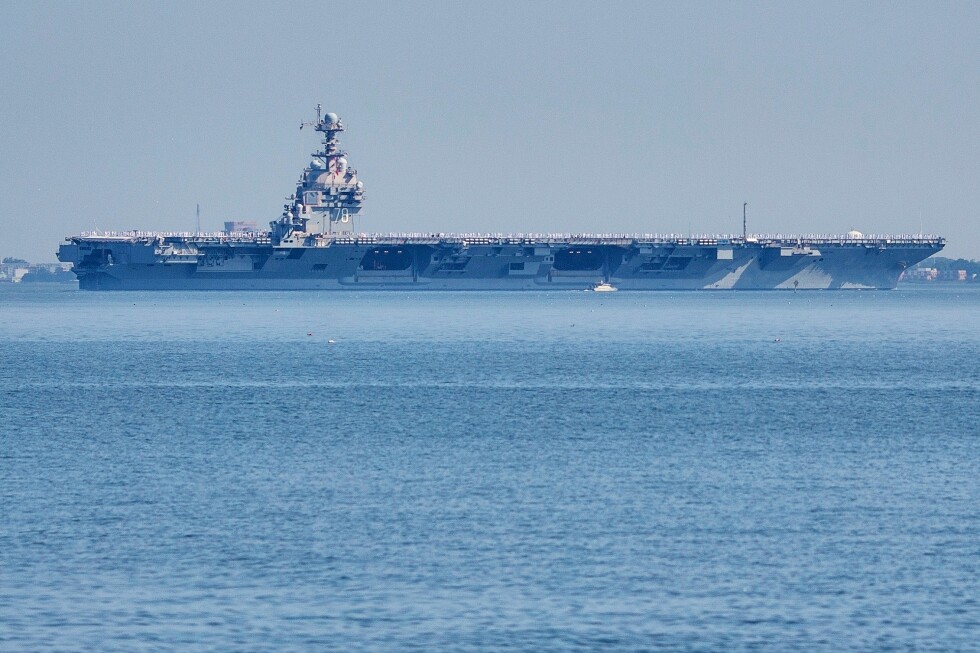
After a historic deployment spanning over 300 days, the USS Gerald R. Ford, the world’s largest aircraft carrier, will soon return to its home port in Virginia, according to two U.S. officials speaking on condition of anonymity. The vessel is expected to depart the Middle East in the coming days and arrive home by mid-May.
The Ford’s deployment has been marked by significant military operations, including participation in the war against Iran and involvement in the capture of Venezuelan leader Nicolás Maduro. This month, the carrier broke the U.S. record for the longest post-Vietnam War deployment, surpassing the previous 294-day record set by the USS Abraham Lincoln during the COVID-19 pandemic in 2020.
The Ford’s return comes as the USS George H.W. Bush arrived in the Middle East last week, creating an unusual concentration of American naval power in the region. Three U.S. aircraft carriers—the Ford, Bush, and Abraham Lincoln—have been simultaneously deployed to the Middle East, a military presence not seen since 2003. The Lincoln has been stationed in the region since January amid escalating tensions with Tehran and a tenuous ceasefire in the Iran conflict.
Defense Secretary Pete Hegseth addressed concerns about the Ford’s extended deployment during a House Armed Services Committee hearing on Wednesday. He acknowledged discussions with Navy officials regarding readiness and maintenance trade-offs resulting from the prolonged mission.
“Multiple times the operational requirements—whether it was down in Southcom or up to Centcom—demanded additional assets in real time, which through a tough decision-making process led to an extension,” Hegseth explained, referring to U.S. Southern Command and U.S. Central Command.
The Ford’s journey began with deployment to the Mediterranean Sea before being rerouted to the Caribbean in October as part of the largest naval buildup in that region in generations. The carrier participated in the military operation to capture Maduro before being redirected to the Middle East as tensions with Iran intensified.
During the early days of the Iran war, the Ford operated from the Mediterranean Sea before transiting through the Suez Canal into the Red Sea in early March. However, the ship’s mission encountered a setback when a fire broke out in one of its laundry spaces, forcing the carrier to return to the Mediterranean for repairs and leaving hundreds of sailors temporarily without accommodations.
While the Ford’s 295-day deployment is remarkable in modern times, it falls short of the Cold War record held by the now-decommissioned USS Midway, which spent 332 consecutive days at sea in 1972 and 1973. More recently, the USS Nimitz crew was away from home for a total of 341 days in 2020 and 2021, though this included extended isolation periods ashore in the U.S. as part of COVID-19 prevention measures.
The Ford’s extended deployment has raised concerns among military analysts and personnel advocates regarding the impact on service members’ wellbeing and the vessel’s operational readiness. Extended deployments can strain not only the sailors who endure long separations from their families but also the ship’s systems and equipment, potentially affecting long-term maintenance requirements and readiness.
As the Ford prepares to return home, its historic deployment underscores the continuing demands on U.S. naval forces amid global conflicts and regional instabilities, particularly in the Middle East and Latin America. The rotation of carrier strike groups highlights the Navy’s ongoing challenge of maintaining a robust presence across multiple theaters with limited resources.
Fact Checker
Verify the accuracy of this article using The Disinformation Commission analysis and real-time sources.
