


Listen to the article
Saudi Arabia’s sovereign wealth fund announced Thursday it will cease funding LIV Golf beyond 2026, creating significant uncertainty for the upstart golf league that emerged as a challenger to the PGA Tour establishment.
The Public Investment Fund (PIF), which has bankrolled LIV Golf since its 2022 launch, confirmed it would only support the league through the remainder of the 2026 season. “The substantial investment required by LIV Golf over a longer term is no longer consistent with the current phase of PIF’s investment strategy,” the fund stated in an official release.
Industry reports suggest PIF has already spent approximately $5.3 billion on LIV Golf since its inception, with that figure likely to exceed $6 billion by year-end. A significant portion—roughly $1 billion—went toward recruiting top talent from the PGA Tour, including stars like Bryson DeChambeau, Phil Mickelson, Brooks Koepka, and Dustin Johnson.
The financial pullback comes just two weeks after PIF unveiled a new five-year investment strategy focused on “sustained value creation” and “maximizing impact” with “higher standards of governance and transparency”—language that suggests the massive golf expenditures no longer align with Saudi Arabia’s investment priorities.
In response, LIV Golf has established a new board led by Gene Davis of Pirinate Consulting Group as chairman, alongside Jon Zinman from strategic advisory firm JZ Advisors. The restructured leadership aims to secure long-term financial partners to keep the league viable.
“The executive leadership team, along with Jon and I, see a clear opportunity to help the league formalize its structure, attract and secure long-term capital, and position the business for growth while continuing to promote the game across the world,” Davis said.
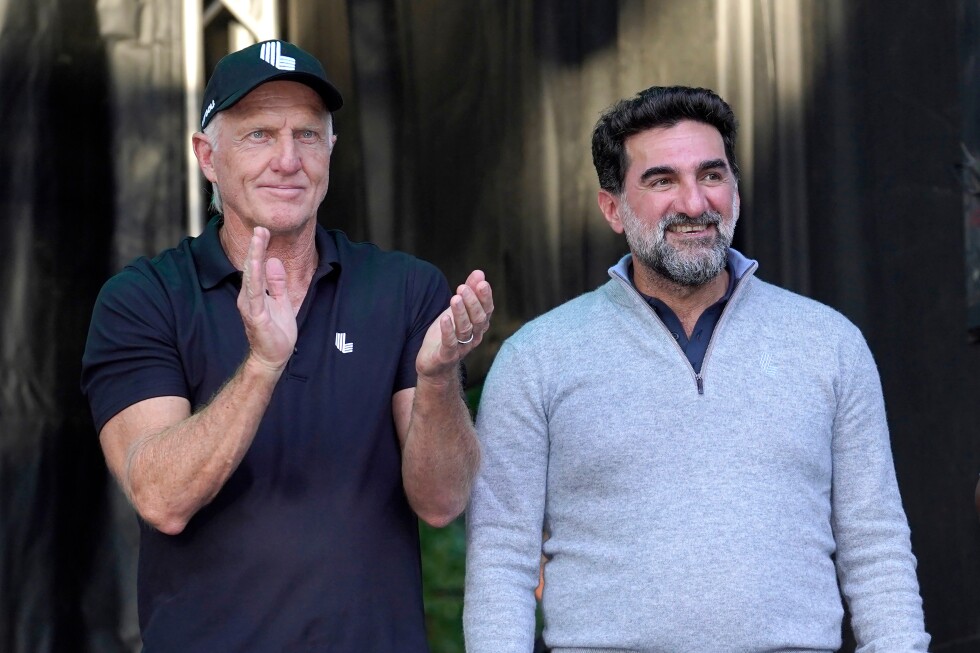
Another significant development is the departure of Yasir Al-Rumayyan, the PIF governor who spearheaded LIV Golf’s creation. Al-Rumayyan, whom players often referred to simply as “H.E.” (His Excellency), is no longer listed as LIV Golf chairman amid reports he has resigned from the position.
His exit removes a crucial ally for LIV Golf players. Al-Rumayyan was instrumental in signing the June 2023 framework agreement intended to unify golf’s commercial assets and would have joined the PGA Tour Enterprises board if the deal had materialized. While that agreement never fully developed beyond ending antitrust lawsuits, Al-Rumayyan remained committed to the team golf concept that defined LIV’s approach.
LIV Golf CEO Scott O’Neil acknowledged the funding situation during a recent interview with Britain-based TNT: “The reality is that you’re funded through the season, and then you work like crazy as a business to create a business plan to keep us going.”
Despite the uncertainty, LIV Golf claims it expects 10 of its 13 teams to be profitable this year. The league has also secured five tournament title sponsors this season after having none during its first three years.
The funding withdrawal raises questions about player retention as contracts expire. Koepka already left LIV after last season, with the PGA Tour granting him a conditional path back that included stipulations like a $5 million charity donation and five-year exclusion from equity grants.
Similar offers extended to major champions Jon Rahm, DeChambeau, and Cameron Smith went unanswered before a February deadline. Meanwhile, former Masters champion Patrick Reed chose not to renew his LIV contract and is now playing on the European tour schedule, positioning himself to regain PGA Tour membership.
DeChambeau, one of LIV’s marquee players, expressed commitment during a recent interview: “As long as LIV is here, I would figure out a way for it to make sense. It’s a startup, right? And so there’s going to be times where we’re squeezed and punched. This is one of those moments.”
LIV Golf’s next tournament is scheduled for May 7-10 in northern Virginia, while its Louisiana event, originally planned for late June, has been postponed until the fall—perhaps another sign of the operational adjustments required as the league navigates its uncertain financial future.
Fact Checker
Verify the accuracy of this article using The Disinformation Commission analysis and real-time sources.

16 Comments
The PIF’s substantial investment of over $5 billion in LIV Golf over the past year underscores just how much the Saudis were willing to spend to disrupt the traditional golf ecosystem.
Indeed, the scale of their financial backing was unprecedented. It will be intriguing to see if LIV can retain top talent without that level of financial support.
The news that LIV Golf is seeking new funding without Saudi backing raises concerns about the league’s long-term stability and ability to compete with the established PGA Tour.
Absolutely, the loss of the PIF’s deep pockets could significantly limit LIV’s ability to attract and retain top talent, which was a key part of their disruptive strategy.
While the PIF’s withdrawal of funding is a major setback for LIV Golf, it could open the door for more traditional golf investors to get involved and reshape the league’s direction.
That’s a good point. This may be an opportunity for LIV to transition to a more sustainable, commercially-viable model that aligns better with the existing golf ecosystem.
This development highlights the challenges of building a new professional sports league from scratch, especially one that is attempting to challenge an entrenched industry leader like the PGA Tour.
You’re right, establishing a viable alternative to the PGA Tour is an immense undertaking, and the withdrawal of Saudi funding makes LIV Golf’s path forward much more uncertain.
The PIF’s shift in investment strategy suggests they may be scaling back their disruptive sports ventures. This could signal a broader pullback in Saudi Arabia’s global ambitions across various industries.
That’s an interesting perspective. The Saudis’ motive for backing LIV Golf was likely geopolitical as much as commercial, so this move may indicate a shift in their strategic priorities.
This shift in PIF’s funding strategy for LIV Golf is an interesting development. It will be curious to see how the league adapts and seeks new sources of financing without the Saudi backing.
You’re right, it will be a significant challenge for LIV Golf to find alternative funding sources to sustain their operations long-term.
The PIF’s decision to cease funding LIV Golf beyond 2026 is a significant blow to the upstart league’s ambitions. It will be fascinating to see how they adapt their strategy and business model to overcome this major setback.
Indeed, this is a pivotal moment for LIV Golf. Their ability to find alternative financing and chart a sustainable course forward will be crucial to their long-term survival.
This news raises questions about the long-term viability of LIV Golf. Losing the Saudi sovereign wealth fund’s backing could deal a major blow to their ambitious plans to challenge the PGA Tour’s dominance.
Absolutely, the withdrawal of PIF funding puts LIV Golf in a very precarious position. Their ability to attract and retain top players may now be severely constrained.