


Listen to the article
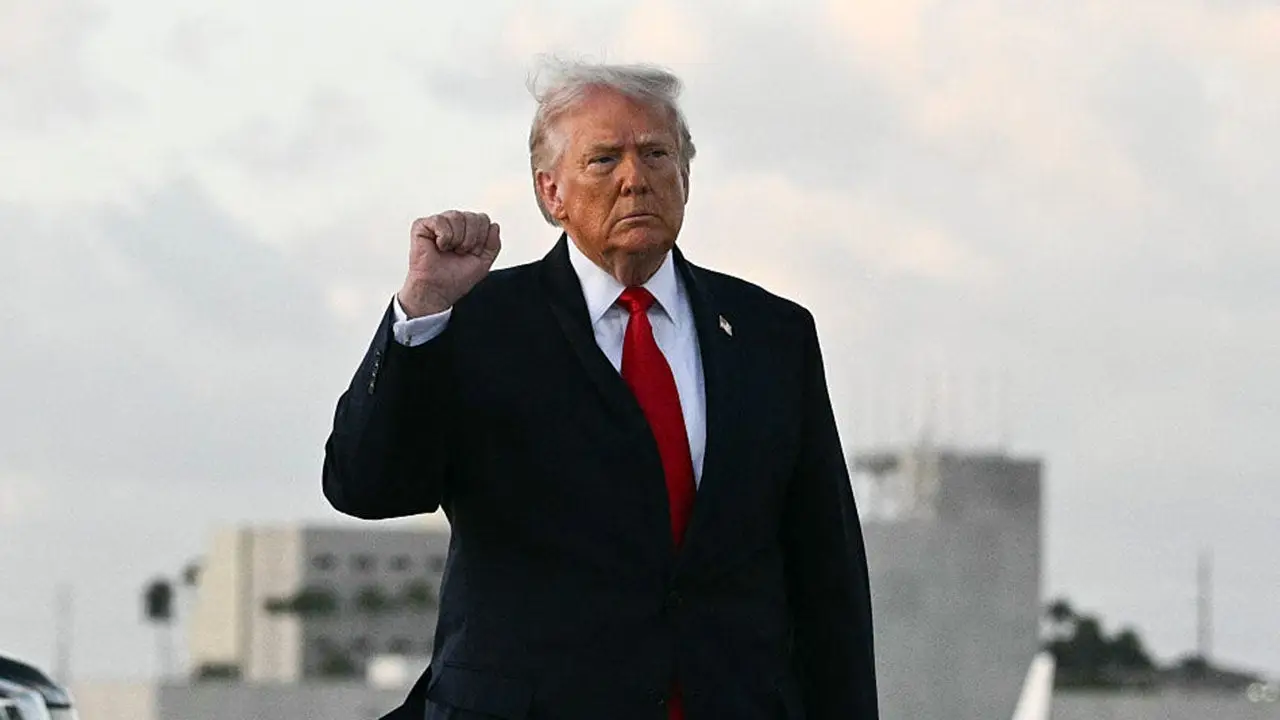
President Trump arrived at Miami International Airport on April 11, raising his fist in a show of defiance amid recent controversies surrounding educators and academic institutions responding to his survival of an assassination attempt.
Several educators across the country have faced severe professional consequences after making controversial statements about the recent shooting at the White House Correspondents’ Association dinner. Multiple teachers and administrators have been fired or suspended after social media posts or recorded comments that appeared to lament the fact that Trump survived the attempt on his life.
In one notable case, an Ohio teacher was terminated after being caught on video seemingly expressing disappointment that the former president wasn’t killed in the shooting. The incident highlights the growing tension between personal political expression and professional responsibilities in educational settings.
The controversy extends beyond K-12 education into higher education, where free speech battles continue to intensify. The University of California, Berkeley is facing a lawsuit for allegedly obstructing an investigation into a violent protest that occurred during a Turning Point USA (TPUSA) event featuring comedian Rob Schneider. The lawsuit claims university officials deliberately stonewalled efforts to identify individuals responsible for disrupting the event.
In a separate but related development, a former Columbia University professor who was dismissed for expressing support for Hamas is now conducting speaking tours at various college campuses. The professor’s “Death Akademy” lectures have sparked concern among critics who worry about the normalization of extremist viewpoints in academic settings.
The political divide on campuses is further illustrated by claims of double standards in disciplinary actions. At UCLA, a university dean reportedly warned conservative law students they would face punishment for identifying liberal protesters, raising questions about equal application of campus policies across the political spectrum.
Some institutions, however, are reversing course on controversial decisions. Duke University recently reinstated its Students for Justice in Palestine chapter after initially suspending the group over antisemitism concerns. The reversal comes as universities nationwide struggle to balance free expression with creating safe learning environments for all students.
Meanwhile, a board member at a prominent Arab advocacy organization claims he was removed from his position after reporting misconduct within the group. Representative Rashida Tlaib has criticized the organization’s handling of sexual harassment allegations, adding another layer to the complex intersection of politics and organizational accountability.
In Florida, a private Catholic law school has changed its position on recognizing a TPUSA chapter after initially rejecting the conservative club as conflicting with the institution’s values. The reversal came following pressure from state officials, highlighting the influence of government in campus politics.
Education policy itself may face significant changes according to experts responding to proposals from Zohran Mamdani, whose education plans have drawn criticism from Republican leaders. Critics warn that Mamdani’s approach “lacks merit” and could “fundamentally change student outcomes” if implemented.
These developments collectively point to deepening polarization within educational institutions at all levels, where political tensions increasingly affect administrative decisions, faculty employment, student organizations, and classroom environments.
As campuses navigate these challenging waters, questions about academic freedom, institutional neutrality, and the boundaries of acceptable political discourse continue to define the educational landscape in an increasingly divided America.
Fact Checker
Verify the accuracy of this article using The Disinformation Commission analysis and real-time sources.

11 Comments
This is a complex issue with valid points on both sides. Educators have a right to express political views, but universities also have an obligation to maintain order and decorum.
The discipline of educators who commented on the Trump shooting attempt is concerning. While their views may be controversial, they should be able to express them without fear of repercussions.
I can understand the university’s position, but firing teachers over political speech sets a dangerous precedent. Reasonable people can disagree on these sensitive topics.
This case highlights the need for clear policies around political expression by educators. Their free speech rights must be weighed against their professional responsibilities.
Agreed. Striking the right balance is critical to upholding democratic values while maintaining appropriate conduct in educational institutions.
Interesting to see the tension between free speech and professional responsibilities in education settings. This is a complex issue with valid concerns on both sides.
I agree, it’s a delicate balance. Educators should be able to express political views, but not in a way that undermines their professional responsibilities.
This lawsuit against UC Berkeley highlights the ongoing debates around campus free speech. It’s a challenging issue with strong arguments on multiple sides.
Absolutely. Universities must uphold academic freedom, but also maintain a safe and inclusive learning environment. Finding the right balance is critical.
The university’s lawsuit response is concerning. While they must address campus disruptions, limiting free speech sets a worrying precedent that could chill academic discourse.
Troubling to see educators facing such severe consequences for their political views, even if controversial. Free speech protections should extend to the academic world.