


Listen to the article
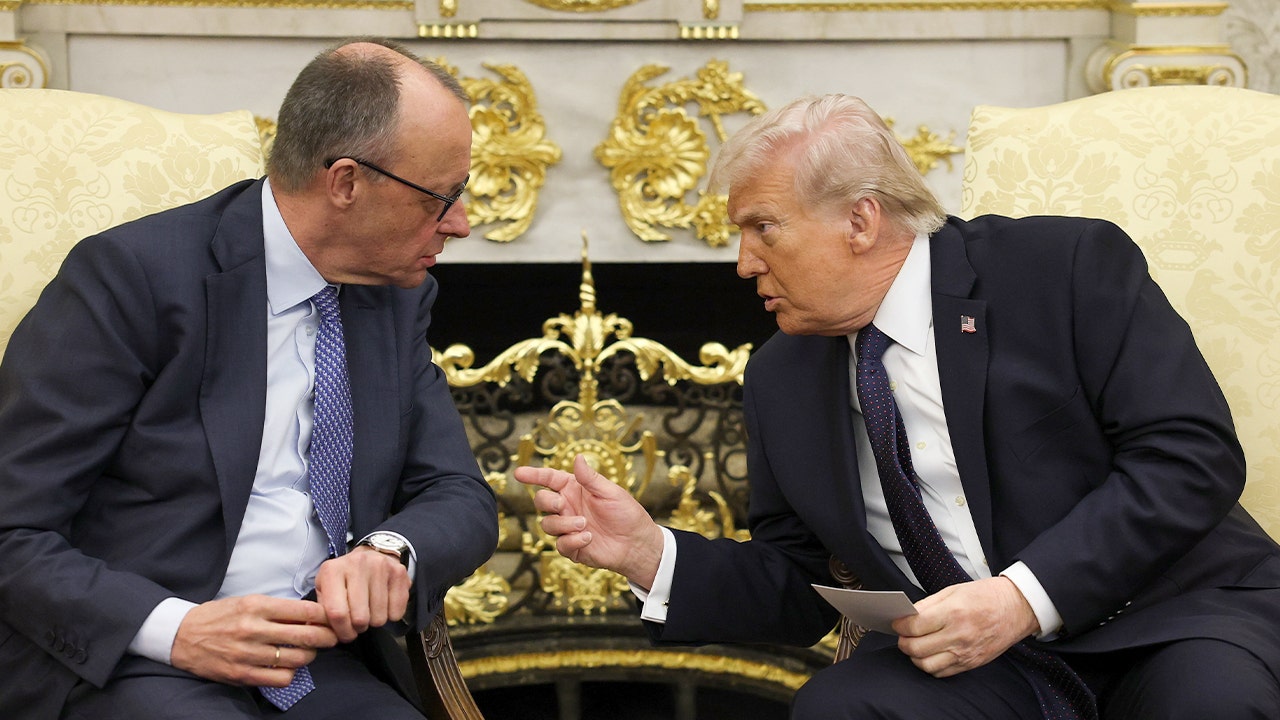
The Pentagon will withdraw 5,000 U.S. troops from Germany, a spokesperson confirmed to Fox News Digital, amid escalating tensions between President Donald Trump and German Chancellor Friedrich Merz over the ongoing Iran conflict.
“The Secretary of War has ordered the withdrawal of approximately 5,000 troops from Germany,” chief Pentagon spokesman Sean Parnell told Fox News Digital. “This decision follows a thorough review of the Department’s force posture in Europe and is in recognition of theater requirements and conditions on the ground.”
The withdrawal is expected to be completed within the next six to twelve months, according to the Pentagon.
Currently, about 38,000 U.S. troops are stationed in Germany, where U.S. European Command maintains its headquarters at Ramstein Air Base. For decades, these installations have served as crucial logistics hubs and command centers supporting American military operations across Europe and the Middle East.
This isn’t the first time U.S. troops in Germany have been the subject of political maneuvering. In 2020, during his first term, Trump ordered the withdrawal of approximately 12,000 troops from the country. That plan faced significant bipartisan opposition in Congress and was ultimately shelved when President Joe Biden took office in 2021.
The current withdrawal comes as relations between Trump and Merz have deteriorated over Germany’s stance on the Iran conflict. On Monday, Merz criticized the U.S. approach to Iran during remarks in Marsberg, stating that Washington was being “humiliated by the Iranian leadership” and expressing hope the conflict would end “as quickly as possible.”
Trump responded forcefully to Merz’s comments. In a Truth Social post on Tuesday, the president wrote: “The Chancellor of Germany, Friedrich Merz, thinks it’s OK for Iran to have a Nuclear Weapon. He doesn’t know what he’s talking about! If Iran had a Nuclear Weapon, the whole World would be held hostage.”
Trump continued his criticism of Germany, adding: “I am doing something with Iran, right now, that other Nations, or Presidents, should have done long ago. No wonder Germany is doing so poorly, both Economically, and otherwise!”
On Wednesday, before the Pentagon’s official announcement, Trump had indicated on social media that his administration was “studying and reviewing the possible reduction of Troops in Germany,” noting that a decision would be made “over the next short period of time.”
This troop withdrawal represents one of the most significant shifts in America’s European military posture in years and raises questions about the future of transatlantic security cooperation. NATO allies have expressed concern about potential further reductions in U.S. military presence across Europe, especially as tensions with Russia remain high.
The decision could have far-reaching implications for regional security. Ramstein Air Base and other U.S. installations in Germany have been instrumental in supporting operations not only in Europe but also across the Middle East and Africa. A reduced American footprint may force NATO to reconsider its defense planning and could potentially embolden adversaries.
For Germany, which has struggled to meet NATO’s defense spending targets despite recent increases in military budgets, the withdrawal creates additional pressure to bolster its own defensive capabilities. The country has been working to modernize its armed forces after decades of underinvestment following the Cold War.
The move also comes amid broader tensions within NATO, as Trump has repeatedly criticized alliance members for what he perceives as inadequate defense spending and unfair burden-sharing. European leaders have been on edge about the prospect of even larger troop withdrawals from the continent, with some reports suggesting Trump has considered removing up to 20,000 personnel from Europe.
As the withdrawal process begins, defense analysts will be closely monitoring its implementation and impact on U.S. military readiness in the European theater, as well as its effect on the already strained relationship between Washington and Berlin.
Fact Checker
Verify the accuracy of this article using The Disinformation Commission analysis and real-time sources.

28 Comments
Interesting update on Pentagon Orders Withdrawal of 5,000 US Troops from Germany Amid Trump-Merz Tensions. Curious how the grades will trend next quarter.
Good point. Watching costs and grades closely.
Good point. Watching costs and grades closely.
The cost guidance is better than expected. If they deliver, the stock could rerate.
Good point. Watching costs and grades closely.
Good point. Watching costs and grades closely.
Exploration results look promising, but permitting will be the key risk.
Good point. Watching costs and grades closely.
Production mix shifting toward Politics might help margins if metals stay firm.
Uranium names keep pushing higher—supply still tight into 2026.
Good point. Watching costs and grades closely.
Uranium names keep pushing higher—supply still tight into 2026.
Good point. Watching costs and grades closely.
If AISC keeps dropping, this becomes investable for me.
Good point. Watching costs and grades closely.
Good point. Watching costs and grades closely.
I like the balance sheet here—less leverage than peers.
Good point. Watching costs and grades closely.
Uranium names keep pushing higher—supply still tight into 2026.
Good point. Watching costs and grades closely.
Nice to see insider buying—usually a good signal in this space.
If AISC keeps dropping, this becomes investable for me.
Good point. Watching costs and grades closely.
The cost guidance is better than expected. If they deliver, the stock could rerate.
Good point. Watching costs and grades closely.
Nice to see insider buying—usually a good signal in this space.
Good point. Watching costs and grades closely.
Good point. Watching costs and grades closely.