


Listen to the article
Years after a lead acid battery recycling plant closed its doors in Kenya’s coastal city of Mombasa, residents of Owino Uhuru continue to grapple with the devastating effects of lead poisoning, highlighting a growing public health crisis across Africa as the continent embraces renewable energy solutions.
Faith Muthama, a 40-year-old mother of four, bears the physical burden of this environmental disaster daily. “Life has never been the same,” she explained, struggling to catch her breath. “I still struggle to do heavy chores as I suffer from breathing difficulties. When I was tested in 2012, I was found with high lead levels in my blood.”
The contamination began in 2007 when Kenya Metal Refineries EPZ, a subsidiary of an Indian company based in Mumbai, established a lead-acid battery recycling facility in the settlement. Residents report that toxic waste from the plant, which exported processed lead to India, infiltrated local soil and water sources, causing widespread illness throughout the community. More than 20 deaths have been linked to the pollution, and despite the facility’s closure in 2014, the environmental damage persists.
Health experts have established clear links between lead exposure and serious health conditions, including neurological damage, reduced cognitive development, and long-term health impacts. Children face particularly severe risks as their developing brains are especially vulnerable to lead toxicity.
In a landmark decision in 2025, Kenya’s Supreme Court awarded approximately $12 million in damages to about 3,000 residents who successfully brought a class-action lawsuit against the smelting company—a rare legal victory for victims of industrial pollution in the region. However, community activists report that the state has failed to ensure timely compensation.
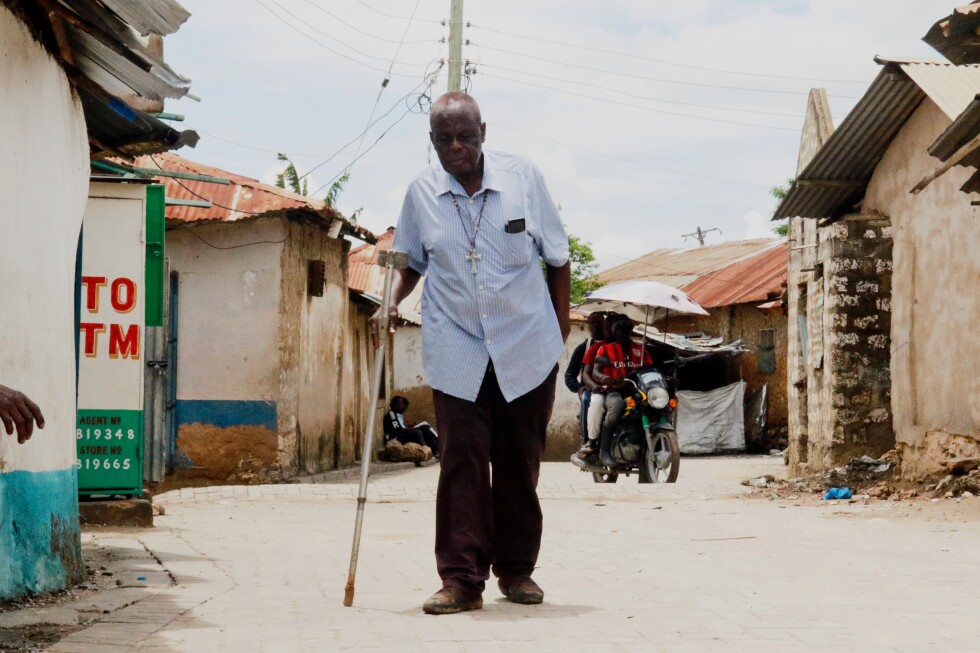
Alfred Ogulo, a 70-year-old village elder with slightly slurred speech, embodies the ongoing suffering. “I am just waiting for help as I have exhausted all my resources treating myself,” he said. Tests once revealed extremely high lead levels in his bloodstream, resulting in nerve damage and limited mobility. “I cannot walk without a stick,” he explained. “I also suffer from serious chest pain and coughs from the toxic fumes that we breathed in here when the factory was still in operation.”
This local tragedy reflects a broader continental challenge. A February report by the Centre for Global Development, an independent think tank based in Washington and London, warns that Africa’s rapid expansion of off-grid solar systems and battery storage—while critical for addressing energy access gaps—is fueling an unprecedented demand for battery recycling facilities.
Lead-acid batteries remain prevalent in many low-income markets due to their lower cost compared to alternatives like lithium-ion batteries. However, safe recycling requires substantial infrastructure investments that are often absent. Consequently, informal recyclers frequently employ rudimentary methods that release dangerous lead particles into the air, soil, and water.
“Off-grid solar could account for a substantial share of batteries entering the recycling stream in Africa,” explained Lee Crawfurd, a senior research fellow at the Centre for Global Development. “That’s on top of existing demand from vehicles like cars and motorbikes.”
Crawfurd highlighted the economic challenges driving unsafe practices: “Safe recycling is expensive and that creates a strong incentive to do it unsafely.” Rather than banning lead-acid batteries entirely, which he deems unfeasible, Crawfurd advocates for improved safety measures in the recycling process.
The scale of the problem is alarming. Studies across Africa and South Asia estimate that between one-third and half of all children have elevated blood lead levels, making lead exposure one of the most widespread environmental health risks globally. In many countries, weak enforcement of existing environmental regulations compounds the issue.
“This is a silent threat,” Crawfurd noted. “It’s often invisible, but it affects health, cognitive development and economic productivity.”
The problem extends beyond small informal workshops to larger facilities that may operate without proper controls. Global supply chains for recycled lead frequently obscure accountability, prompting Crawfurd to call for “accountability across the entire supply chain.”
Some progress is evident. South Africa has introduced producer responsibility systems requiring manufacturers to manage battery recycling, creating a more structured approach. However, in regions where batteries are primarily imported rather than locally produced, assigning responsibility remains challenging.
While international donors increasingly support lithium-ion technologies that don’t carry the same lead-related risks, lead-acid batteries will likely remain widespread for years, particularly in off-grid solar systems across the continent.
For the residents of Owino Uhuru, these broader trends offer little comfort. Phyllis Omido, who leads the Centre for Justice Governance and Environmental Action in Mombasa and helped residents pursue legal action, expressed frustration at the delayed compensation: “It is sad that the state has ignored prioritizing the compensation payment as ordered by the court. These monies would have alleviated the current suffering these vulnerable residents are going through.”
Mejumaa Hassan Nyanje, 60, voiced the community’s despair through tears: “Is it fair that we are the ones still chasing justice while the company walks away? Will we all die before justice is served? It feels like we’ve been abandoned, like our lives and our health don’t matter.”
Fact Checker
Verify the accuracy of this article using The Disinformation Commission analysis and real-time sources.

17 Comments
It’s troubling to hear about the long-term impacts on residents of Owino Uhuru even after the facility closed. Proper remediation and support for affected communities should be a priority.
Absolutely. Addressing legacy environmental damage from improper industrial practices is just as important as preventing future issues as Africa embraces new clean energy technologies.
This is a stark reminder that the clean energy transition in Africa needs to be carefully managed to avoid unintended consequences like toxic pollution. Proper regulation and enforcement are critical.
Absolutely. The clean energy transition is important, but it must be done in a way that protects the health and well-being of local communities.
This is a concerning situation that highlights the need for robust environmental regulations and enforcement as Africa transitions to clean energy. Protecting public health must be a key consideration.
Well said. The clean energy transition is crucial, but it needs to be implemented in a way that prevents environmental disasters like this.
This highlights the need for stronger environmental regulations and enforcement across Africa to ensure the clean energy transition doesn’t come at the expense of public health. Balancing progress and protection is crucial.
This is a concerning situation. Lead exposure is a serious public health issue, especially in developing countries. Proper regulation and enforcement of environmental standards is critical as Africa transitions to clean energy.
Agreed. Transitioning to renewable energy is important, but ensuring proper disposal and recycling of lead-acid batteries is crucial to protect communities from contamination.
The long-term health impacts on this community are heartbreaking. As Africa embraces renewable energy, safeguarding public health and the environment must be a top consideration.
It’s alarming to see the lasting health impacts on residents from lead contamination, even years after the facility closed. This underscores the importance of proper waste management and environmental safeguards.
Absolutely. The transition to clean energy must be accompanied by robust policies and enforcement to prevent similar environmental disasters in the future.
Tragic to see the lasting impacts of lead contamination on this community. As Africa embraces renewable energy, ensuring proper waste management and environmental protections should be a top priority.
Tragic to see the lasting effects of lead contamination on this community, even years later. As Africa embraces renewable energy, ensuring proper waste management and environmental safeguards should be a top priority.
Tragic to see how this community continues to grapple with the devastating effects of lead contamination. Proper remediation and support for affected residents is crucial, in addition to stronger regulations.
Well said. The clean energy transition should improve lives, not endanger them. Balancing progress and environmental protection is key.
This is a sobering reminder that the clean energy transition in Africa must be carefully managed to avoid unintended consequences like this lead poisoning crisis. Protecting public health should be a top priority.