


Listen to the article
Foreign Saboteurs Target Ukraine as Russia Recruits Vulnerable Individuals
A growing network of foreign nationals is being recruited to carry out acts of sabotage across Ukraine, with prosecutors revealing that 18 foreigners have been convicted on sabotage-related charges in 2024 alone. These individuals join hundreds of Ukrainian citizens convicted of similar acts since Russia launched its full-scale invasion in 2022.
Ukrainian security services (SSU) told the Organized Crime and Corruption Reporting Project (OCCRP) that they believe Russian intelligence is orchestrating these operations, noting a significant increase in such attacks since 2023.
“They involve minors, people with drug or alcohol addiction, and other individuals vulnerable to recruitment, who are easier to manipulate into illegal activities,” the SSU said in a statement to OCCRP.
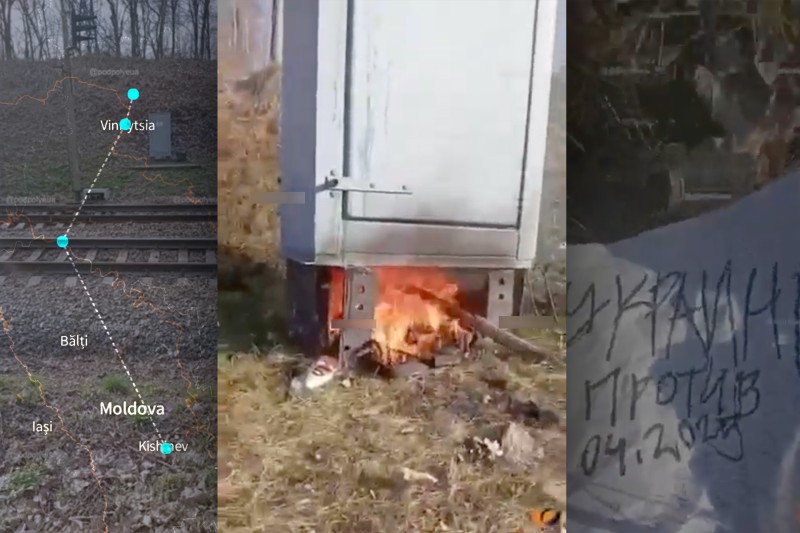
One such case involves Moldovan national Gherus, who was sentenced to 10 years in prison for arson. Prosecutors say his case exemplifies a broader pattern where sabotage acts carried out by foreigners are being leveraged by pro-Russian propaganda networks to create the false impression of an “underground movement” opposing the Ukrainian government.
“This narrative was planted from the very beginning of the full-scale invasion to serve as a pretext and justification for the war,” explained Kostiantyn Gozdup, head of the Compliance Monitoring Department at the Vinnytsia Prosecutor’s Office.
Despite these efforts, polling data from October shows that only a small minority of Ukrainians hold positive views toward Russia. Experts emphasize there is no evidence of any coordinated nationwide resistance movement against the Ukrainian government.
Liubov Tsybulska, an expert on hybrid warfare who leads the NGO Join Ukraine, told OCCRP: “A resistance movement requires coordination; it implies some kind of unity among these forces. These are all sporadic cases where Russian special services recruit individual people via social media.” She added that saboteurs are typically motivated by financial rewards rather than ideology.
Moscow’s primary objective, according to Tsybulska, is “to create a rift between the people and the political and military leadership.” The Russian government did not respond to requests for comment.
Court documents in Gherus’ case describe his arson attack as part of “a significant increase in the sabotage activities of the special services of the aggressor state.” Investigators were unable to determine the true identity of his handler, who operated under the name Denis Stanciu and delivered payments via cryptocurrency.
The recruitment operation appears sophisticated yet low-cost. After acts of sabotage, videos are often shared on Telegram channels with messages encouraging others to join what they describe as an anti-mobilization movement. One such channel, created in April 2024 with over 19,000 subscribers, regularly publishes evidence of sabotage acts with messages like: “Join our ranks. We will teach, guide, and support! Everyone can help.”
Andrei Curăraru, a Moldovan security and public policy expert, describes how messaging apps have revolutionized recruitment for intelligence operations: “You can identify vulnerable individuals, give them a narrow task, request a video as proof, and pay them without direct contact. This type of sabotage increasingly resembles a clandestine gig-economy marketplace rather than traditional espionage networks.”
The recruited individuals “often do not even understand whose interests they are serving,” Curăraru noted. “These people are expendable, and everyone in the chain of command knows this — except for the recruits themselves.”
Both Gherus and his accomplice, 26-year-old Moldovan Iurie Lupu, fit the profile of vulnerable recruits targeted by Russian operatives: young men with financial problems and histories of drug issues and prior legal troubles. Lupu told reporters that he received an initial Telegram message from “Denis Stanciu” offering a chance to “make some money,” and subsequently involved his friend Gherus who was also in need of cash.
When contacted for comment, Telegram spokesperson Remi Vaughn told OCCRP the messaging app was “a platform for peaceful speech and privacy, not war,” adding that “attempts to recruit people for sabotage are routinely removed.”
Fact Checker
Verify the accuracy of this article using The Disinformation Commission analysis and real-time sources.

10 Comments
The report of increasing sabotage acts by foreigners in Ukraine is quite alarming. Recruiting vulnerable individuals like minors or addicts to destabilize the country is a cynical ploy by Russia. Ukraine will need to remain vigilant to counter these subversive efforts.
You’re right, Ukraine faces a complex challenge in detecting and preventing these sabotage operations. Securing the country’s infrastructure and institutions while also supporting at-risk populations will be critical.
This is a concerning development, with Russia apparently orchestrating a network of foreign saboteurs to destabilize Ukraine. The Ukrainian government will need to respond firmly while also addressing the underlying factors that make people vulnerable to recruitment.
It’s troubling to see Russia exploiting vulnerable people to carry out acts of sabotage in Ukraine. Prosecuting and convicting these foreign agents is important, but Ukraine will need robust counterintelligence to get ahead of these threats.
The news of foreign nationals being convicted for sabotage in Ukraine is quite alarming. It seems Russia is pursuing a multifaceted strategy to undermine Ukraine’s security and stability. Strengthening intelligence sharing and cross-border cooperation will be crucial.
I agree, this shows the need for a comprehensive response from Ukraine and its allies. Disrupting these sabotage networks, securing critical infrastructure, and providing support to vulnerable populations should all be priorities.
It’s troubling to see Russia engaging in these kinds of subversive activities in Ukraine. Recruiting foreigners, including minors and those with addiction issues, to carry out acts of sabotage is a worrying strategy. Ukraine will need to remain vigilant and take firm action to protect its sovereignty.
The use of foreign saboteurs by Russia to target Ukraine is a concerning development. Exploiting vulnerable people for these illegal activities is a disturbing tactic. Ukraine will need robust counterintelligence and security measures to identify and disrupt these networks.
This report highlights the challenges Ukraine faces in securing its territory against foreign interference. Recruiting vulnerable individuals to carry out acts of sabotage is a cynical tactic by Russia. Ukraine will need to redouble its efforts to counter these threats.
This is concerning news about foreign saboteurs targeting Ukraine. It seems Russia is exploiting vulnerable individuals to carry out these attacks, which is a troubling tactic. We’ll have to closely monitor the situation to see how Ukraine responds and secures its territory.