


Listen to the article
May Day Protests Highlight Growing Labor Activism Amid Political Divide
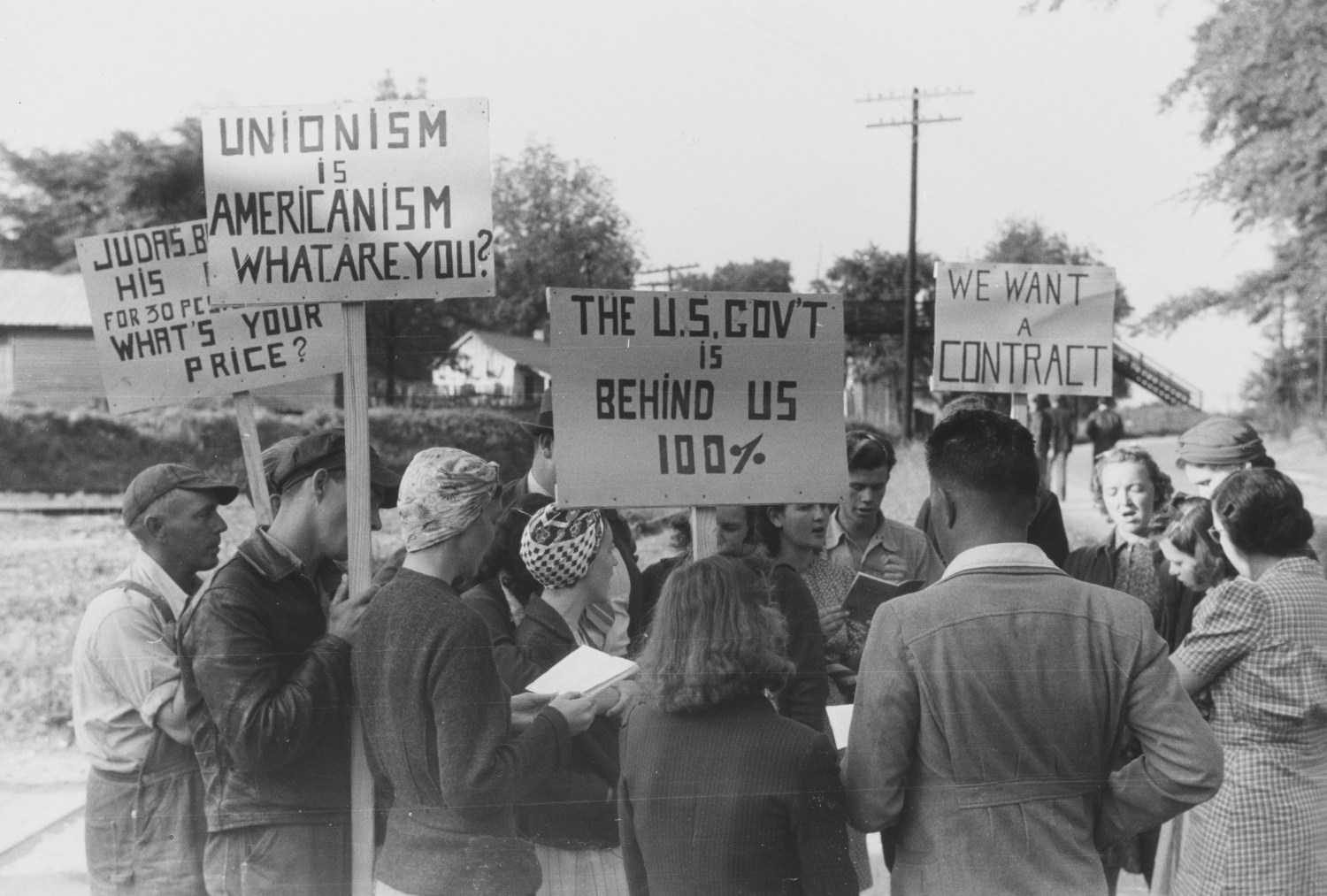
Workers across the United States took to the streets today to mark May Day, also known as International Workers’ Day, continuing a tradition that dates back to the late 1880s. The day commemorates the historic Haymarket Affair in Chicago, when laborers rallied for an eight-hour workday – a standard many Americans now take for granted.
From major metropolitan areas to smaller communities, demonstrations drew thousands advocating for improved wages, better working conditions, and increased taxation of the ultra-wealthy. The nationwide demonstrations transcended geographic boundaries, though they revealed deepening political divisions around labor issues.
In North Carolina, the state’s teacher advocacy group, North Carolina Association of Educators, emerged as a prominent participant. Thousands gathered in Raleigh, the state capital, calling for higher teacher salaries and increased classroom resource funding. Throughout the day, Republican politicians criticized teachers for “calling out” of work to participate in the rallies.
These May Day demonstrations share organizers with the recent “No Kings” protests, leading some critics to dismiss them as left-wing political theater rather than legitimate labor advocacy. This characterization highlights a peculiar contradiction in American politics: labor rights, once considered a bipartisan concern, have become increasingly politicized.
Political analysts note a significant shift in working-class voting patterns over the past fifteen years. Since 2008, approximately one-third of Americans earning under $50,000 annually have switched their political allegiance from Democratic to Republican. Concurrently, the Democratic Party has experienced declining support among voters without college degrees.
“Republicans have effectively leveraged cultural identity issues to create political divisions,” explained Dr. Martha Reynolds, a political scientist at Georgetown University. “They’ve successfully portrayed Democrats as elitist and disconnected from working-class concerns, despite policy platforms that often align with labor interests.”
The rhetoric mirrors historical tactics used by Southern politicians who stoked racial fears to justify segregation policies that eventually culminated in Jim Crow laws. Today’s political messaging often employs similar fear-based approaches, albeit with different targets.
Yet the irony remains that primarily Democratic and left-leaning activists advocate for worker protections that would benefit Americans across the political spectrum. These include policies addressing wage stagnation, healthcare access, and affordable housing – issues affecting millions regardless of political affiliation.
“What we’re seeing is a fundamental disconnect between economic self-interest and political identity,” said Robert Menendez, a labor economist at the Economic Policy Institute. “Many voters are prioritizing cultural alignment over policies that would materially improve their financial situations.”
For the Democratic Party, this presents a challenging balancing act: reconnecting with working-class voters without abandoning commitments to immigrants, transgender individuals, and other marginalized communities that form part of their coalition.
Today’s May Day protests reflect this complex political landscape. While organized labor once served as a unifying force in American politics, current demonstrations highlight how deeply economic issues have become entangled with partisan identity.
International Workers’ Day celebrations continue around the globe, with particularly large turnouts reported in Europe, Latin America, and parts of Asia. Unlike the United States, many countries observe May Day as a national holiday, underscoring different cultural approaches to labor recognition.
As participants disperse and the day concludes, the broader questions about the future of the American labor movement remain unresolved. With union membership at historic lows but public support for labor rights growing, May Day 2023 represents not just a celebration of past achievements but a referendum on workers’ ongoing struggle for dignity and fair treatment in an increasingly polarized nation.
Fact Checker
Verify the accuracy of this article using The Disinformation Commission analysis and real-time sources.

8 Comments
The protests reflect the growing political divide on labor issues. While I believe workers deserve fair treatment, the ‘propaganda’ label implies the messaging may be overly partisan. Focusing the debate on facts and practical solutions, rather than rhetoric, could yield more progress.
This highlights the challenges of balancing workers’ rights with political realities. The ‘propaganda’ criticism suggests the advocacy efforts may be too ideologically driven. A more measured, fact-based approach could help find common ground and enact meaningful change.
This is a contentious topic without easy solutions. While workers deserve fair treatment, the ‘propaganda’ label implies the messaging may be overly politicized. Focusing the debate on objective data and practical solutions, rather than rhetoric, could help bridge the divide.
The May Day protests underscore the passionate feelings around labor issues. I can understand both the human rights perspective and the concerns about propaganda. Striking the right balance between advocacy and pragmatism will be crucial for making progress on these complex challenges.
It’s a complex issue without easy answers. I appreciate the human rights framework, but the ‘propaganda’ critique suggests there may be ideological agendas at play beyond workers’ interests. More transparency and compromise from all stakeholders could help move the discussion forward.
The May Day protests highlight how divisive labor issues have become. While workers’ rights are important, I can understand the criticism around ‘propaganda’ if the messaging seems overly partisan. Finding a balanced, fact-based approach would likely be more productive.
You raise a good point. Framing labor advocacy as ‘propaganda’ may be counterproductive and shut down meaningful dialogue. Both sides could benefit from more nuanced discussion to identify practical solutions.
Interesting to see the ongoing debate around labor rights advocacy. Both sides seem to have valid points – workers deserve fair treatment, but there are concerns about political agendas. I wonder if there are ways to find common ground and address the core issues constructively.