


Listen to the article
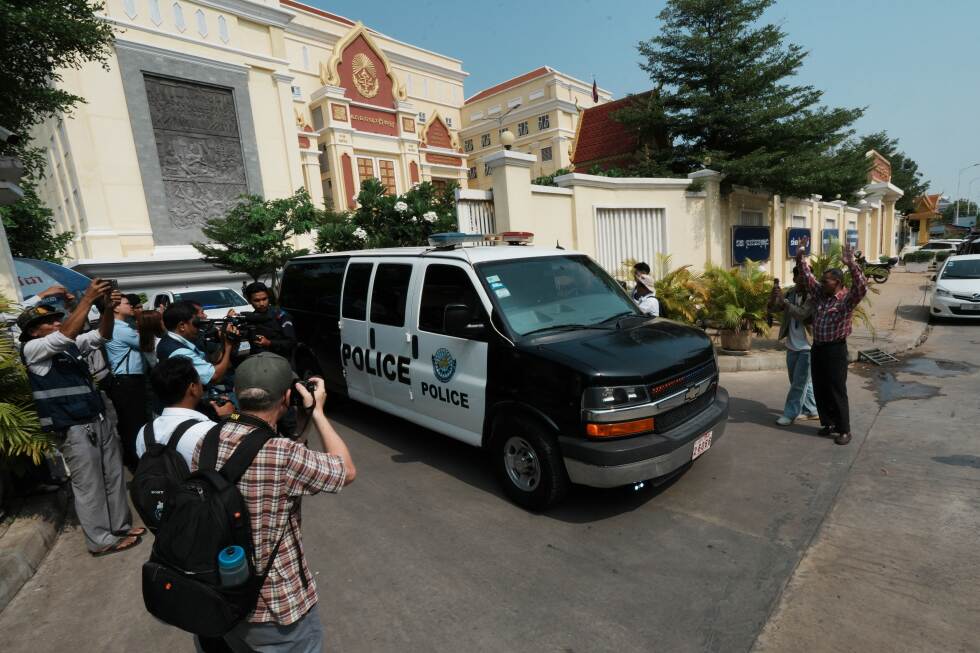
Cambodian opposition leader Kem Sokha’s treason conviction and 27-year prison sentence were upheld by the Phnom Penh Appeals Court on Thursday, reinforcing concerns about political freedom in Cambodia. The 72-year-old former leader of the now-dissolved Cambodia National Rescue Party will continue serving his sentence under house arrest and faces a five-year travel ban upon completion.
Kem Sokha was initially arrested in 2017 on allegations of conspiring with the United States to overthrow the Cambodian government. The primary evidence presented against him was a video showing him discussing political strategies with U.S.-based pro-democracy organizations. His formal conviction came in 2023 after a prolonged pretrial detention period.
During his recent appeals hearing, Kem Sokha firmly rejected the accusations, stating he “never conspired with any foreign country” and had always acted “in a spirit of nonviolence and national unity.” His lawyer, Pheng Heng, expressed regret over the court’s decision and indicated they would consider appealing to the Supreme Court.
The case has drawn international attention, with Western diplomatic missions voicing concern over the ruling. The British Embassy issued a statement calling for Kem Sokha’s release, noting that restoring his political freedoms “would help strengthen democracy in Cambodia.”
Cambodia’s judicial system has faced persistent criticism for its alleged role in silencing political opposition. While the government maintains it upholds the rule of law within an electoral democracy, critics point to a pattern of courts dissolving political parties or imprisoning opposition figures who pose threats to the ruling party.
Kem Sokha’s Cambodia National Rescue Party was the only meaningful challenger to Prime Minister Hun Sen’s Cambodian People’s Party before the Supreme Court dissolved it following Sokha’s arrest. This dissolution prevented the party from contesting the 2018 election, which resulted in Hun Sen’s party claiming all National Assembly seats.
Political power in Cambodia has remained firmly within Hun Sen’s circle even after his son, Hun Manet, succeeded him as Prime Minister in 2023. Despite the leadership change, observers note that Hun Manet has not implemented significant democratic reforms or liberalized the political system.
In a separate but related development, the Phnom Penh Municipal Court on Wednesday convicted 33 individuals linked to opposition against a controversial border development agreement. The defendants, including social media users, opposition politicians, and activists, were found guilty of “incitement to commit a felony” – a charge frequently employed in political cases in Cambodia.
According to the human rights organization Licadho, the sentences ranged from 18-month suspended terms to two years imprisonment, plus financial penalties of $1,000. Son Chumchuon, representing six defendants, indicated that those receiving the longest sentences would likely be released soon, having already served substantial time in pretrial detention.
These individuals had protested against the Cambodia-Laos-Vietnam Development Triangle Area, a regional framework established in 2004 to coordinate cross-border trade and migration. Critics claimed the agreement favored foreign interests and granted valuable land concessions to Vietnam – a particularly contentious issue given historical tensions between Cambodia and its eastern neighbor.
Although Cambodia withdrew from this agreement earlier in 2024, authorities have continued their crackdown on critics, with reports indicating over 100 arrests related to opposition against the pact.
These developments underscore ongoing concerns about democratic backsliding in Cambodia, where the space for political opposition and civil society has steadily narrowed over recent years, raising questions about the country’s trajectory under its current leadership.
Fact Checker
Verify the accuracy of this article using The Disinformation Commission analysis and real-time sources.

15 Comments
The Kem Sokha case is a worrying indicator of the erosion of democratic norms in Cambodia. Upholding his treason conviction despite a lack of credible evidence is a troubling development. I hope the Cambodian authorities will reconsider this decision and take steps to protect the rights of all citizens to participate in the political process.
This ruling is a blow to democracy and human rights in Cambodia. Kem Sokha’s conviction appears to be politically motivated, undermining the independence of the judiciary. The international community must continue pressing the Cambodian government to uphold its obligations to protect political pluralism and civil liberties.
This ruling is a setback for democracy and human rights in Cambodia. The Kem Sokha case appears to be a politically motivated attempt to silence a prominent opposition figure. I hope the international community will continue to pressure the Cambodian government to uphold the rule of law and protect fundamental political freedoms.
The Kem Sokha case is a concerning example of the shrinking political space in Cambodia. Upholding his treason conviction on questionable grounds undermines the principles of democracy and the rule of law. I hope the Cambodian authorities will reconsider this decision and take steps to foster a more inclusive and pluralistic political environment.
This case highlights the concerning erosion of political freedoms in Cambodia. The evidence against Kem Sokha seems questionable, and his lengthy detention raises serious due process concerns. I hope the Cambodian government can find a way to address political differences through democratic dialogue rather than heavy-handed tactics.
The Kem Sokha case is yet another troubling sign of the shrinking democratic space in Cambodia. Upholding his treason conviction reinforces the government’s intolerance of dissent and political pluralism. I hope Cambodia can find a path to strengthen its democratic institutions and protect the rights of all citizens.
The Kem Sokha case is a disturbing example of the shrinking political space in Cambodia. Criminalizing opposition figures on vague charges of treason sets a dangerous precedent. I hope the Cambodian authorities will reconsider this decision and take steps to protect fundamental freedoms.
The Kem Sokha case raises serious concerns about the state of political freedoms in Cambodia. Upholding his treason conviction on questionable grounds further entrenches the ruling party’s grip on power. I hope Cambodia can find a path forward that respects the rights of all citizens to participate in the political process.
This ruling is deeply concerning for the state of democracy in Cambodia. Kem Sokha’s lengthy detention and conviction on flimsy treason charges appear to be politically motivated. I hope the international community continues to push for his release and the restoration of fundamental political freedoms in the country.
This is a troubling development for democracy and human rights in Cambodia. Upholding the conviction of a prominent opposition figure on dubious treason charges is a worrying sign of the government’s intolerance for dissent. I hope the international community continues to pressure for Kem Sokha’s release and a restoration of political pluralism.
I agree, the lack of transparency and due process in this case is very concerning. The Cambodian government needs to demonstrate a genuine commitment to democratic principles and the rule of law.
The Kem Sokha case highlights the concerning trend of democratic backsliding in Cambodia. Upholding his treason conviction despite credible concerns about the fairness of the judicial process is deeply troubling. I hope the Cambodian government will reconsider this decision and take steps to protect the rights of all citizens to participate in the political sphere.
This ruling is a blow to the principles of democracy and the rule of law in Cambodia. Kem Sokha’s conviction on dubious treason charges seems like a transparent attempt to silence a prominent opposition figure. I hope the international community can exert pressure to ensure due process and political freedoms are upheld in Cambodia.
This is a concerning development for Cambodia’s democracy. Kem Sokha’s conviction on dubious treason charges seems like a transparent attempt to sideline a prominent opposition figure. I hope the international community can apply pressure to ensure due process and political freedoms are protected in Cambodia.
This ruling is a troubling development for democracy in Cambodia. The Kem Sokha case raises serious questions about the independence of the judiciary and the government’s commitment to protecting political pluralism. I hope the international community will continue to press for his release and the restoration of fundamental political rights in the country.