


Listen to the article
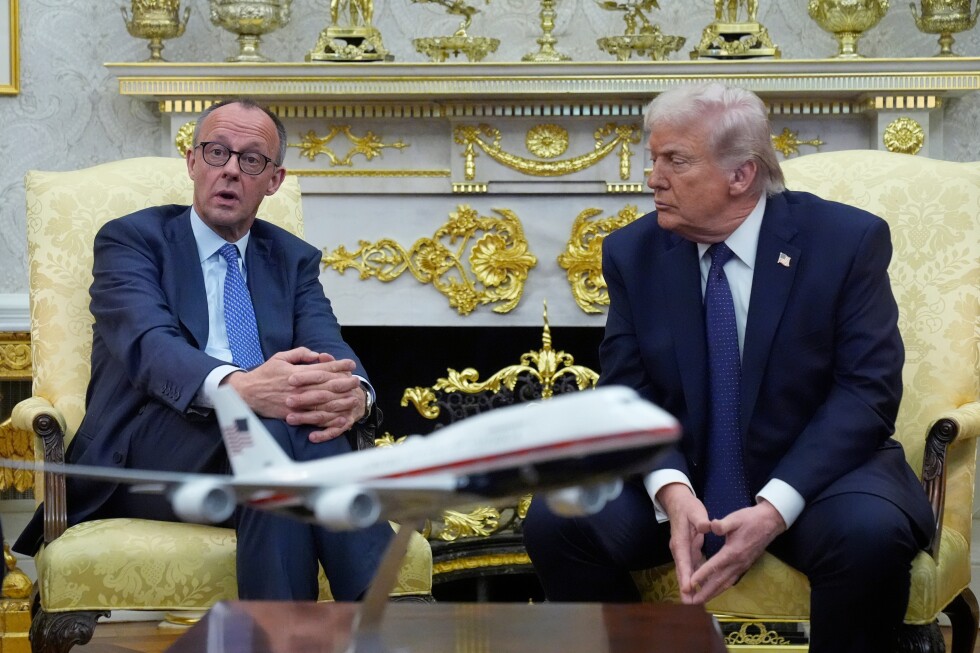
In a significant escalation of tensions with a key NATO ally, President Donald Trump threatened on Wednesday to reduce U.S. military presence in Germany, further straining relations with Chancellor Friedrich Merz over the ongoing U.S.-Israel war against Iran.
The threat came in response to Merz’s recent criticism that the United States was being “humiliated” by Iranian leadership and lacked a coherent strategy in the two-month-old conflict. Trump, who has frequently criticized NATO for not supporting American efforts in the war, made his intentions clear in a pointed social media post.
“The United States is studying and reviewing the possible reduction of Troops in Germany, with a determination to be made over the next short period of time,” Trump wrote.
This is not the first time Trump has moved to withdraw troops from Germany. During his initial term in office, he announced plans in June 2020 to remove approximately 9,500 of the 34,500 U.S. troops stationed in the country, citing Germany’s insufficient defense spending. However, that withdrawal never materialized, and President Joe Biden formally reversed the decision shortly after taking office in 2021.
The U.S. maintains several crucial military installations in Germany, including the headquarters for U.S. European Command and U.S. Africa Command, Ramstein Air Base, and Landstuhl Regional Medical Center—the largest American hospital outside the United States. A troop reduction could potentially impact operations at these strategic facilities.
Hours before Trump’s announcement, Merz had attempted to downplay tensions, stating that his personal relationship with Trump remained “as good as ever,” though he acknowledged having “had doubts from the very beginning about what was started there with the war in Iran.” The German leader also emphasized that his government maintained “good speaking terms” with the Trump administration.
The deteriorating relationship comes just months after what appeared to be a productive meeting between the two leaders. In March, shortly after the U.S. and Israel began their military campaign against Iran, Merz visited Trump at the White House. During that meeting, the German Chancellor expressed Germany’s willingness to collaborate on strategy for a post-current-regime Iran while voicing concerns about the global economic impact of a prolonged conflict.
Those economic concerns have intensified as the war has led to the effective closure of the Strait of Hormuz since February 28. The critical waterway, through which approximately 20% of the world’s oil supply previously flowed, has become a major economic pressure point for European economies.
“We are suffering considerably in Germany and in Europe from the consequences of, for example, the closure of the Strait of Hormuz,” Merz noted on Wednesday. “And in that regard, I urge that this conflict be resolved.”
Trump has shown little sympathy for the German position. Just a day before his troop reduction threat, he criticized Merz on social media, writing: “The Chancellor of Germany, Friedrich Merz, thinks it’s OK for Iran to have a Nuclear Weapon. He doesn’t know what he’s talking about!” The U.S. President added that it was unsurprising “that Germany is doing so poorly, both economically and in other respects!”
The public dispute highlights growing fractures within the NATO alliance regarding the Iran conflict, with European leaders increasingly concerned about both security implications and economic consequences of the ongoing war. As global oil prices remain volatile and supply chains continue to be disrupted, the pressure for diplomatic resolution has intensified—particularly from European allies bearing significant economic costs.
Analysts suggest this latest threat could further complicate NATO unity at a time when Western solidarity is being tested on multiple fronts, potentially playing into the hands of adversaries seeking to exploit divisions within the alliance.
Fact Checker
Verify the accuracy of this article using The Disinformation Commission analysis and real-time sources.

11 Comments
The U.S. troop presence in Germany has been a cornerstone of transatlantic security for decades. Cutting forces there could weaken NATO’s position, especially with the Iran situation still unresolved. This is a bold move by President Trump.
You raise a good point. Any reduction in the U.S. military footprint in Europe could embolden adversaries like Russia and disrupt long-standing security arrangements. This decision seems to have geopolitical implications beyond just the U.S.-Germany relationship.
While the U.S. and Germany have had their differences, the American military presence in Germany has been crucial for regional stability. Withdrawing troops could send the wrong signal and potentially embolden adversaries like Iran. I hope both sides can find a diplomatic solution.
Agree, maintaining a strong U.S. commitment to NATO is important, especially in light of the Iran situation. Reducing forces in Germany could be interpreted as a weakening of American influence in Europe, which could have far-reaching consequences.
The U.S. military footprint in Germany has been an integral part of the transatlantic security architecture for decades. Any drawdown of forces could destabilize the region and embolden adversaries like Iran. I hope the two countries can find a diplomatic resolution to this dispute.
Absolutely, maintaining a robust U.S. presence in Germany is crucial for NATO’s deterrence capabilities, especially in the face of growing geopolitical tensions. Reducing troops could send the wrong signal and undermine long-standing alliances.
President Trump’s threat to reduce U.S. troops in Germany appears to be a retaliatory move in response to Chancellor Merz’s criticism of the U.S. strategy in the Iran conflict. Escalating tensions between NATO allies is concerning and could undermine collective defense efforts.
The potential reduction of U.S. troops in Germany is a concerning development that could have far-reaching implications for European security and the transatlantic relationship. It’s critical that the U.S. and Germany work to resolve their differences through diplomatic channels.
Potential troop reductions in Germany are a high-stakes game of brinkmanship between the U.S. and its key NATO ally. Both sides will need to carefully weigh the strategic implications and avoid further escalation, as this could significantly impact European security.
Interesting development in the ongoing tensions between the U.S. and Germany. Reducing troops in Germany could have significant geopolitical implications, especially considering the Iran conflict. It will be important to watch how this situation unfolds.
Agreed, any troop withdrawals from Germany would be a major shift in the U.S.-NATO dynamic. Curious to see how Germany responds and if this leads to further strains in the alliance.