


Listen to the article
Nigerian authorities report a significant breakthrough in their ongoing battle against extremist groups as a 15-year-old former child soldier provides rare insight into the Islamic State West Africa Province’s (ISWAP) recruitment and training of minors.
Yusuf, whose name has been changed to protect his identity, escaped from ISWAP in February after spending two-thirds of his young life as a fighter. Abducted from his village at just five years old during a nighttime motorcycle raid, Yusuf was indoctrinated into the terrorist organization and fighting on the frontlines by age ten.
“You want to wear the uniform. You want to belong. You want to be seen as a hero,” Yusuf told The Times in an interview published last month, describing the psychological manipulation used to transform children into combatants.
The teenager’s testimony offers a window into ISWAP’s operations in the Lake Chad Basin, where the group has established a stronghold across portions of Nigeria, Niger, Chad, and Cameroon. Security analysts estimate ISWAP currently commands approximately 10,000 fighters, making it the largest Islamic State affiliate globally.
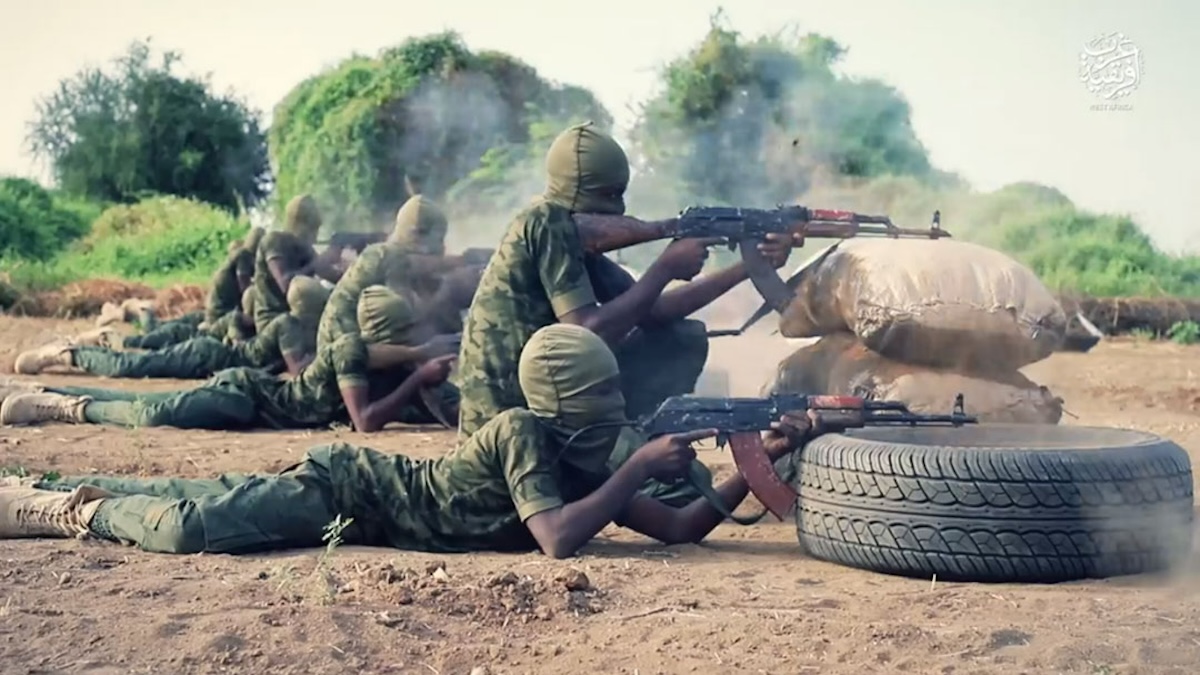
Child recruitment forms a cornerstone of ISWAP’s military strategy. The group maintains hundreds of training camps on Lake Chad’s remote islands, where children as young as five are taught to handle weapons ranging from AK-47 rifles to rocket-propelled grenades. These young fighters, dubbed “Cubs of the Caliphate,” represent an easily manipulated source of manpower.
“We use children to fight because if you begin training them at a young age they are fearless,” explained Ali Ajaban, a former senior ISWAP commander who defected in 2021 and now assists Nigerian authorities in counter-terrorism efforts. Ajaban himself once served as an instructor for child recruits during his five-year tenure with the group.
Yusuf described a brutal training regimen that began as soon as he could carry a weapon. Foreign fighters from the Middle East and North Africa provided specialized instruction in improvised explosive devices and drone operations, indicating ISWAP’s international connections and evolving tactical sophistication.
The teenager also revealed the harsh realities of life under ISWAP’s command structure, where disobedience could result in execution. “You could be beheaded,” he stated matter-of-factly, demonstrating how violence and death had become normalized in his worldview.
United Nations data underscores the global scale of child soldier recruitment. According to the UN’s most recent report on Children and Armed Conflict published in December 2025, over 7,400 children were recruited by state and non-state actors worldwide in the previous year. Nigeria ranks among the countries with the highest numbers of both abducted and recruited children.
“The violation was often compounded by other grave violations, such as killing and maiming, abduction and sexual violence,” the UN report noted. Abduction remains the fourth-highest verified violation affecting children in conflict zones, with 4,573 documented cases.
Yusuf’s defection came after communication with Ajaban, whose own departure from ISWAP in 2021 offered a template for escape. The Nigerian military facilitated Yusuf’s extraction in February, adding him to the growing number of former fighters being processed through the country’s disarmament, demobilization, and reintegration programs.
Security experts note that while such defections provide valuable intelligence, the challenge of reintegrating former child soldiers remains immense. Many carry profound psychological trauma and face stigmatization from communities devastated by ISWAP violence.
Regional security forces continue to battle ISWAP across the Lake Chad Basin, with international partners providing intelligence and material support. However, the group’s ability to replenish its ranks through child recruitment presents a persistent obstacle to establishing lasting security in the region.
Fact Checker
Verify the accuracy of this article using The Disinformation Commission analysis and real-time sources.

12 Comments
The testimony of this former child soldier provides a chilling window into ISWAP’s tactics. The psychological manipulation and indoctrination of minors is despicable and must be stopped.
Absolutely. Urgent action is needed to cut off ISWAP’s supply of child recruits and protect vulnerable communities from this horrific abuse.
ISWAP’s child recruitment practices are abhorrent and unacceptable. The international community must make combating this issue an urgent priority and provide the necessary resources and support.
Deeply troubling to hear of ISWAP’s continued exploitation of children in their terrorist activities. This is a grave violation of human rights that must be condemned. Protecting vulnerable youth should be the top priority.
Saddening to see ISWAP continuing to exploit children in their terrorist activities. These young victims deserve our utmost compassion and support as they seek to rebuild their lives.
While the testimony of this former child soldier is harrowing, it’s important that we listen to these stories and use them to inform more effective strategies to protect vulnerable youth from extremist groups.
This is a complex issue with no easy solutions, but the safety and wellbeing of children must be the top concern. I hope the authorities can ramp up efforts to disrupt ISWAP’s child recruitment operations.
Sadly, the use of child soldiers is all too common among extremist groups. It’s crucial that the international community works to intervene and provide support and rehabilitation for these young victims.
Agreed. Reforming and reintegrating former child soldiers is incredibly challenging but vital to break the cycle of violence.
The scale of ISWAP’s child soldier program is truly staggering. Decisive international intervention is required to combat this egregious human rights violation and provide rehabilitation for the victims.
While the scale of ISWAP’s child soldier program is deeply disturbing, I’m heartened to see the authorities taking steps to intervene and support the rehabilitation of these young victims.
This report highlights the crucial need to strengthen security and social services in the affected regions to prevent the further exploitation of children by terrorist organizations like ISWAP.