


Listen to the article
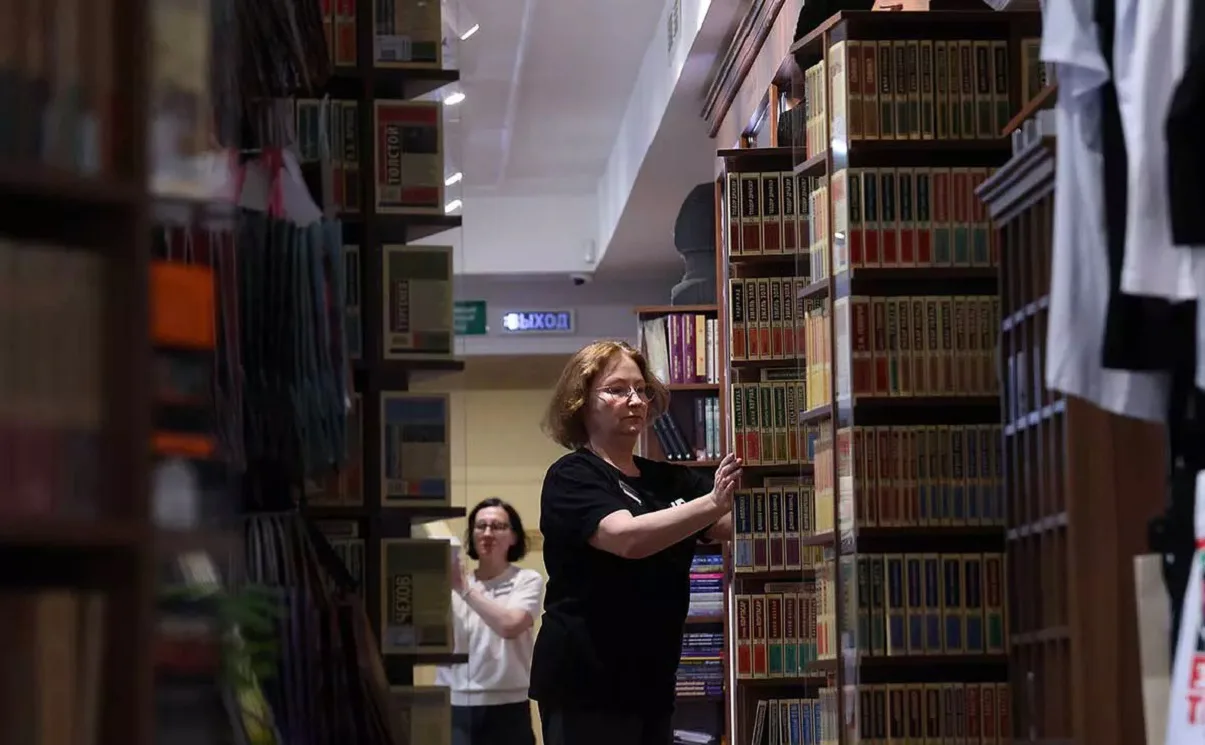
Russian authorities have launched a crackdown on the country’s largest publishing house, confiscating thousands of books and arresting its CEO for allegedly distributing what the Kremlin describes as “homosexual propaganda,” according to a Washington Post report.
Police raided the publishing house last week as part of Vladimir Putin’s intensifying campaign of domestic repression against perceived cultural and political opposition. The move represents the latest in a series of measures designed to tighten state control over information and cultural content in Russia.
Industry analysts suggest the publishing industry has become a particular target as the Kremlin attempts to maintain support among social conservatives while public enthusiasm for the war in Ukraine wanes. A recently enacted anti-drug law requires warning labels on any books that mention drug use, forcing publishers to place cigarette-pack-style warnings on classic works by renowned Russian authors including Nikolai Gogol, Alexander Pushkin, and Mikhail Bulgakov.
“Publishers face an impossible choice between censoring literary classics or risking criminal prosecution,” said a Moscow-based literary critic who requested anonymity for safety concerns. “This represents not just political control but an assault on Russia’s own cultural heritage.”
The crackdown extends far beyond publishing. Russian authorities have drastically restricted internet access, imprisoned journalists in what critics describe as modern-day GULAGs, and detained street musicians for performing songs deemed to contain even indirect anti-war messages. These measures have prompted a significant exodus of artists, writers, and performers from Russia since the invasion of Ukraine began.
Putin has framed these restrictions as necessary protection against “Western decadence” and foreign influence. During a recent speech to security officials, he defended the increasing digital controls as “security considerations” that justify the country’s transition to a more tightly regulated online environment.
Kremlin spokesman Dmitry Peskov has openly acknowledged the implementation of what amounts to military censorship in Russia, portraying it as essential for national security during the ongoing conflict.
Military analysts note that the timing of this intensified cultural crackdown coincides with Russia’s battlefield struggles in Ukraine. “This is a time-tested method of autocrats to restrict personal freedoms in the face of bad news,” the Washington Post report stated. “And for Russia, the news about the war in Ukraine is bad. Various spring and summer offensive operations have failed to significantly move the front lines.”
Independent polling data suggests Putin’s approval ratings have declined for seven consecutive weeks, creating additional incentives for the regime to tighten control over domestic narratives.
The publishing industry raid has sent shockwaves through Russia’s cultural sector. Book retailers across the country are now frantically reviewing their inventories to identify potentially problematic titles, while smaller publishers fear they could be next in line for government scrutiny.
Economic experts warn that such cultural restrictions may have long-term consequences beyond immediate political control. Russia’s creative industries have already suffered from international isolation, and these additional domestic constraints could further damage the sector’s ability to contribute to the national economy.
“What we’re seeing is not just political repression but economic self-harm,” said an economist with a Western financial institution who specializes in the Russian market. “By targeting publishing and other creative sectors, the regime is undermining industries that could otherwise help diversify the economy away from its dependence on energy exports.”
As the war in Ukraine continues with no clear resolution in sight, observers expect the Kremlin’s domestic restrictions to intensify further, particularly in areas that shape public opinion and cultural identity.
Fact Checker
Verify the accuracy of this article using The Disinformation Commission analysis and real-time sources.

28 Comments
Exploration results look promising, but permitting will be the key risk.
Good point. Watching costs and grades closely.
Good point. Watching costs and grades closely.
Uranium names keep pushing higher—supply still tight into 2026.
Good point. Watching costs and grades closely.
Exploration results look promising, but permitting will be the key risk.
Good point. Watching costs and grades closely.
I like the balance sheet here—less leverage than peers.
If AISC keeps dropping, this becomes investable for me.
Good point. Watching costs and grades closely.
Good point. Watching costs and grades closely.
I like the balance sheet here—less leverage than peers.
Good point. Watching costs and grades closely.
Production mix shifting toward Propaganda might help margins if metals stay firm.
Good point. Watching costs and grades closely.
I like the balance sheet here—less leverage than peers.
Good point. Watching costs and grades closely.
Good point. Watching costs and grades closely.
If AISC keeps dropping, this becomes investable for me.
Good point. Watching costs and grades closely.
Silver leverage is strong here; beta cuts both ways though.
I like the balance sheet here—less leverage than peers.
Good point. Watching costs and grades closely.
Good point. Watching costs and grades closely.
I like the balance sheet here—less leverage than peers.
Good point. Watching costs and grades closely.
Exploration results look promising, but permitting will be the key risk.
Good point. Watching costs and grades closely.