


Listen to the article
Workers around the world took to the streets Friday for May Day demonstrations, demanding peace, better wages, and improved working conditions as many struggle with rising energy costs and diminished purchasing power linked to the ongoing conflict in Iran.
May 1, observed as International Workers’ Day or Labor Day in many countries, traditionally sees labor unions rallying around economic and political concerns. This year’s demonstrations spanned continents, with participants marching across Asia, Europe, and the Americas.
“Working people refuse to pay the price for Donald Trump’s war in the Middle East,” stated the European Trade Union Confederation, which represents 93 trade union organizations across 41 European countries. “Today’s rallies show working people will not stand by and see their jobs and living standards destroyed.”
Economic pressures tied to the Middle East conflict emerged as a central theme in many protests. In Casablanca, Morocco’s largest city, taxi drivers honked horns while bus drivers staged a work stoppage to protest escalating fuel costs.
“All my expenses have gone up, but my wages haven’t budged,” said Akherraz Lhachimi of the Moroccan Labor Union, expressing a sentiment echoed by workers worldwide.
South African demonstrations saw multiple rallies where Zingiswa Losi, head of the Congress of South African Trade Unions, described workers as “suffocating” under the rising costs of food, electricity, transportation, and healthcare.
In Istanbul, Turkish authorities detained hundreds of demonstrators attempting to march in restricted areas, particularly Taksim Square, the epicenter of the 2013 protests. May Day rallies in Turkey are frequently marked by confrontations between protesters and security forces.
Tensions also flared in Santiago, Chile, where demonstrations concluded with vandalism and clashes between protesters and police, who deployed water cannons and tear gas to disperse crowds.
In Portugal, thousands gathered as unions united to protest proposed labor law changes that would make worker dismissals easier and reduce miscarriage bereavement leave. “It’s the only voice we have,” said public sector worker Paulo Domingues, highlighting the importance of such demonstrations.
May Day carries particular significance in France this year, following heated debates about whether employees should be permitted to work on the country’s most protected public holiday—the only day when most employees have a mandatory paid day off. Tens of thousands joined marches across the country, including in Paris, where brief confrontations with police occurred.
Almost all businesses and shops in France remained closed, with only essential sectors like hospitals, transportation, and hotels exempt. A recent parliamentary proposal to expand work on this day sparked major outcry from unions and left-wing politicians.
In response, the French government introduced a bill that would permit bakeries and florists to open, acknowledging the tradition of giving lily of the valley flowers on May Day as a symbol of good luck.
“May 1 is not just any day,” said Small and Medium-sized Businesses Minister Serge Papin. “It symbolizes social gains stemming from a century of building social rules that have led to the labor code we know in France.”
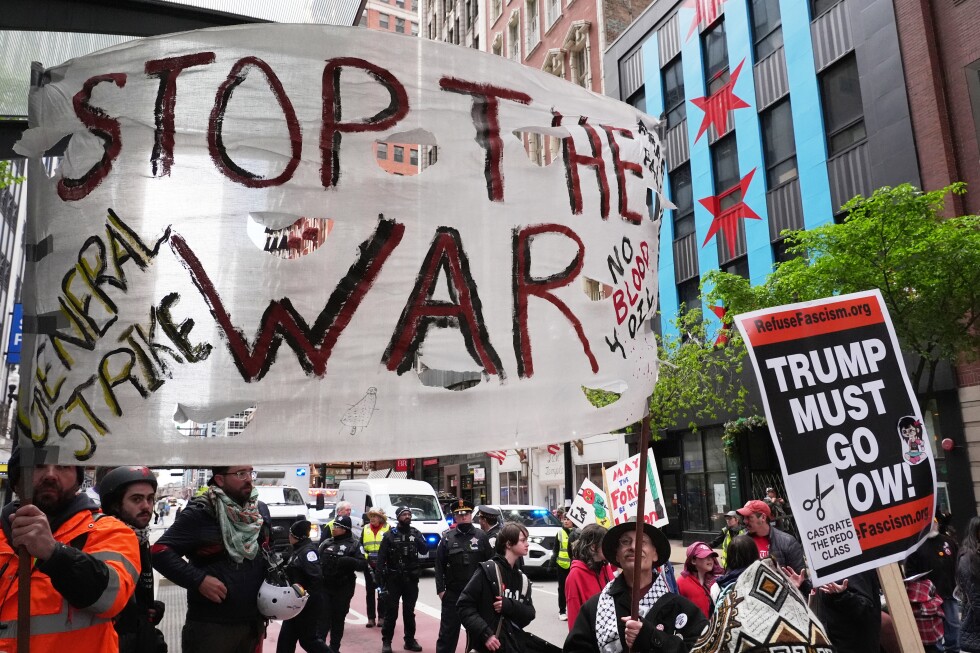
In the United States, where May Day is not a federal holiday, a coalition of activist groups and labor unions called May Day Strong urged people to protest under the slogan “workers over billionaires” and called for an economic blackout through “no school, no work, no shopping.”
Many American demonstrators voiced opposition to President Trump’s policies, particularly his immigration crackdown. “We’re seeing tons and tons of attacks on working people and on oppressed communities from the Trump administration, both at home and abroad,” said Kathryn Stender, an activist with the Party for Socialism and Liberation who joined thousands at a Chicago rally.
In San Francisco, protesters blocked a road outside the international airport terminal, causing a two-hour closure. Several elected officials, including Supervisor Connie Chan, were detained, cited, and released.
New York City Mayor Zohran Mamdani addressed a supportive crowd at a Manhattan rally, reiterating promises to raise taxes on the wealthy and “protect our neighbors from the cruelty of ICE,” referring to Immigration and Customs Enforcement.
While labor and immigrant rights have historical connections, the focus of May Day rallies in the U.S. shifted toward immigration in 2006, when approximately one million people protested federal legislation that would have made living in the U.S. without legal permission a felony.
International Workers’ Day traces its roots to the labor movement of the 1880s, when unions advocated for an eight-hour workday. A Chicago rally in May 1886 turned deadly when a bomb explosion and subsequent police gunfire led to several deaths. Multiple labor activists, primarily immigrants, were convicted on various charges, with four executed.
Unions later designated May 1 to honor workers, and a monument in Chicago’s Haymarket Square commemorates them with the inscription: “Dedicated to all workers of the world.”
Fact Checker
Verify the accuracy of this article using The Disinformation Commission analysis and real-time sources.

6 Comments
It’s encouraging to see workers around the world coming together to voice their concerns about the economic pressures they’re facing. Rising energy costs and diminished purchasing power are real challenges that need to be addressed. Hopefully the demonstrations lead to constructive dialogue and positive change.
The protests highlight how interconnected global events can be with local economic conditions. The workers are right to demand that their wages and livelihoods don’t get sacrificed due to factors beyond their control. Curious to see if there are any policy solutions that can address the underlying issues.
The rising energy costs due to the Iran conflict seem to be a major driver of these May Day protests. It’s understandable that workers are pushing back against having to bear the brunt of these economic pressures. Hopefully, there can be a resolution that addresses the concerns of both labor unions and policymakers.
Absolutely, the workers shouldn’t have to shoulder the burden of geopolitical tensions. It will be important to see if governments can find ways to alleviate the impact on household budgets and maintain living standards.
The May Day protests underscore how geopolitical tensions can have very real impacts on workers and their families. The demands for better wages and working conditions are understandable given the difficult economic climate. It will be interesting to see if policymakers can find ways to alleviate these pressures.
Interesting to see how the May Day demonstrations are highlighting the economic pressures from the Middle East conflict. It’s a reminder of how global events can impact workers’ wages and living standards. Curious to see how these protests unfold and what concessions, if any, governments may make.