


Listen to the article
In a cluttered office in Rutland, Vermont, journalist Tom Haley hunches over his notebook, surrounded by piles of papers and worn furniture. The scene, captured by photographer Ann Hermes, reveals the unglamorous reality of local journalism – a stark contrast to popular perceptions of the profession.
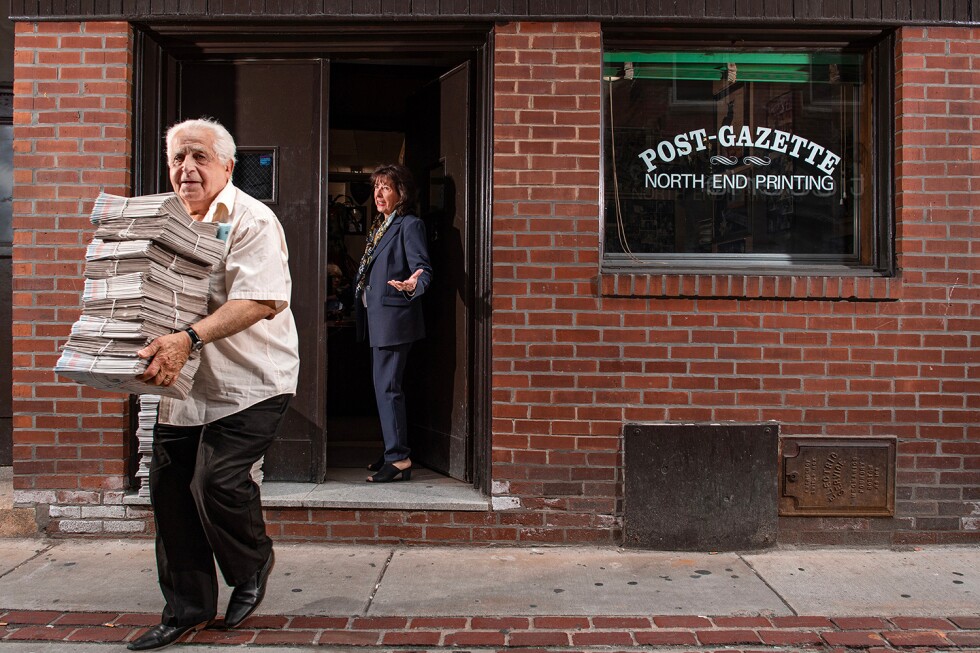
Hermes, a Brooklyn-based photographer, has made it her mission to document these vanishing spaces. She has visited approximately 50 newsrooms across the United States, primarily in smaller towns and cities, creating a visual archive of an industry in steep decline. Already, one of the newspapers she photographed in Alameda, California has ceased operations.
“I love these spaces,” Hermes says. “I love spending time with these people. The more time I spent in newsrooms and hearing about their difficulties of life, it took on a different agenda. I couldn’t have spent so much of my free time on this if I didn’t enjoy it.”
Her photographs dispel the notion of journalism as an elite profession, particularly at the local level. The images reveal working-class environments with shabby surroundings that would make interior designers cringe: Post-it notes clinging to computer monitors, whiskey bottles perched on bookshelves alongside office supplies, stained carpets, and antacid pills atop microwaves.
As writer Zach Helfand of The New Yorker aptly noted: “News people tend to pay their surroundings little mind. There’s too much to do and always a deadline looming. What you see hanging around these rooms isn’t designed but improvised, and more revealing.”
The physical newspaper itself appears throughout Hermes’ work – stuffed into cubbies, yellowing with age, jumbled in delivery vans, or stacked in precarious piles. These artifacts are becoming increasingly rare as publications abandon print editions for digital-only formats, eliminating a tangible connection to community news.
Perhaps most poignant are the newspaper “morgues” – a term becoming increasingly literal. These archives contain cut-out articles stuffed into cardboard files, once the primary resource for research before digital databases. These morgues hold the collective memory of communities, histories that risk disappearing when local papers fold.
“This is really a love letter to local journalism,” Hermes emphasizes. “It’s not a ‘gotcha’ piece.”
The project has evolved into a deep exploration of the “true believers” who remain committed to journalism despite mounting challenges. These professionals endure criticism from civic leaders whose decisions they question and weather the harsh business realities that have driven many colleagues into different careers.
“The rewards are diminishing in doing this job,” Hermes observes. “You have to really believe in the fundamental civic service that you are providing. Otherwise, why else would you do it? It’s a really difficult job.”
Her work comes during a critical period for local journalism. Over the past two decades, more than 2,500 newspapers have closed across America, creating “news deserts” where communities lack reliable local information. The remaining outlets often operate with skeleton staffs after multiple rounds of layoffs, yet continue to serve vital civic functions by covering local government, schools, and community issues.
Hermes has published her photographs on her website and aspires to compile them into a book someday. Her role has expanded beyond documentary photography into advocacy, as she plans exhibitions in the communities she’s visited to highlight the importance of local journalism.
Her ambitious goal is to photograph 100 newsrooms total, more than doubling her current collection. “I feel like I learn something new in every newsroom I visit,” she says.
As local news outlets continue to face existential threats from declining advertising revenue, digital competition, and changing consumer habits, Hermes’ work serves as both documentation and warning – capturing the physical spaces and dedicated professionals who keep community journalism alive, even as their numbers dwindle.
Fact Checker
Verify the accuracy of this article using The Disinformation Commission analysis and real-time sources.

8 Comments
Local journalism may not be as flashy as national news, but it’s arguably even more essential for keeping communities informed and connected. I hope this project sparks more support and appreciation for these hardworking reporters and editors.
In an era of declining local news, this photographer’s work is a valuable record of a disappearing institution. These gritty, unglamorous spaces are where the real stories of communities are uncovered and reported. We should all be grateful for their efforts.
It’s a shame to see local newsrooms disappearing. These places are the lifeblood of communities, even if they may not look glamorous. Kudos to the photographer for capturing these spaces before they vanish.
While the glamour of journalism may live in the big city, the real heart of the profession is in these small-town newsrooms. I’m glad someone is shining a light on their important, often unglamorous work.
Interesting to see the contrasts between the public perception of journalism and the day-to-day realities captured in these photographs. It’s a reminder that the news industry faces real challenges, especially at the local level.
This photographer is doing important work to document the realities of local journalism. The images paint a vivid picture of the challenges these newsrooms face, which is so often overlooked. I hope this raises awareness of their vital role.
Absolutely. Local news is the foundation for an informed citizenry, and these newsrooms deserve our support, not neglect. Hopefully this project inspires more people to appreciate and protect them.
These images provide a fascinating window into the changing landscape of local news. It’s a sobering reminder of the pressures these newsrooms face, and the vital role they play that is so often overlooked. Kudos to the photographer for this important documentation.