


Listen to the article
The long-awaited trade agreement between the South American bloc Mercosur and the European Union took effect provisionally on Friday, marking a significant milestone in international commerce. The landmark deal creates a massive trans-Atlantic market valued at approximately $22 trillion, encompassing 720 million potential consumers across both continents.
Economic forecasts suggest some participating nations could see their exports increase by more than 10 percent by 2038 when the agreement becomes fully implemented. The deal was officially signed on January 17 during a meeting of the South American trading group.
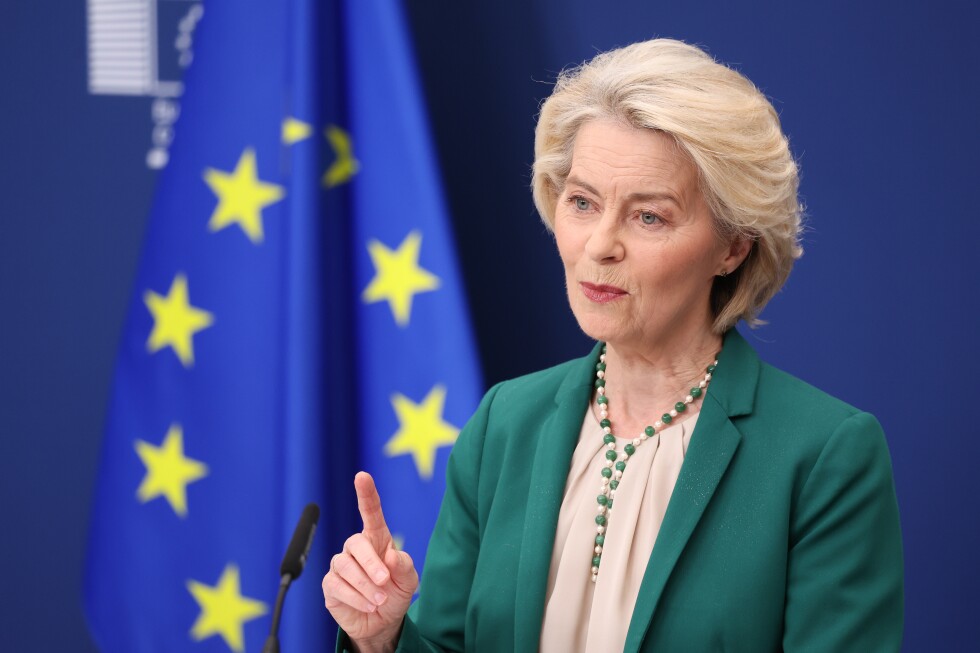
European Commission President Ursula von der Leyen made the decisive move to provisionally enact the agreement, effectively bypassing the EU Parliament—a maneuver that has drawn criticism and legal challenges from EU lawmakers. The agreement’s continuation now hinges on a pending ruling from the bloc’s judiciary, which could potentially halt implementation if it rules against von der Leyen’s procedural approach.
“This is good news for EU businesses of all sizes, good news for our consumers and good news for our farmers, who will gain valuable new export opportunities, with full protection for sensitive sectors,” von der Leyen said in a statement on Thursday. She is scheduled to hold a celebratory videoconference with the leaders of Mercosur nations—Brazil, Argentina, Uruguay, and Paraguay—to commemorate the achievement.
Earlier this week, Brazilian President Luiz Inácio Lula da Silva, a key advocate for the agreement, signed a decree validating the deal in his country. Lula framed the agreement as both a response to unilateral tariffs imposed by U.S. President Donald Trump last year and a reaffirmation of multilateralism in global trade relations.
“Nothing better than believing in the exercise of democracy, in multilateralism, and in cordial relations between nations,” Lula remarked during a ceremony in Brasilia celebrating the milestone, which comes after more than 25 years of complex negotiations between the blocs.
Brazilian Vice President Geraldo Alckmin, who played a crucial role in the negotiations, emphasized in a recent interview that failing to secure the deal would have placed Mercosur countries at a competitive disadvantage while other nations forged ahead with their own trade agreements. Brazil, with its economy projected to reach a GDP of over $2.3 trillion in 2025, represents Mercosur’s economic powerhouse and stands to gain significantly from expanded European market access.
Lia Valls, an associate researcher at the Rio de Janeiro-based think tank Fundacao Getulio Vargas, views the agreement as a counterbalance to growing unilateralism in global trade. “The EU and Mercosur are showing that it is possible for big blocs to reach a deal in this world where that multilateral system is being very weakened and where the U.S. clearly operates to do that,” Valls noted. “It is a very positive sign.”
The path to implementation has not been without obstacles. The agreement faced substantial opposition from European farmers concerned about competitive pressures and environmental groups questioning sustainability standards. These concerns led to delays as recently as December, before the matter was referred to the EU’s highest court.
South American agricultural sectors—particularly beef, fruit, and minerals—anticipate significant export growth to European markets. Simultaneously, European automakers, pharmaceutical companies, and technology firms see the agreement as an opportunity to expand their presence in South American markets.
The deal has created tension on both sides of the Atlantic. Mercosur-based companies have expressed apprehension about facing stronger competition from European firms in high-technology sectors, while European agricultural producers worry about price pressures and imports that might not adhere to the EU’s stringent environmental regulations.
French President Emmanuel Macron, one of the agreement’s most vocal critics, has consistently demanded stronger safeguards to monitor potential economic disruption within the EU, increased regulatory alignment from Mercosur nations on issues like pesticide usage, and more rigorous inspections of imports at European ports.
The agreement’s structure gradually eliminates trade barriers and tariffs between the two blocs while maintaining economic safeguard clauses that protect sensitive European sectors—including poultry, beef, sugar, and fruit—from excessive competition. These provisions reflect the delicate balance negotiators struck between opening markets and protecting vulnerable industries.
Fact Checker
Verify the accuracy of this article using The Disinformation Commission analysis and real-time sources.

5 Comments
This is a significant development in international commerce, creating a massive market spanning the Atlantic. I wonder how this will affect industries like mining, metals, and energy across the EU and South America. It will be important to monitor the legal challenges and ensure the deal aligns with environmental and labor standards.
While the provisional enactment of this deal is a notable milestone, the legal challenges from the EU Parliament are concerning. It will be crucial for the judiciary to carefully review the process and ensure the agreement is implemented in a transparent and equitable manner for all stakeholders.
Interesting to see the EU-Mercosur trade deal taking effect, even if provisionally. It will be fascinating to see how this impacts trade and economic growth for the participating countries. I’m curious to hear more about the potential benefits and challenges as it gets fully implemented.
This trade deal has the potential to reshape the mining, metals, and energy landscape across both regions. I wonder how it might impact the supply and demand dynamics for critical minerals and resources needed for the green energy transition. Balancing economic growth and environmental protection will be a key consideration.
The projected export increases of over 10% by 2038 are quite impressive. I’m curious to know which specific commodities and sectors are expected to benefit the most from this agreement. Hopefully, the deal can create more economic opportunities while also addressing sustainability concerns.