


Listen to the article
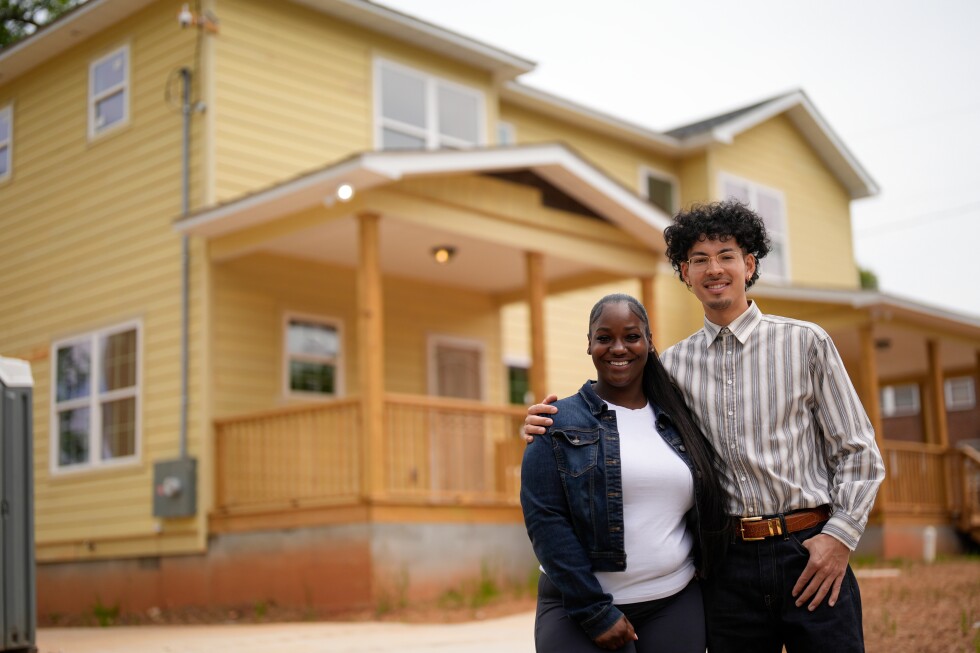
Ozzy Herrera walks through the wooden frame of what will soon be his first home in Atlanta’s Sylvan Hills neighborhood, his mind already decorating the space—a brown leather sofa, terra-cotta walls, and a bar cart near the kitchen.
“It’s special. It’s magical,” says the 27-year-old airport worker who never imagined homeownership would be within his reach at this age.
Herrera’s home is one of 24 affordable housing units being constructed during Habitat for Humanity’s 40th Carter Work Project, returning to Atlanta for the first time since 1988. Nearly 1,000 volunteers will descend on the site this May to complete the intensive weeklong build—part of a legacy program named after former President Jimmy Carter and his late wife Rosalynn that has constructed approximately 5,000 homes across 14 countries since 1984.
The Sylvan Hills development, called Langston Park, represents a significant evolution for Habitat for Humanity as it celebrates its 50th anniversary. Beyond merely building individual homes, the organization is now embracing a broader role as a real estate developer amid America’s worsening affordable housing crisis.
“The gap between what a family can afford and what it costs to create that unit of housing is the widest it has been in modern history,” explains Jonathan Reckford, CEO of the international organization.
This strategic shift comes as many smaller developers have either failed to recover from pandemic-related losses or have gone out of business entirely, creating a vacuum in affordable housing construction at a time when it’s most needed.
Habitat purchased the 8-acre Sylvan Hills property in 2015, previously home to a saw-blade manufacturer, and successfully navigated the rezoning process to convert it from industrial to residential use. The project marks another milestone—it’s the first time Atlanta Habitat for Humanity will build multifamily townhomes alongside single-family homes.
“We do believe it’s important to get the best use out of every precious piece of land that we’re able to acquire and come by so that we can serve more families,” says Atlanta Habitat for Humanity President and CEO Rosalyn Merrick.
Each home in Langston Park costs approximately $200,000 to build. Future homeowners like Herrera will pay a monthly mortgage based on their income, with no interest charged by Habitat. The organization envisions eventually adding 40 more homes to the site, creating a substantial new affordable community.
For 27-year-old Phileena Daniel, another qualified homebuyer, the development represents stability after two years of housing insecurity, including time spent in a unit infested with rats and roaches.
“Sometimes we don’t see ourselves going far in life as young Black women in this society,” she reflects. “This is giving us an opportunity to expand.”
Housing experts praise Habitat’s evolution into community development. Vincent Reina, urban economics and planning professor at the University of Pennsylvania, calls it “a classic example of a nonprofit organization really trying to be responsive to community needs.”
“They can still be true to their core mission, which is advancing homeownership opportunities, but they are also acknowledging that we need a diverse set of housing solutions to really meet the needs of individuals,” adds Reina, who founded the Housing Initiative at Penn.
The organization’s expanded approach comes at a critical moment. Research published by Reina and Benjamin J. Keys, a Wharton real estate and finance professor, found that high home prices coupled with 30-year mortgage rates exceeding 7% have made homeownership unattainable for even moderate-income households in nearly all of the nation’s 98 most expensive metro areas.
This affordability crisis has prompted legislative action, with both the House and Senate passing different affordable housing bills that lawmakers are now working to reconcile before sending to President Trump. While Trump has signed executive orders to reduce housing regulatory burdens and help smaller banks provide mortgages, his proposed 2027 budget seeks cuts to the Department of Housing and Urban Development and elimination of numerous community development programs that currently support affordable housing construction.
For Herrera, his future home represents more than just shelter. It offers security for his family—including his parents, with his mother having battled breast cancer—and provides financial stability that could help him pursue his dream of opening a coffee shop. After previous forced moves due to rising Atlanta rents that drained his resources and delayed his business plans, homeownership through Habitat offers a new foundation.
“Now, I can finally take some risks,” he says, his voice full of hope for the future.
Fact Checker
Verify the accuracy of this article using The Disinformation Commission analysis and real-time sources.

14 Comments
It’s great to see former President Carter and his wife Rosalynn still actively involved in this impactful program after all these years. Their leadership has been instrumental to Habitat’s success.
The scale of 1,000 volunteers building 24 homes in a single week is really impressive. This shows the power of community engagement to drive tangible results.
The Sylvan Hills project represents an exciting evolution for Habitat as they adapt to the evolving affordable housing landscape. I hope this community-oriented approach can be replicated elsewhere.
Habitat’s legacy of delivering high-quality, affordable homes through volunteer labor is truly inspiring. This new Atlanta development seems poised to continue that tradition.
Excellent to see Habitat for Humanity leveraging volunteer power to create affordable homes in Atlanta. This program has a great track record globally and it’s inspiring to see the Carters’ enduring commitment to this cause.
The affordable housing crisis is a major challenge, so initiatives like this that increase access to homeownership are crucial. Kudos to the volunteers for their hard work.
The Carters’ personal involvement and commitment to Habitat for Humanity over decades is truly remarkable. Their continued leadership on this issue is inspirational.
Habitat’s focus on empowering first-time homebuyers like Ozzy Herrera is critical. Increasing homeownership opportunities is key to building stronger, more equitable communities.
Habitat for Humanity’s evolved role as a real estate developer is an innovative approach to addressing the affordable housing shortage. Integrating these homes into the broader community is an important next step.
I’m curious to learn more about the specific design and sustainability features of these new homes. Building energy-efficient, resilient housing is key.
Habitat for Humanity’s shift to a more comprehensive real estate development model is an intriguing strategic move. I’ll be interested to see how this changes their community impact over time.
Homeownership is such a crucial path to wealth-building and stability. Initiatives that make it more accessible are vital, especially for underserved populations.
Habitat’s 50th anniversary is a major milestone, and the Carter Work Project’s lasting impact is a testament to their enduring mission. Expanding into real estate development is a smart strategic shift.
It’s heartening to see an organization like Habitat for Humanity innovating to meet the growing need for affordable housing. This Atlanta project looks like a promising model.