


Listen to the article
California’s $20 Billion Delta Tunnel Project Advances Despite Significant Hurdles
Governor Gavin Newsom celebrated a milestone last week as his ambitious $20 billion Delta tunnel project cleared another regulatory hurdle. However, water policy experts caution that the project still faces formidable challenges before becoming reality.
For more than 50 years, California leaders have debated rerouting water around, rather than through, the Sacramento-San Joaquin Delta. Newsom’s proposal would construct a 45-mile bypass to pipe Sacramento River water directly to a reservoir on the California Aqueduct, with the goal of securing water supplies for two-thirds of California’s population against climate change threats and natural disasters.
The Delta Stewardship Council voted six-to-one to require the Department of Water Resources to address just two of the numerous challenges raised by project opponents. While Newsom declared “we are closer than ever to seeing this important piece of infrastructure completed,” significant obstacles remain.
These include recent court rulings undermining California’s financing plans, pending water rights decisions from state regulators, and uncertainty about whether water agencies will commit to the project’s costs. Jeffrey Mount, senior fellow at the Public Policy Institute of California, describes these as “existential” challenges. “You’ve got some pretty tough hurdles ahead,” he noted.
The Sacramento-San Joaquin River Delta serves as the heart of California’s water system, where state and federal pumps deliver Northern California river water to cities and farms in the southern half of the state. However, the Delta ecosystem is collapsing under this strain, suffering from algal blooms, degraded water quality, and endangered fish species.
Delta residents, environmentalists, and fishing industry representatives fear the tunnel would exacerbate these problems. Though voters rejected an earlier version of the project in the 1980s during Jerry Brown’s first gubernatorial term, subsequent governors have continued pushing various iterations forward.
Carrie Buckman, environmental program manager for the tunnel project, suggests construction could begin as early as 2029 and last approximately 13 years. With Newsom serving his final year as governor, however, the political timeline is growing short.
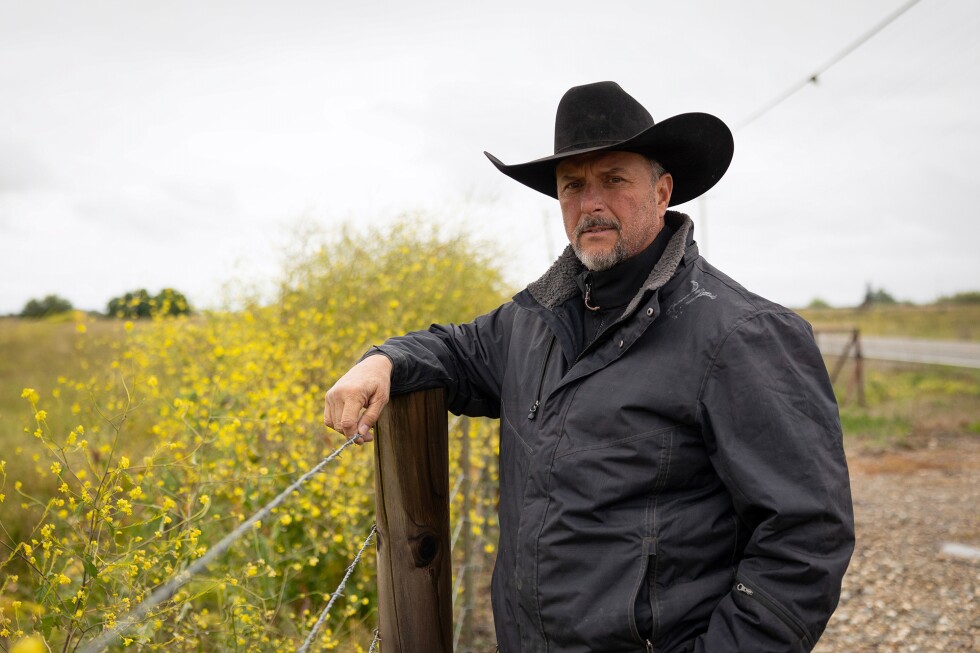
Meanwhile, Delta communities remain in limbo. “Nobody seems to care about the people out here on the ground,” said Duane Martin Jr., a third-generation cattleman whose operation would be directly affected by the project.
Martin worries about the impact of truck traffic, noise, a concrete batch plant, and the roughly 200-acre pile of tunnel excavation material planned for land where his cattle have grazed for decades. “They’re going to change the Delta area forever,” he said.
Water management experts acknowledge the Delta’s vulnerability. Aging levees risk failure from earthquakes and climate-fueled storms, while sea level rise threatens to flood the system with saltwater. “It’s about water supply,” Buckman explained, as California faces increasingly extreme swings between wet and dry periods.
Mount believes the tunnel’s construction is inevitable. “If you don’t build it in this generation, you’ll build it in the next,” he said. “Build a tunnel, or start a very painful process of really cutting back on water supplies from the Delta.”
Cost estimates vary dramatically. The Department of Water Resources projects $20.1 billion, while an economic assessment commissioned by opponents suggests $60 to more than $100 billion. The financing mechanism remains uncertain after courts ruled the department’s plan to issue revenue bonds “exceeded its delegated authority.” In April, the California Supreme Court refused to review the case.
So far, no water agency has committed to funding the tunnel. The federal government and the irrigation districts it supplies have already opted out. “Ag, at large, cannot afford to pay for large infrastructure projects,” explained Jennifer Pierre, general manager for the State Water Contractors association.
This leaves the bulk of the cost with urban water suppliers and their customers. The Metropolitan Water District of Southern California, which serves half the state’s population, is already paying nearly half the tunnel’s planning costs while simultaneously investing heavily in local recycled water supplies. Its board isn’t expected to vote on construction funding until 2027 – after Newsom leaves office.
State regulators are currently conducting hearings about water rights that could extend through summer, while Newsom continues advocating for legislative fixes to financing and other roadblocks.
For Delta residents like Martin, the fight continues. One battleground involves land where he grazes cattle that’s also part of Harvest Water, California’s largest agricultural recycled water project. The $400 million state-funded initiative would provide treated wastewater to 16,000 acres of farmland and create wildlife habitat.
However, the Department of Water Resources plans to build a nearly 600-acre construction complex with a permanent 214-acre mound of excavated tunnel materials on the same site. The Delta Stewardship Council has ordered the department to resolve this conflict.
“I always thought that this was going to be [the department’s] Achilles heel,” said Kelley Taber, an attorney representing the sewer district behind Harvest Water. “Among the multitude of disastrous impacts to the Delta, it’s the most obvious fatal flaw.”
If the state proceeds, it will need to buy or seize the land through eminent domain. Martin expects a fight: “They’re gonna have to take it. I’ve got a lot of friends that leave, but I ain’t about to quit. I’m a fighter, and I’m going to stay here and fight for it to the death.”
Fact Checker
Verify the accuracy of this article using The Disinformation Commission analysis and real-time sources.

9 Comments
The Delta tunnel project is hugely ambitious and complex. I’m curious to see if California can overcome the many legal, regulatory, and financing hurdles to make it a reality. It would be a major infrastructure achievement, but also faces strong opposition from environmental groups.
The $20 billion price tag on the Delta tunnel is staggering. I wonder if that kind of investment could be better spent on more distributed, sustainable water solutions instead of this massive and controversial infrastructure project.
That’s a great point. Distributed solutions like groundwater recharge, water recycling, and conservation may be more cost-effective and have less environmental impact than a single large-scale tunnel.
Securing California’s water supplies against climate change and disasters is vital, but the Delta tunnel seems like a controversial and expensive solution. I wonder if there are more cost-effective and less environmentally disruptive alternatives that could be explored.
This is an important story for anyone following the politics and economics of California’s water management. The Delta tunnel plan has been debated for decades, and it’s interesting to see Newsom push it forward despite the obstacles. I’ll be curious to see how this plays out.
Absolutely, the political dynamics around this project are fascinating. It pits environmental concerns against economic and water security priorities. I’ll be following the developments closely.
As someone who follows the commodities and energy sectors, I’m very interested in the implications of this project for industries that rely on stable, affordable water supplies in California. The Delta tunnel could be a game-changer, but the challenges it faces are formidable.
This is a high-stakes issue for California’s economy and environment. I hope the state can find a way to address its water security needs in a balanced, sustainable manner – whether through the Delta tunnel or alternative solutions. It’s a complex problem without easy answers.
As a mining and commodities investor, I’m watching this project closely. Reliable water infrastructure is crucial for industries like mining, agriculture, and energy production. But the Delta tunnel faces so many challenges – I’m skeptical it will be completed anytime soon.