


Listen to the article
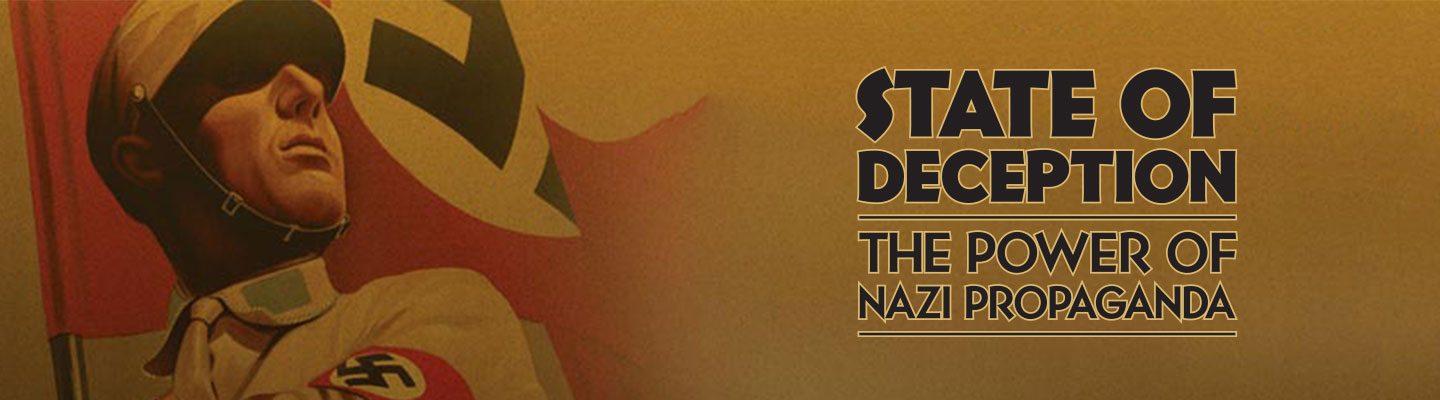
In a sobering examination of one of history’s darkest chapters, the exhibition “State of Deception: The Power of Nazi Propaganda” offers visitors a comprehensive look at how the Nazi regime weaponized communication to devastating effect. Opening with Hitler’s chilling 1924 observation that “propaganda is a truly terrible weapon in the hands of an expert,” the exhibition chronicles how Nazi leaders pioneered manipulation techniques that changed the course of history.
The main exhibition, produced by the United States Holocaust Memorial Museum, meticulously documents the Nazis’ carefully orchestrated propaganda campaign that capitalized on emerging technologies of the early 20th century. Visitors can observe how Hitler and his regime utilized movies, recordings, and radio broadcasts to disseminate their ideology to the German public.
The power of visual communication is prominently featured, showcasing how the Nazis employed striking imagery in posters and advertisements designed for maximum public impact through simplified messaging. The exhibition reveals how Hitler’s radical programs exploited Germans’ yearning for a strong national identity during the turbulent 1930s, a period marked by economic hardship and political instability.
Particularly disturbing are displays featuring newspapers, documents, and even children’s toys that demonstrate how the Nazi regime cultivated support for war, persecution, and eventually genocide by scapegoating Jews and other marginalized groups within German society. These artifacts illustrate the insidious way propaganda penetrated every aspect of daily life in Nazi Germany.
Complementing the main exhibition is “On the Texas Homefront,” a locally curated component that connects these historical events to Texas. Original artwork from a Dallas editorial cartoonist provides insight into what Texans were reading about European developments in their morning newspapers during this period.
The Texas exhibition also addresses America’s domestic response to the perceived threat of internal espionage through government footage, 1940s drawings, and first-person accounts from Texas internment camps. This section serves as a reminder that propaganda’s effects extended far beyond Europe’s borders, influencing American policies and public opinion.
Military contributions from Texas are highlighted through documents, uniforms, and personal stories that showcase the significance of the 36th Infantry, known as the “Texas Division.” A particularly moving video features testimonials from Texans who served in the 42nd Infantry Division and participated in liberating the Dachau concentration camp.
The emotional impact of these liberations is further conveyed through excerpts from an oral history project commissioned by the Texas Holocaust and Genocide Commission. These accounts capture the profound psychological effect on young American soldiers, many still in their teens and early twenties, as they encountered the horrors of the Holocaust firsthand.
The exhibition also features a remarkable historical document: First Lady Eleanor Roosevelt’s original hand-written notes on a draft preamble to the Universal Declaration of Human Rights. This artifact underscores her determination to establish international frameworks that might prevent similar atrocities in the future.
“On the Texas Homefront” concludes with an interactive space where visitors can create messages of hope inspired by The Butterfly Project, an art installation in the Museum’s Grand Lobby featuring thousands of unique butterflies created by children throughout Texas.
The exhibition is made possible through support from multiple organizations and individuals, including the United States Holocaust Memorial Museum, the Albert and Ethel Herzstein Hall Fund, Jeanne and Michael L. Klein, and educational programming sponsored by Lisa and Sandy Gottesman. Additional funding comes from various foundations including the Stanford and Joan Alexander Foundation and the Pearlman Family Foundation.
By examining how propaganda functioned during the Nazi era, the exhibition serves as both historical documentation and contemporary warning about the persistent dangers of manipulation, misinformation, and hate speech in public discourse.
Fact Checker
Verify the accuracy of this article using The Disinformation Commission analysis and real-time sources.

10 Comments
This exhibit serves as a sobering reminder of the dangers of misinformation and propaganda. It’s important we learn from history to prevent such atrocities from happening again.
Absolutely. The Nazis’ use of media to spread their ideology is a chilling example of how powerful and destructive propaganda can be.
This exhibit underscores how important it is to be discerning consumers of information. We must always strive to separate truth from fiction, no matter the source.
Exactly. Recognizing the warning signs of propaganda is the first step in protecting ourselves and our communities.
While difficult to confront, this exhibit is a critical exploration of how propaganda can be weaponized to devastating effect. It’s a sobering yet necessary examination of one of history’s darkest chapters.
Absolutely. Exposing the Nazis’ tactics is essential for understanding the ongoing threat of misinformation and how to combat it effectively.
While it’s an uncomfortable topic, this exhibit highlights the critical need for media literacy and fact-checking, especially in our digital age. We must be vigilant against the misuse of communication.
Agreed. Examining how the Nazis manipulated media can help us identify and counter similar tactics today.
The sheer scale and impact of the Nazis’ propaganda campaign is truly chilling. This exhibit serves as a stark reminder of the power of communication and the dangers of its misuse.
Agreed. It’s a powerful lesson in the importance of maintaining a free and independent press, and the vital role it plays in a healthy democracy.