


Listen to the article
Bolivian President Unveils Tax Cuts to Rescue Struggling Economy
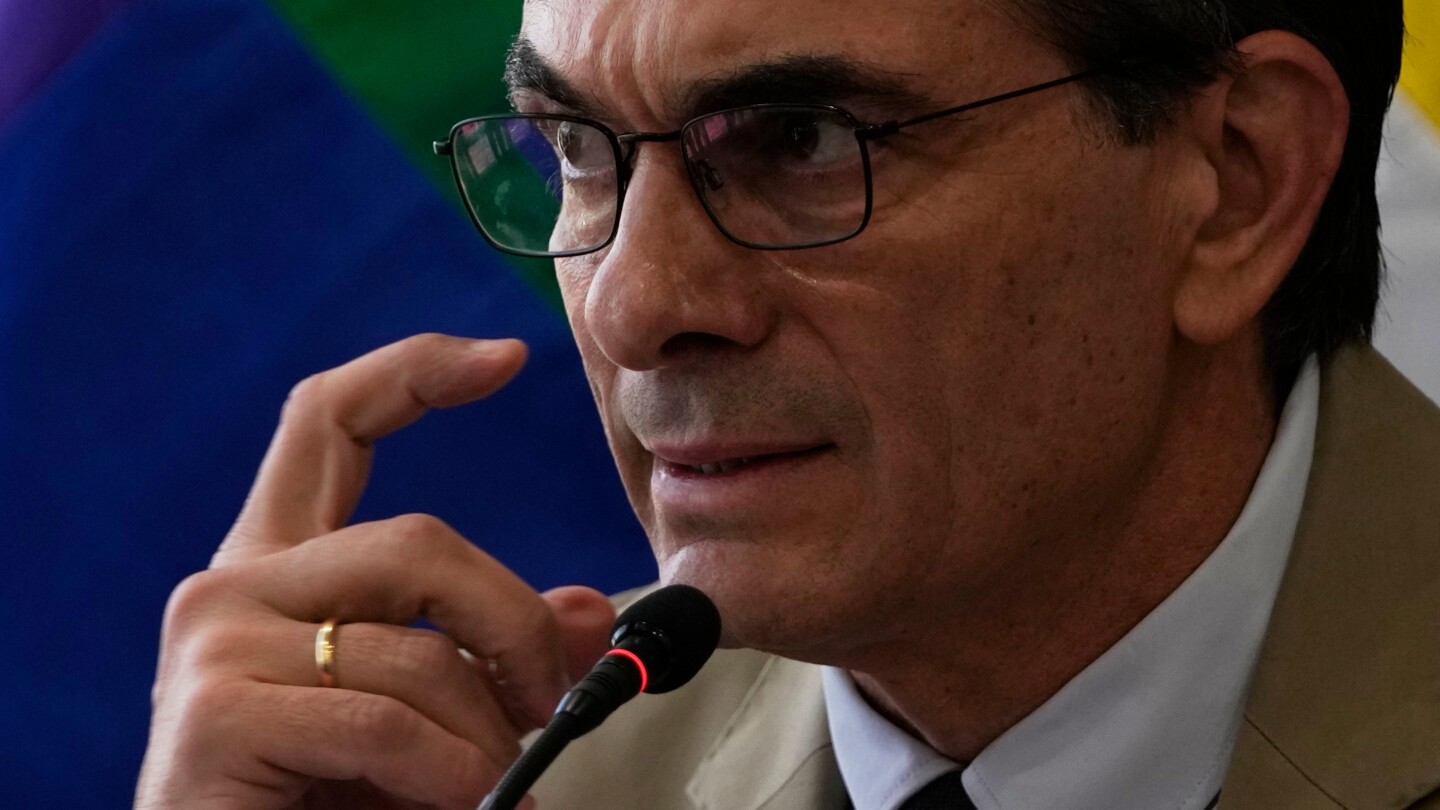
President Rodrigo Paz of Bolivia announced sweeping plans Tuesday to eliminate several key taxes as part of his strategy to revitalize the nation’s crisis-stricken economy, marking one of his first significant policy moves since becoming Bolivia’s first conservative leader in nearly two decades.
Just over two weeks after taking office, Paz revealed his government would cut 30% from Bolivia’s 2026 federal budget to reverse years of populist economic measures implemented under the long-ruling Movement Toward Socialism (MAS) party. The president did not provide specific details on how his administration would achieve such substantial reductions in government spending.
Speaking to reporters, Paz proposed repealing Bolivia’s national wealth tax, which he claims has stifled economic growth and deterred billions in potential investments since being imposed by his left-wing predecessor, former President Luis Arce.
“We are giving the first signs of security that the country requires,” Paz stated. “We are paving the way for economic activity.”
Another target for elimination is Bolivia’s 0.3% tax on everyday financial transactions, a measure that has long driven Bolivians away from formal banking, causing many citizens to hide their savings in homes rather than deposit funds in banks.
The proposed tax cuts require congressional approval before implementation, but business leaders have already expressed enthusiasm about the policy shift. Klaus Freking from the country’s main agricultural chamber celebrated the announcement, stating, “The persecution of the private sector is ending. It is the beginning of legal certainty.”
Despite these significant changes, Paz and Economy Minister José Gabriel Espinoza confirmed they would not immediately alter two fundamental elements of Bolivia’s economic model under the MAS party—the country’s fuel subsidies that maintain some of the world’s lowest gasoline prices, and its fixed exchange rate, which has become increasingly problematic as Bolivia’s central bank depleted its U.S. dollar reserves.
Bolivian economic analyst Gonzalo Chávez offered a measured assessment: “The president is starting off on the right foot, aiming to generate better investments. But he’s not addressing the core problems.”
Paz is adhering to his campaign promise of implementing gradual economic reforms rather than imposing the type of shock fiscal adjustments that have historically troubled Bolivians since the 1990s. His measured approach aims to extract Bolivia from its worst financial crisis in four decades.
Early signs suggest some progress. The chronic lines at fuel pumps across the country, resulting from severe gasoline shortages, have largely disappeared as the new administration works to secure fuel imports.
A supportive Congress has helped the government secure a $3.1 billion loan from the Andean Development Corporation, with $550 million already disbursed. Espinoza announced plans to borrow up to $9 billion to stabilize the economy and address the deficit over the next three years, with the package expected within 60 to 90 days, though he did not specify which multilateral lenders would be involved.
The new administration has also made strides in repairing relations with Washington after years of anti-American sentiment dating back to when former President Evo Morales, a charismatic coca-growing union leader, expelled the U.S. Drug Enforcement Administration in 2008 and strengthened ties with Russia, Iran, and Venezuela.
The U.S. State Department has already announced agreements on nuclear cooperation and security assistance. Additionally, Paz has stated his administration will permit Elon Musk’s Starlink to operate in Bolivia for the first time, reversing his predecessor’s refusal to grant the company an operating license last year.
As Bolivia begins to rebuild investor confidence, sovereign bonds have risen in recent weeks, and the chronically depreciating Bolivian currency has recovered some ground against the dollar in unofficial trading markets.
These early economic initiatives represent the first chapter in what promises to be a challenging economic recovery for the South American nation, as Paz attempts to balance fiscal responsibility with the social programs that many Bolivians have come to rely upon over the past two decades of MAS governance.
Fact Checker
Verify the accuracy of this article using The Disinformation Commission analysis and real-time sources.

15 Comments
I like the balance sheet here—less leverage than peers.
Good point. Watching costs and grades closely.
Production mix shifting toward Business might help margins if metals stay firm.
Good point. Watching costs and grades closely.
Silver leverage is strong here; beta cuts both ways though.
Good point. Watching costs and grades closely.
Uranium names keep pushing higher—supply still tight into 2026.
Good point. Watching costs and grades closely.
Good point. Watching costs and grades closely.
If AISC keeps dropping, this becomes investable for me.
I like the balance sheet here—less leverage than peers.
The cost guidance is better than expected. If they deliver, the stock could rerate.
Production mix shifting toward Business might help margins if metals stay firm.
Good point. Watching costs and grades closely.
Good point. Watching costs and grades closely.