


Listen to the article
After Years of Controversy, Maine Hydropower Project Receives Final Permit
Avangrid Inc. has secured the last permit needed from Maine officials to complete its contested hydropower transmission line project, bringing the long-delayed energy initiative one step closer to powering Massachusetts homes.
The New England Clean Energy Connect corridor, designed to deliver up to 1,200 megawatts of Canadian hydropower to the regional grid, has overcome significant legal and political hurdles after Maine voters rejected it in a 2021 referendum. Opponents had mounted a campaign arguing the project would damage the state’s woodland areas.
Despite this public opposition, a jury ruled in 2023 that project developers had a constitutional right to proceed with construction. With the final permit now in hand as of November 19, Avangrid is on track to complete testing by mid-December, after which the system can begin delivering electricity.
“We have secured every permit, met every regulatory requirement, and overcome significant challenges because we believe we must address the urgent need for reliable energy at a time of rising demand,” said Avangrid Chief Executive Officer Jose Antonio Miranda in a statement.
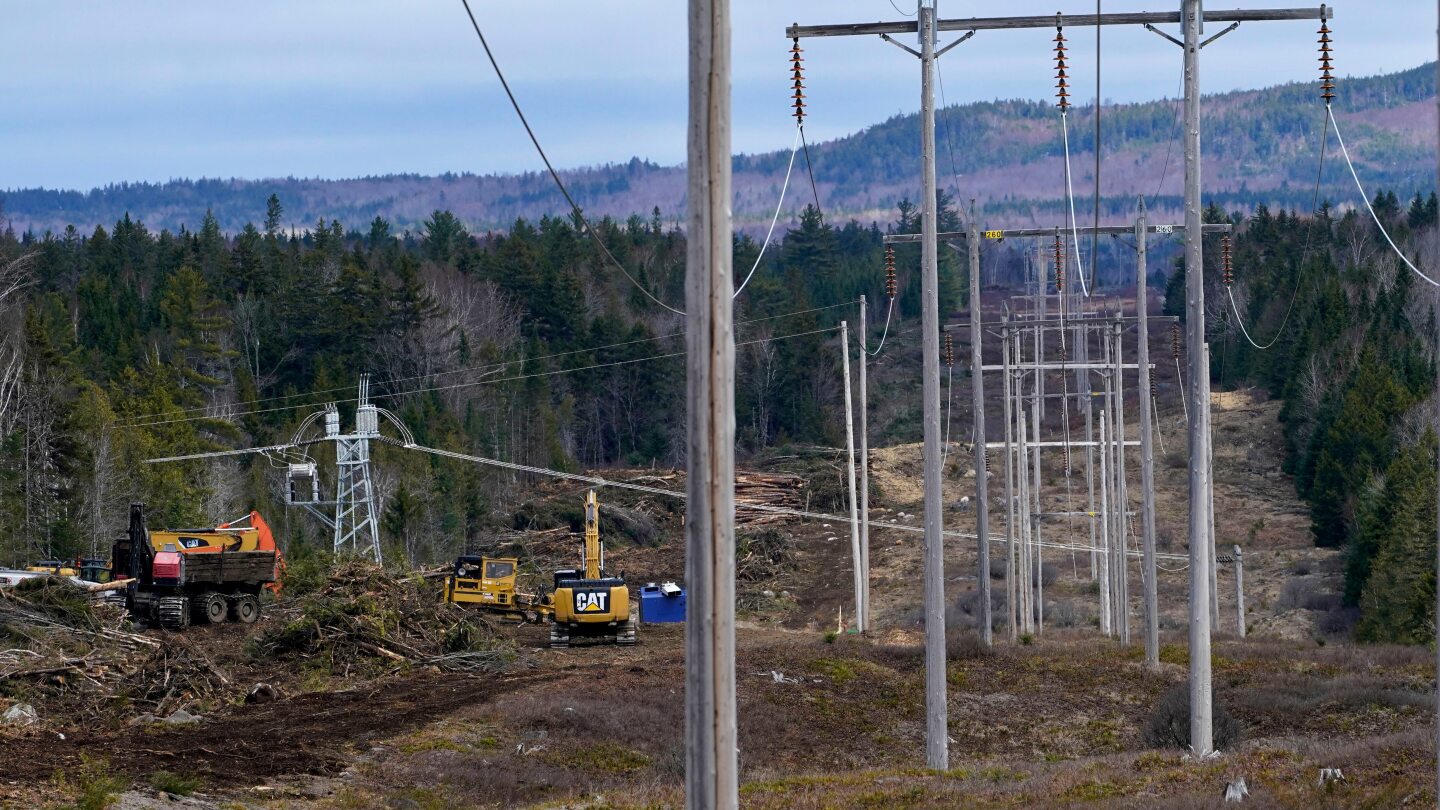
The 145-mile transmission line stretches from Lewiston, Maine, to the Canadian border. While most of the corridor follows existing utility rights-of-way, a new 53-mile section cutting through western Maine’s forests became the focal point of environmental opposition.
The project represents a significant development in New England’s energy landscape as the region continues its transition toward cleaner energy sources. Massachusetts, facing growing electricity demands and ambitious climate goals, has been particularly interested in securing hydropower from Quebec to reduce its carbon emissions while ensuring grid reliability.
However, the controversy surrounding the transmission line highlights the complex challenges facing renewable energy infrastructure projects across the United States. Even as states and power companies seek to decarbonize the grid, local opposition to large-scale energy projects remains a persistent obstacle.
Seth Berry, executive director of Our Power, a Maine energy nonprofit that did not take a position on the corridor, noted that the prolonged legal battles have created lasting tension between Avangrid—owner of Central Maine Power, the state’s largest utility—and Maine residents.
“Unless future energy projects bring better benefits for impacted Maine communities, such as shared ownership, we can expect to see an ever-greater backlash against elected leaders and against the industry as a whole,” Berry said.
The project’s journey reflects broader tensions in America’s energy transition. While proponents argue that infrastructure like the New England Clean Energy Connect is essential for meeting climate goals, critics question whether the environmental costs and impacts on local communities are justified.
Energy analysts note that the completion of this corridor could influence how future interstate energy projects are developed. The successful navigation of legal challenges despite a public referendum may set precedents for how similar projects address regulatory and community concerns.
For Avangrid, the final approval represents the culmination of years of regulatory processes, legal battles, and public relations campaigns. The company has consistently framed the project as a critical component of the region’s clean energy future, emphasizing the corridor’s role in reducing greenhouse gas emissions while providing reliable power.
For Massachusetts, which will receive the majority of benefits from the imported Canadian hydropower, the project’s completion will mark a significant milestone in the state’s efforts to reduce its reliance on natural gas and other fossil fuels.
As the project moves toward operational status, attention will now turn to its actual performance and whether it delivers on the promised benefits of clean, reliable energy for New England consumers, particularly as the region faces growing concerns about winter energy reliability and rising electricity costs.
Fact Checker
Verify the accuracy of this article using The Disinformation Commission analysis and real-time sources.

11 Comments
Hydropower can be a valuable part of the clean energy transition, but the specifics of project implementation matter greatly. I’ll be watching to see if Avangrid can navigate the remaining challenges constructively.
This is a complex issue with valid arguments on both sides. While the energy benefits are clear, the environmental concerns raised by Maine voters deserve serious consideration. I hope a balanced solution can be found.
Securing the final permit despite the referendum loss suggests the developers have a strong legal case. But the public opposition highlights the challenge of balancing energy needs with environmental protection. It will be interesting to see how this plays out.
You raise a fair point. Maintaining public trust and addressing community concerns will be crucial as this project is implemented.
This hydropower project seems to be quite contentious in Maine. While it may help address regional energy needs, the environmental concerns raised by opponents are understandable. Curious to see how the local community responds as construction moves forward.
The legal victory for Avangrid is noteworthy, but the public referendum shows the depth of local opposition. I hope the company can find ways to address environmental impacts and rebuild trust with Maine residents.
Canadian hydropower can be a valuable renewable resource, but the local impacts need to be carefully considered. I hope Avangrid can find ways to mitigate the damage to Maine’s woodland areas during construction and operation.
The fact that this project has overcome so many hurdles suggests Avangrid is determined to see it through. But the public opposition raises valid questions about the project’s long-term sustainability. Careful monitoring of environmental impacts will be crucial.
This is a complex issue without easy answers. On one hand, the region needs reliable, sustainable energy. On the other, protecting the environment is crucial. I’ll be following this story to see how Avangrid navigates the tradeoffs.
It’s good to see that Avangrid is committed to meeting all regulatory requirements, even in the face of public opposition. Responsible development of renewable energy infrastructure is crucial, but must be balanced with environmental concerns.
Agreed. Transparency and engagement with the local community will be key as this project moves forward.