


Listen to the article
As outrage spreads over energy-hungry data centers, politicians from President Donald Trump to local lawmakers have found rare bipartisan agreement over insisting that tech companies — and not regular people — must foot the bill for the exorbitant amount of electricity required for artificial intelligence.
But that might be where the agreement ends.
The price of powering data centers has become deeply intertwined with concerns over the cost of living, a dominant issue in the upcoming midterm elections that will determine control of Congress and governors’ offices. Some efforts to address the challenge may be coming too late, with energy costs already on the rise.
Even though tech giants are pledging to pay their “fair share,” there’s little consensus on what that actually means. “Fair share is a pretty squishy term, and so it’s something that the industry likes to say because ‘fair’ can mean different things to different people,” said Ari Peskoe, director of the Electricity Law Initiative at Harvard University.
The political landscape has shifted dramatically in recent months. Just last year, states were actively courting massive data center projects, with Trump directing his administration to secure electricity for them. Now, a significant backlash has emerged as communities fight against new data center developments and utility customers face rapidly rising electricity bills.
This voter dissatisfaction has already impacted electoral outcomes. In Georgia, Democrats successfully ousted two Republicans from the state’s utility regulatory commission last November, largely due to public anger over rising energy costs.
“Voters are already connecting the experience of these facilities with their electricity costs and they’re going to increasingly want to know how government is going to navigate that,” explained Christopher Borick, a pollster and director of the Muhlenberg College Institute of Public Opinion.
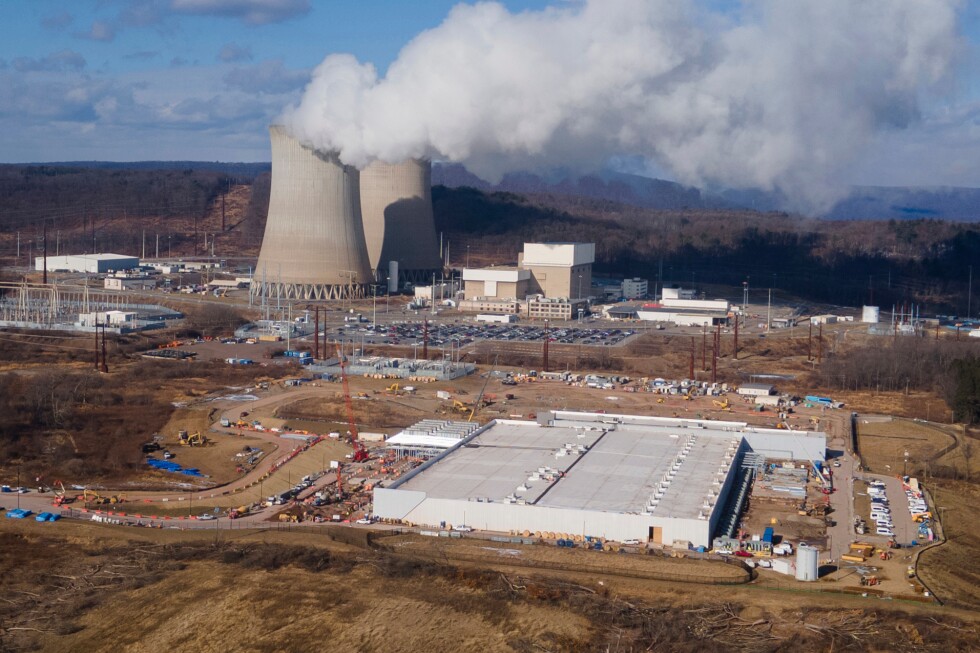
Data centers are proliferating across the United States as tech companies race to meet global demand for AI products that require immense computing power. These facilities resemble giant warehouses, often with footprints exceeding those of factories and stadiums. Some require more electricity than a small city – more than any utility has ever supplied to a single user – triggering a scramble to build additional power generation capacity.
The unprecedented electricity demand creates ripple effects throughout the energy market. When utilities construct new power plants or transmission lines to serve these facilities, the costs are frequently distributed across all ratepayers, not just the tech companies.
These concerns have merged with broader anxieties about the rising cost of living, the growing influence of technology companies, and the societal impact of artificial intelligence.
Trump continues to champion AI as a crucial economic and national security priority, though he recently acknowledged the backlash by posting on social media that data centers “must ‘pay their own way.'” At other times, he has dismissed concerns, claiming tech giants are building their own power plants. Energy Secretary Chris Wright has disputed assertions from consumer advocates and independent analysts that data centers drive up electricity bills.
Several states and utilities have begun implementing measures to ensure data centers bear their costs. These include requiring tech companies to purchase electricity through long-term contracts, fund necessary power plants and transmission upgrades, and make substantial down payments to mitigate risks if they abandon projects or reduce their electricity needs.
However, the solution may not be so straightforward. These regulations cannot immediately address the short-term problem of enormous demand outpacing the construction of new power facilities.
“What do you do when Big Tech, because of the very profitable nature of these data centers, can simply outbid grandma for power in the short run?” asked Abe Silverman, a former utility regulatory lawyer and energy researcher at Johns Hopkins University. “That is, I think, going to be the real challenge.”
Consumer advocacy groups argue that tech companies’ fair share should include covering increased costs of electricity, grid equipment, and natural gas driven by their demand. In Oregon, which enacted legislation to shield smaller ratepayers from data centers’ power costs, advocates are challenging Portland General Electric’s implementation plan. Similar concerns have emerged in Indiana, Georgia, and Missouri.
While utilities have committed to ensuring fair electric rates, in some regions it may already be too late. In the mid-Atlantic grid territory spanning from New Jersey to Illinois, consumer advocates and analysts attribute billions of dollars in rate increases affecting regular Americans directly to data center demand.
Legislation addressing data centers is proliferating at both federal and state levels. Democratic bills in Congress await Republican cosponsors, while state lawmakers are proposing moratoriums on new facilities, drafting regulations to protect residential customers, and reconsidering data center tax breaks and utility profits.
Governors who previously recruited data centers to their states are now taking tougher stances. Arizona Governor Katie Hobbs, a Democrat running for reelection, has proposed a penny-per-gallon water fee on data centers and eliminating their sales tax exemption, which she characterized as a $38 million “corporate handout.”
“It’s time we make the booming data center industry work for the people of our state, rather than the other way around,” Hobbs stated in her state-of-the-state address.
With energy costs projected to continue rising through 2026, the debate over responsibility intensifies. Republicans in Washington blame liberal state energy policies favoring renewable energy, arguing these have increased transmission costs and constrained supply by limiting fossil fuels.
The struggle to assign blame was evident at a recent U.S. House subcommittee hearing with Federal Energy Regulatory Commission members. Republicans advocated for expedited natural gas pipeline construction, while Democrats defended renewable energy and urged FERC to restrict utility profits and protect residential customers from data center costs.
As communities and policymakers grapple with these challenges, the fundamental question remains unresolved: who will ultimately bear the cost of powering our increasingly AI-dependent digital future?
Fact Checker
Verify the accuracy of this article using The Disinformation Commission analysis and real-time sources.

9 Comments
It’s interesting to see how the political landscape has shifted on this issue. Data centers were once actively courted, but now there’s pressure for them to take more responsibility for their energy usage. Finding the right balance will be crucial as energy costs continue to rise.
As someone who follows the energy and technology sectors, I’m intrigued by this debate. Data centers are essential, but their environmental footprint is concerning. I hope to see the industry and policymakers work together to find sustainable solutions.
As someone who follows the energy and technology sectors, I’m intrigued by this debate. Data centers are essential, but their environmental footprint is concerning. I hope to see the industry and policymakers work together to find sustainable solutions.
This is a complex issue with no easy answers. While data centers are vital, the cost of powering them is becoming a significant burden. I’m curious to see how the industry and policymakers navigate this challenge in the months and years ahead.
With energy costs soaring, data centers must do their part and find innovative ways to reduce their electricity footprint. Perhaps exploring renewable energy solutions or improving operational efficiency could help them shoulder their fair share of the burden.
Data centers are critical infrastructure, but their energy demands are unsustainable. I’m curious to see what innovative solutions the industry can come up with to reduce their environmental impact and pass on fair costs to consumers. This will be an important issue to watch.
This is a complex issue with no easy answers. While data centers are vital, the cost of powering them is becoming a significant burden. I’m curious to see how the industry and policymakers navigate this challenge in the months and years ahead.
It’s interesting to see how the political landscape has shifted on this issue. Data centers were once actively courted, but now there’s pressure for them to take more responsibility for their energy usage. Finding the right balance will be crucial as energy costs continue to rise.
The debate over who should pay for the exorbitant energy needs of data centers is a complex one. While tech giants can afford higher bills, the impact on everyday consumers and small businesses must also be considered. A balanced approach is needed to address this challenge.