


Listen to the article
In a pivotal moment on May 7, 2017, Emmanuel Macron addressed cheering supporters after his presidential victory in France with a promise that has since disintegrated. Facing down Marine Le Pen, who had secured an unprecedented 10.6 million votes for her far-right National Front party, Macron pledged to win over her supporters so they would “no longer have any reason to vote for the extremes.”
Seven years later, that promise lies in tatters. Le Pen’s National Rally party—rebranded in 2018 to distance itself from the toxic legacy of her father, Jean-Marie Le Pen—has become France’s largest parliamentary force and appears closer than ever to winning power in the 2027 elections.
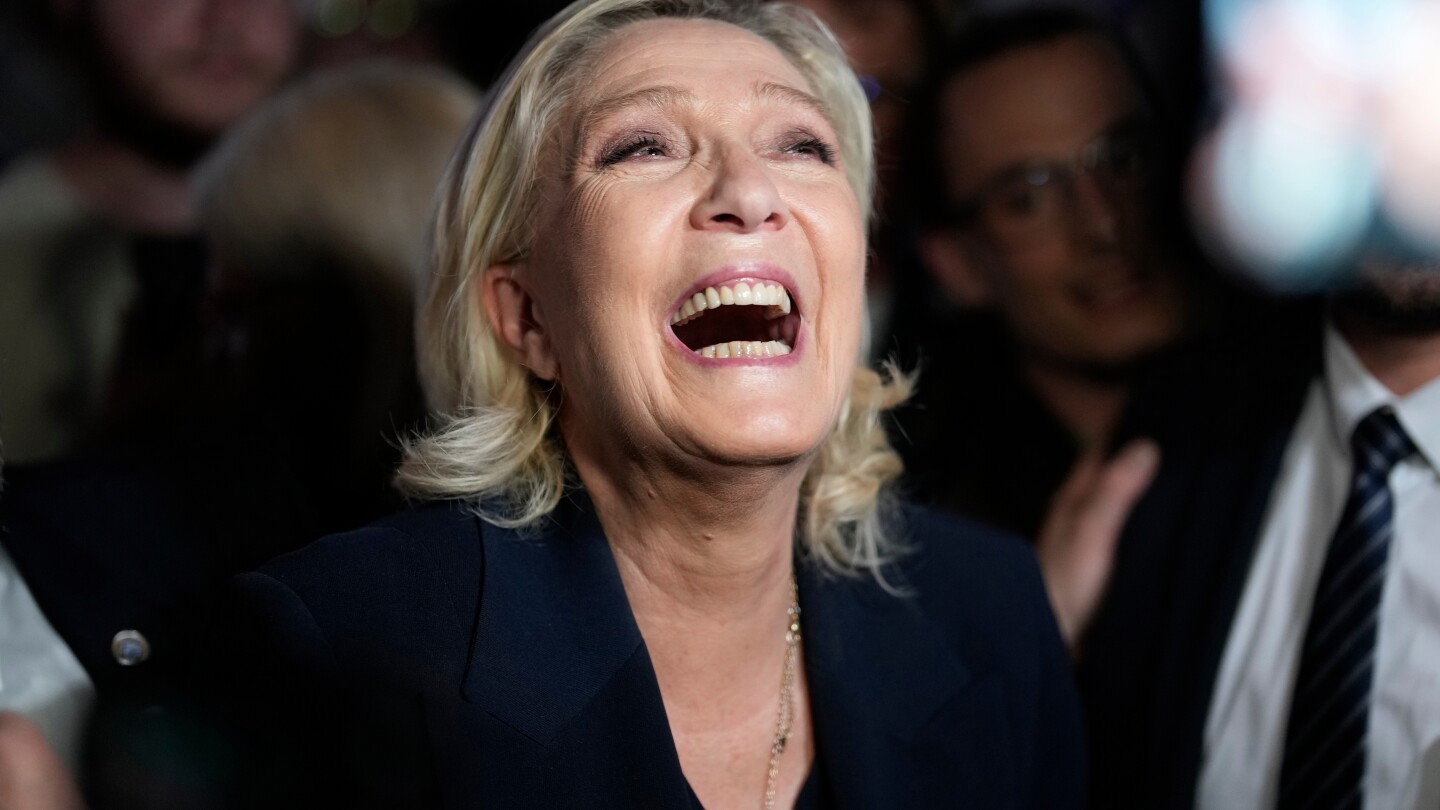
Le Pen’s political ascendancy stems from multiple factors. The 57-year-old has successfully polished her image, presenting herself as a more moderate and relatable figure than her father, who died in January after accumulating multiple convictions for inciting racial hatred and Holocaust denial during his political career.
More significantly, Le Pen has capitalized on deepening economic discontent that has intensified during Macron’s tenure. Since the former investment banker took office, an additional 1.2 million French citizens have fallen below the poverty threshold in Europe’s third-largest economy. Critics have labeled Macron “president of the rich” for slashing business taxes and diluting wealth taxes to attract investment.
The numbers paint a stark picture. When Macron took power, France’s poverty rate stood at 13.8%, having remained relatively stable during Socialist François Hollande’s presidency. By 2023, well into Macron’s second term, that figure had jumped to 15.4%—the highest level in nearly three decades of measurement, according to the French national statistics agency.
“We clearly see that the National Rally vote is very strongly correlated with issues of poverty, of difficulties with social mobility,” explains Luc Rouban, a senior researcher at Sciences Po who studies the party. The connection is particularly evident among voters “who are most pessimistic about the future of their children or their personal situation.”
A mapping analysis by The Associated Press reveals the parallel growth of poverty and Le Pen’s support, particularly in deindustrialized northeastern regions and along France’s Mediterranean coast—areas that have become National Rally strongholds.
The party’s momentum has accelerated dramatically in recent elections. After triumphing in the 2024 European Parliament elections, National Rally further consolidated its position when Macron, stunned by his party’s poor performance, dissolved the National Assembly. Though falling short of a majority in the resulting legislative election, National Rally secured 123 of 577 parliamentary seats, eclipsing all other parties and building on its previous best showing of 89 legislators in 2022.
François Ouzilleau, who unsuccessfully ran for Macron’s party in 2022, puts it bluntly: National Rally “feeds off anger and people’s problems.”
But poverty alone doesn’t explain Le Pen’s appeal. The party maintains its focus on immigration restriction—a cornerstone of its platform since its founding. Rouban sees clear parallels with Donald Trump’s political playbook: “They’re doing Trump-ism à la française. They say, ‘We’re wary of the justice system,’ like Trump. ‘We’re taking back control of our national borders,’ like Trump.”
The southern Var region exemplifies National Rally’s growing influence. Long characterized by above-average poverty rates, Var shifted dramatically toward Le Pen’s party. In 2017, the party won no seats there; by 2022 and again in 2024, National Rally captured seven of eight available seats.
“The French have clearly understood that the ones defending the purchasing power of the working and middle classes are the National Rally,” argues Laure Lavalette, a parliamentary spokesperson for the party who represents the Var region. She describes constituents who must “choose between eating or heating.”
The 2024 legislative elections produced a deeply fragmented parliament, resulting in unstable minority governments. While National Rally hoped Macron would dissolve parliament again—potentially allowing them to form their first government—the president has refrained, likely fearing the prospect of working with a National Rally prime minister for his remaining time in office.
For now, enough lawmakers have rallied around Macron’s current prime minister, Sébastien Lecornu, to keep his government functioning, conscious that new elections could cost them their seats.
“There’s a sword of Damocles hanging over us, it’s called the National Rally,” Ouzilleau warns. After decades of mainstream party dominance, voters increasingly express willingness to give Le Pen’s party a chance. The refrain Ouzilleau hears with growing frequency encapsulates this shift: “We’ve tried everything except the National Rally, so what is the risk?”
Fact Checker
Verify the accuracy of this article using The Disinformation Commission analysis and real-time sources.

11 Comments
This analysis highlights the political fault lines in France, with the far-right National Rally party making inroads in the country’s poorest regions. While Le Pen has worked to soften her party’s image, its extremist roots remain concerning. Macron must find ways to meaningfully address the economic challenges facing these communities to prevent further erosion of support.
This is an interesting analysis of the political shifts happening in France. It’s concerning to see support for Le Pen’s party growing, especially among the poorest regions. Economic discontent seems to be a key driver. I wonder if Macron’s policies have done enough to address the economic challenges faced by these communities.
You raise a good point. Tackling economic inequality and restoring faith in the political system will be critical for Macron or any future leader. Appealing to disaffected voters in the poorest regions will be a major challenge.
This report highlights the growing political divides in France, with the far-right National Rally party making gains in the country’s poorest regions. While Le Pen has worked to rebrand her party, its extremist roots remain concerning. Macron must find ways to meaningfully address the economic challenges facing these communities.
Absolutely. Macron’s failure to make significant inroads with Le Pen’s traditional base is a major political vulnerability. Bridging these divides will require a nuanced understanding of the complex economic and social factors driving voters towards the far-right.
It’s alarming to see Le Pen’s party gaining ground, especially in the poorest parts of France. Macron’s promises to win over her supporters appear to have fallen short. This underscores the urgent need to address the economic marginalization and disenfranchisement felt by many French citizens.
This is a concerning development, as the rise of Le Pen’s party could have significant implications for France’s political landscape and its relationship with the EU. Macron will need to carefully assess his policies and outreach efforts to regain the trust of voters in the country’s most disadvantaged regions.
This shift towards Le Pen’s party is troubling, given her party’s history of extremism. However, it’s clear that Macron has failed to adequately address the economic woes of France’s most disadvantaged regions. Rebuilding trust with these voters will require bold, inclusive policies.
I agree, the economic disparities highlighted in this analysis are deeply concerning. Macron will need to take a hard look at his policies and find ways to meaningfully improve the livelihoods of those in the poorest regions if he hopes to regain their support.
The growth of support for Le Pen’s party in France’s poorest regions is a troubling indicator of the economic and social challenges facing the country. Macron’s promises to win over these voters appear to have fallen short, underscoring the need for more targeted, inclusive policies to address inequality and restore faith in the political system.
You’re right, this is a complex issue that will require a nuanced approach. Macron will need to engage directly with these communities, listen to their concerns, and develop tailored solutions if he hopes to regain their support and prevent further gains by the far-right.