


Listen to the article
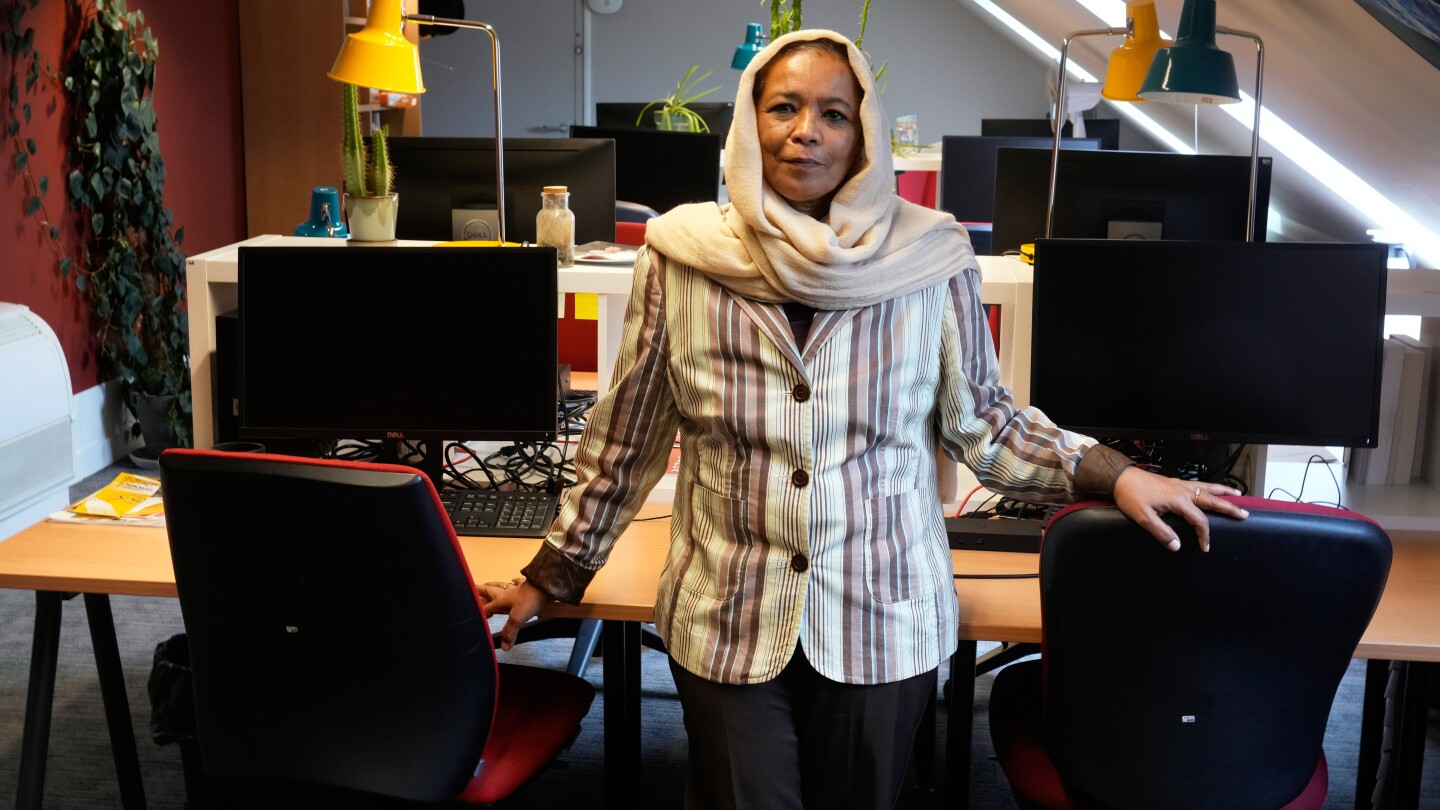
In a dimly lit office at the French National Institute for Art History, Sudanese archaeologist Shadia Abdrabo carefully examines a photograph of pottery made in Sudan around 7,000 B.C. With methodical precision, she records details of the Neolithic artifact into a spreadsheet, racing against time to document her nation’s vanishing cultural heritage.
As the brutal conflict between the Rapid Support Forces (RSF) and the Sudanese Armed Forces (SAF) continues to ravage Sudan, Abdrabo has taken on a critical mission during her yearlong research grant in France: building a comprehensive online database of Sudan’s archaeological sites, museum collections, and historical archives before more irreplaceable treasures are lost forever.
“We have to work fast to secure our collections. We’ve already lost two museums and we don’t want to lose more,” Abdrabo told The Associated Press, her voice reflecting the urgency of her work.
The scale of cultural destruction since fighting erupted in April 2023 has been devastating. Regional museums in El Geneina and Nyala were almost completely destroyed. In Khartoum, the National Museum—home to an estimated 100,000 artifacts—was ransacked by militias who brazenly posted videos of their fighters inside the storeroom.
The National Museum’s collection spanned the entirety of Sudan’s rich archaeological history, from prehistoric artifacts to treasures from the Kerma Kingdom and the Napatan era when Kushite kings ruled the region. Its halls displayed relics from the Meroitic civilization that built Sudan’s pyramids, alongside valuable Christian and Islamic objects from later periods.
Among the museum’s most precious possessions were mummies dating back to 2,500 B.C., considered some of the oldest and most archaeologically significant in the world, as well as royal Kushite treasures that testified to a civilization that once rivaled ancient Egypt in power and wealth.
UNESCO has raised urgent alarms about the unprecedented level of plundering. “My heart was broken, you know? It’s not just objects that we lost. We lost research, we lost studies, we lost many things,” Abdrabo said, reflecting on the cultural catastrophe.
For Abdrabo, the work is deeply personal. “I’m from Nubia, from the north, an area filled with monuments, archaeological sites and ancient life,” she explained. She was working at the national museum in Khartoum when the war began.
“We thought it would finish soon… but then life started getting really difficult: not just the bombing, but there was no electricity, no water,” she recalled. Together with her three sisters, she fled northward—first to Atbara, then to Abri, and finally to Port Sudan.
During this dangerous journey, Abdrabo and her colleagues from Sudan’s National Corporation for Antiquities and Museums (NCAM) worked desperately to protect the country’s 11 museums and UNESCO World Heritage sites, moving valuable pieces to safe rooms and secret locations.
But these preservation efforts proved insufficient against the tide of violence. Ali Nour, a Sudanese cultural heritage advocate, described the tragic reality: “While applications were being drafted, sites were being emptied. While risk assessments were reviewed, entire archives vanished.”
The situation in Sudan has received far less international attention than similar cultural emergencies in Afghanistan and Iraq. According to researcher Meryam Amarir, “Sudan has not benefited from strong media coverage denouncing the degradation and plundering of its cultural heritage. This lack of visibility has reduced the international response.”
The historical significance of Sudan’s artifacts extends far beyond its borders. Ancient Sudan maintained extensive connections through trade and military activity with Egypt, the Mediterranean world, and Mesopotamia. It was a primary source of gold for these regions, making it integral to understanding ancient civilizations.
“If we’re interested in these ancient cultures, then we have to be interested in Sudan,” explained Geoff Emberling of the Kelsey Museum of Archaeology at the University of Michigan, who is involved with the recently established Sudan Cultural Emergency Recovery Fund.
This task force, requested by NCAM, aims to unite institutions, scholars, and donors around urgent recovery efforts. “What Shadia Abdrabo is doing is urgently essential—establishing what’s missing,” Emberling told the AP.
Despite funding until April 2026 to complete her database, Abdrabo fears it won’t be enough time. The work is painstaking, with datasets arriving in various formats—from spreadsheets to handwritten inventories and decades-old photographs. While colleagues at the Louvre, the British Museum, and other institutions provide support, she works mostly alone.
“I’m trying to finish this database but it’s a lot. I’ve done about 20% of the work. Just for the national museums, I’ve recorded 1,080 objects so far… and then I have to do other museums, sites, archives. I need to add pictures, ID numbers, coordinates…” she explained, highlighting the enormous scope of her task.
As winter settles over Paris, Abdrabo remains driven by the escalating crisis in Sudan, where last month’s capture of North Darfur’s capital, El Fasher, by the RSF left hundreds dead and displaced more than 80,000 people.
“We are working on tracking what has been looted,” she said, emotion evident in her voice. “I cry when I talk about this. My only goal and message is to bring back as much as possible, to do as much as I can for Sudan, but it’s not easy for us.”
Beyond the direct destruction caused by fighting, the wider consequences of war threaten Sudan’s cultural heritage. “It’s not just the war itself, but the consequences of it—militias, people displaced… it’s not safe for the art to be in unsecure locations,” Abdrabo added.
Her final words capture the uncertainty that shadows her mission: “Until the war finishes, we just don’t know what is going to happen.”
Fact Checker
Verify the accuracy of this article using The Disinformation Commission analysis and real-time sources.

10 Comments
Archaeologist Shadia Abdrabo is doing vital work to document and protect Sudan’s archaeological treasures. With the ongoing conflict, time is of the essence to secure these collections before more are destroyed. This is an important race against time.
I’m glad to hear she is working to build a comprehensive online database. That will be a crucial tool for preserving this heritage even if the physical sites and museums are damaged.
This article is a sobering reminder of the immense cultural toll that armed conflict can have. Sudan’s rich archaeological history stretches back thousands of years, and its loss would be devastating for our shared human heritage. We must do all we can to prevent that.
The scale of cultural destruction described is truly devastating. Losing two regional museums and potentially 100,000 artifacts from the National Museum in Khartoum is a tragic loss. This conflict is erasing Sudan’s past in the most brutal way.
This is a heartbreaking situation. The cultural heritage of Sudan is an irreplaceable part of human history. It’s critical that the international community supports efforts to preserve these invaluable artifacts before they are lost forever.
This story highlights the fragility of cultural heritage in times of conflict. While the immediate human toll is devastating, the long-term damage to Sudan’s identity and history is also deeply troubling. Preserving archaeological sites and artifacts must be a priority.
Kudos to Shadia Abdrabo for her dedication and bravery in working to document Sudan’s heritage under such difficult and dangerous circumstances. Her efforts to create a comprehensive digital record could be crucial for eventual restoration and recovery.
I hope the international community provides the resources and support Abdrabo and other Sudanese archaeologists need to accelerate this critical documentation work before more is lost.
It’s horrifying that militias have been ransacking museums and looting historical artifacts. This is a deliberate attempt to erase Sudan’s identity and connection to its past. The international community must do more to stop this cultural genocide.
I agree, the work of archaeologists like Shadia Abdrabo to document and preserve what they can is the only way to try to salvage some of this irreplaceable heritage.