


Listen to the article
Major retailers and tech giants are deploying sophisticated artificial intelligence tools to transform this holiday shopping season, offering consumers streamlined gift-buying experiences while aiming to capture a larger share of online spending.
Unlike the basic chatbots of past shopping seasons, the latest AI assistants from Walmart, Amazon and Google can conduct natural conversations with shoppers, provide personalized product recommendations, track prices, and even place orders autonomously.
According to Salesforce, AI will influence approximately $73 billion, or 22%, of global sales during the holiday shopping period from the Tuesday before Thanksgiving through Cyber Monday. This represents a significant increase from $60 billion a year ago, according to Caila Schwartz, Salesforce’s director of consumer insights.
Despite these advancements, Brad Jashinsky, a senior retail industry analyst at Gartner, believes AI’s impact this holiday season will remain “relatively limited” since not all retailers have deployed useful tools and many shoppers remain hesitant to try them.
“The more retailers that launch these tools, the better they get, and the more that consumers get comfortable and start to seek them out,” Jashinsky noted. “But customer behavior takes a long time to change.”
The most visible application of AI in holiday shopping comes in the form of enhanced search capabilities that promise to deliver results faster and with greater detail than traditional web browsers.
OpenAI has upgraded ChatGPT with a shopping research feature that creates personalized buyers’ guides based on product information, reviews, prices, and the user’s previous interactions. The company says the tool is particularly effective for complex products like electronics and appliances, or detail-oriented items like beauty products and sporting goods.
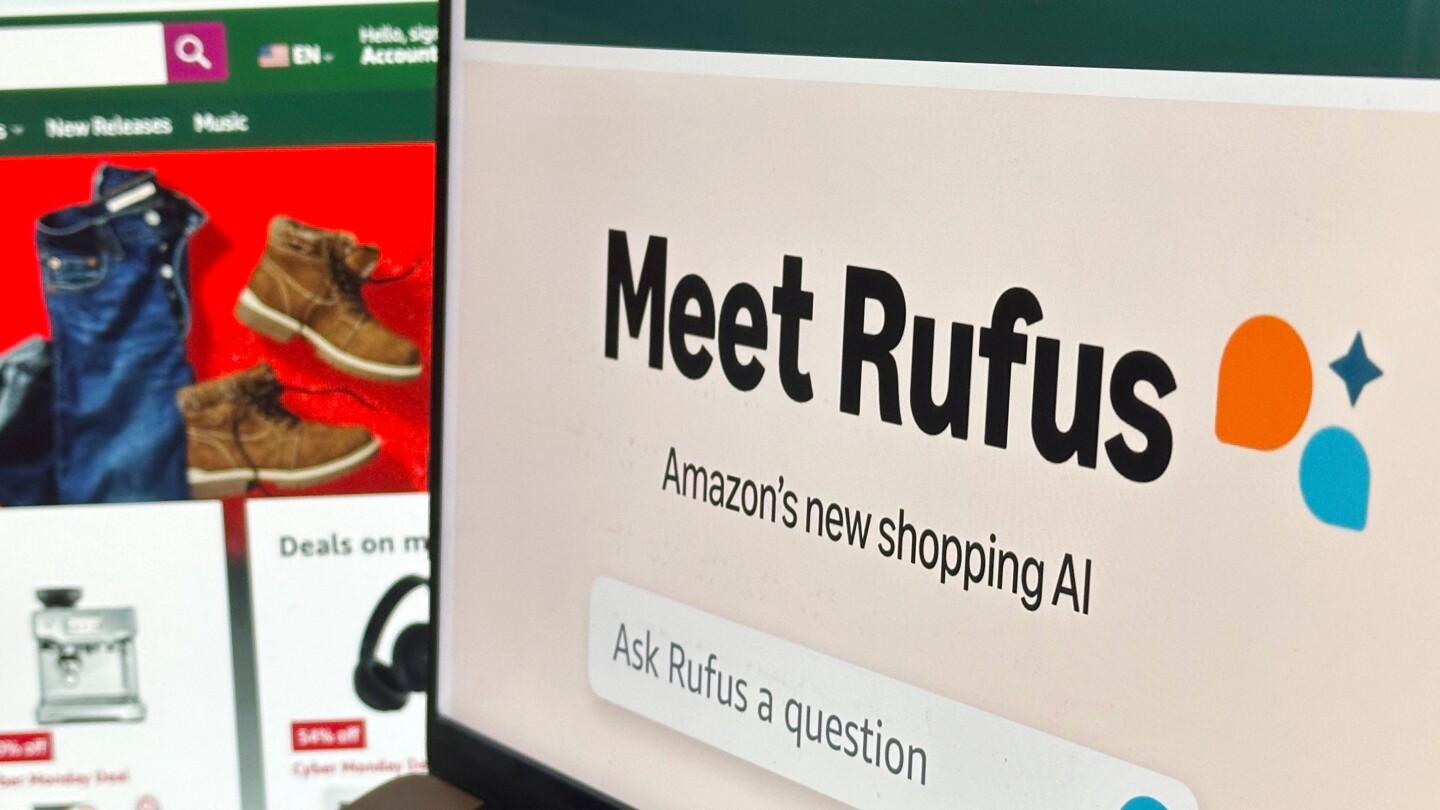
Amazon’s shopping assistant, Rufus, now remembers information customers have previously shared, such as having four children who all enjoy board games. The assistant leverages a user’s browsing history, purchase records, and reviews to deliver tailored recommendations.
Google has enhanced its AI Mode search tool to handle detailed natural language queries. Users can now request specific items like “a casual sweater to wear with a skirt or jeans in New York in January,” with responses pulled from Google’s database of 50 billion product listings. The tool can also generate comparative charts showing prices, features, and reviews.
“This is an expansionary moment, I think, for all of technology and for commerce,” said Lilian Rincon, vice president of product, consumer shopping at Google.
Meanwhile, Walmart’s AI assistant, Sparky, offers occasion-based recommendations and synthesizes product reviews, while Target has introduced an AI-powered gift finder that responds to prompts about the recipient’s age and interests.
Price tracking tools have also evolved significantly this season. Amazon launched a 90-day pricing history tracker for virtually all its products and now allows shoppers to set alerts for when prices fall within their budget.
Google has upgraded its basic price tracker to a more sophisticated version that permits users to refine their searches with specific details like garment size and color. Microsoft’s Copilot has also introduced a price tracking feature.
Jason Goldberg, chief commerce strategy officer at Publicis Groupe, believes these new pricing tools will increase pressure on retailers to maintain competitive pricing. “A lot of consumers that weren’t even looking for price alerts are going to discover price alerts for the first time,” he predicted.
Perhaps most significantly, major tech companies are racing to develop seamless AI-powered shopping experiences that take consumers from browsing to buying without leaving their platforms.
OpenAI has launched an instant checkout feature allowing users to purchase products recommended by ChatGPT without exiting the app. The company has partnerships with Etsy sellers and brands using Shopify, including Glossier, Skims, and Spanx.
A recent partnership between OpenAI and Walmart will enable ChatGPT users to shop for most items available on Walmart’s website, though currently limited to one item per transaction. Target has a similar arrangement with OpenAI, but redirects customers to the Target app for payment processing.
Amazon and Google are pioneering “agentic AI” tools that operate more independently than traditional chatbots. Amazon now allows Rufus to automatically purchase items for customers who activate an “auto buy” button when setting price alerts, while Google’s AI Mode price tracker includes a “buy for me” option that automatically completes purchases through Google Pay when prices reach desired levels.
Google has also expanded its browser capabilities with an automated AI calling feature that phones local stores to inquire about product availability, initially focusing on toys, health and beauty products, and electronics.
As these technologies continue to evolve, they promise to reshape the retail landscape not just for this holiday season, but for years to come.
Fact Checker
Verify the accuracy of this article using The Disinformation Commission analysis and real-time sources.

10 Comments
AI-assisted shopping is an interesting development, but I hope it doesn’t become too intrusive or manipulative. Shoppers should maintain control and autonomy in their purchasing decisions. Transparency from retailers will be key.
Agreed. The human element and consumer choice should remain central, even as AI becomes more integrated into the shopping experience.
This technology could really streamline the holiday shopping experience, but I wonder about the impact on small businesses that may not have the resources to deploy advanced AI tools. Will it widen the gap between large and small retailers?
That’s a valid concern. Smaller retailers may struggle to compete with the AI-powered capabilities of big tech and retail giants. Policymakers may need to consider ways to support small business adoption of these tools.
Interesting to see the projected growth in AI-influenced sales. Though I’m a bit skeptical – not all retailers may have the best AI tools yet. Hopefully the technology keeps improving to benefit both businesses and consumers.
You raise a good point. Widespread adoption and refinement of the AI tech will be key. Consumers will need to feel comfortable before fully embracing it.
Fascinating how AI is transforming holiday shopping. I wonder how well these new tools will work in practice and if shoppers will warm up to them. Personalized recommendations could be really useful, but I’d want to maintain control over my purchases.
I agree, it’s important that shoppers feel in control and not pressured by AI. Curious to see how the user experience evolves.
I’m cautiously optimistic about AI-assisted shopping. The convenience could be great, but privacy and security will be crucial. Retailers need to be transparent about how they use customer data.
Absolutely. Maintaining consumer trust will be essential as these AI tools become more prevalent. Robust data protection safeguards will be critical.