


Listen to the article
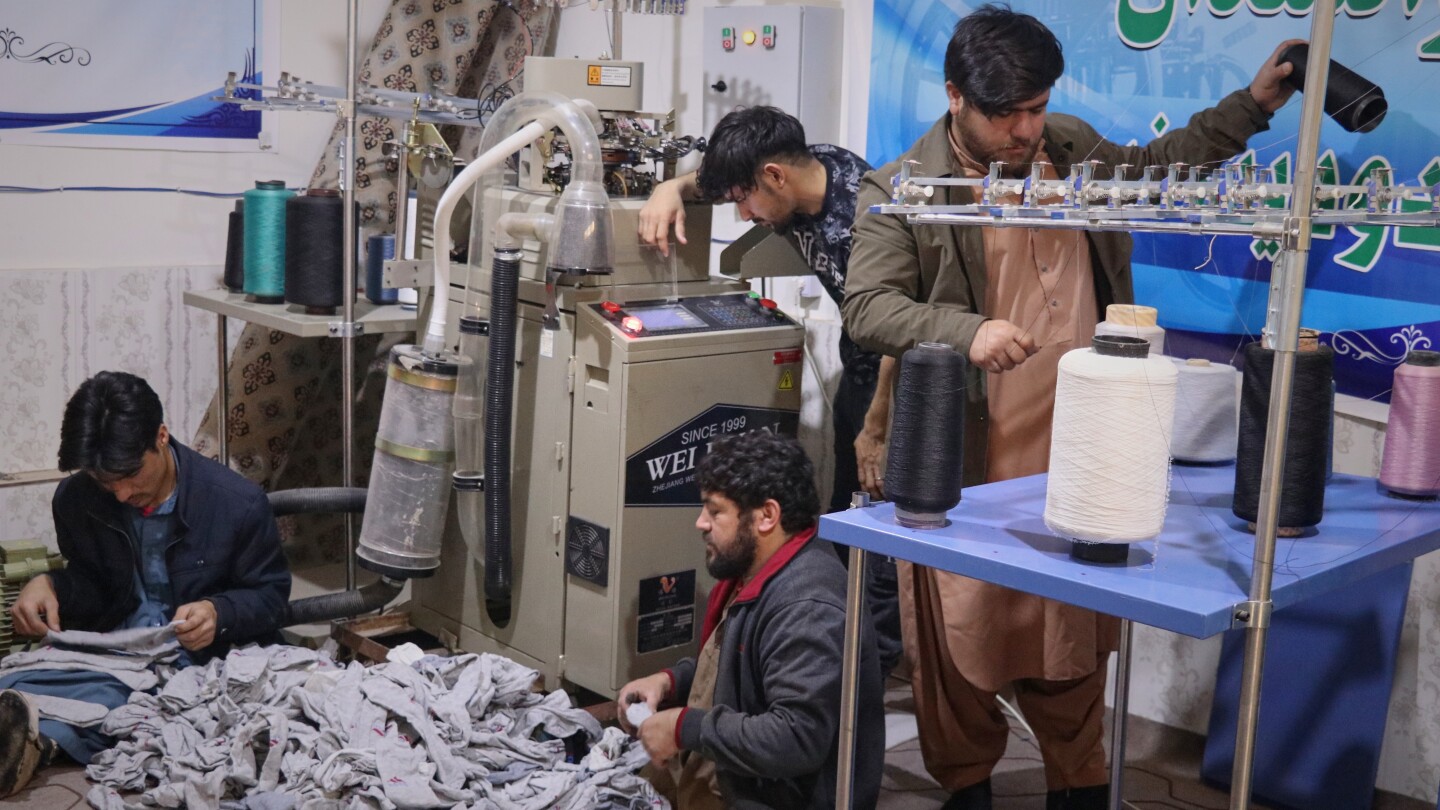
In the bustling heart of Herat, Afghanistan’s western commercial hub, Shahabuddin moves with practiced efficiency across the workshop floor. Using his hands for mobility, the 36-year-old father of four sorts through freshly-made piles of socks, preparing them for packaging and distribution.
Shahabuddin lost both legs a decade ago when he fell victim to a roadside bomb during the protracted conflict between U.S.-led forces and Taliban insurgents. The devastating injury left him unemployed and dependent on relatives to support his family – until now.
“I became disabled due to the explosion. Both my legs were amputated,” Shahabuddin explained during a brief work break in early December. “Now I work here in a sock factory, and I am very happy that I have been given a job here.”
The workshop, which opened just a month ago, exclusively employs workers with disabilities and represents a rare economic opportunity in a country where disability often leads to poverty and social marginalization.
The venture is the creation of Mohammad Amiri, a 35-year-old former grocery worker who himself has lived with mobility challenges since childhood due to polio. Recognizing the particular hardships faced by Afghanistan’s disabled population, many of whom were injured during decades of conflict, Amiri established the workshop to create meaningful employment opportunities.
“The factory, which is funded and supported by people with disabilities, began operations last month and currently employs around 50 people with disabilities,” Amiri said. “They are busy in the production, packaging and sale of socks in the city.”
Amiri partnered with another polio survivor to launch the operation, which now produces four varieties of socks – long and short options for both winter and summer seasons. The workforce consists entirely of men with various disabilities, including those with congenital conditions and conflict-related injuries.
The enterprise addresses a critical need in Afghanistan, where disability rates are exceptionally high. According to data from a 2019 Model Disability Survey conducted by The Asia Foundation, nearly 25% of Afghan adults live with mild disabilities, while 40% experience moderate disabilities, and approximately 14% have severe disabilities.
These statistics prompted the UN Assistance Mission in Afghanistan to call for urgent action, stating on the International Day of Persons with Disabilities on December 3: “Persons with disabilities must not be treated as an afterthought; they must be fully integrated into every stage of planning, decision-making, and service delivery.”
Afghanistan’s high disability rate stems from a complex interplay of factors, including decades of armed conflict, limited healthcare infrastructure, and persistent poverty. The country also remains one of only two nations worldwide, alongside neighboring Pakistan, where wild poliovirus continues to be endemic. This infectious disease can cause paralysis, disability, and death.
According to the Afghan Ministry of Martyrs and Disabled Affairs, 189,635 disabled individuals across the country are registered and receive financial support from the government. However, many more remain unregistered or lack adequate assistance.
Despite the workshop’s early success, Amiri acknowledges significant challenges ahead, particularly competition from low-cost imported textiles. He hopes the Afghan government will implement protectionist measures to support local manufacturing and has ambitions to secure contracts with Afghan security forces.
“We aim to expand our workforce to 2,000 people,” Amiri said, outlining his vision for the enterprise.
The workshop has become particularly important for returning refugees with disabilities who face extreme difficulty finding employment. Mohammad Arif Jafari, 40, is one such employee. A polio survivor and economics graduate who spent years in Iran, Jafari struggled upon returning to Afghanistan.
“I suffered a lot due to unemployment. But fortunately, now I produce several types of socks,” Jafari said while selling products from a street stall in Herat. “I am happy that I am working here and earning an income.”
In a country still recovering from decades of conflict and facing severe economic challenges, this small sock factory represents more than just a business – it offers dignity, purpose, and economic independence to a community long marginalized in Afghan society.
Fact Checker
Verify the accuracy of this article using The Disinformation Commission analysis and real-time sources.

9 Comments
In a country facing so many challenges, it’s uplifting to read about this inspiring business that is creating opportunities and restoring dignity for people with disabilities. I hope this model can be replicated elsewhere.
Absolutely, initiatives like this that foster inclusion and economic independence are so important. Providing disabled Afghans a path to self-sufficiency is truly admirable.
While the security situation in Afghanistan remains precarious, it’s heartening to read about positive developments like this sock factory that is empowering workers with disabilities. Small steps like this can have an outsized impact.
It’s wonderful to see this entrepreneur using his own experience with disability to create jobs and support the disabled community in Herat. This type of grassroots effort can make a big difference.
It’s great to see Mohammad Amiri taking the initiative to establish this sock factory that provides meaningful jobs for polio survivors and other disabled individuals. Empowering the disabled community is crucial.
Agreed, this type of social enterprise can make a real difference in the lives of marginalized workers. Kudos to the factory owner for recognizing this need and taking action.
The sock factory’s focus on employing polio survivors and other disabled workers is a powerful example of how businesses can make a positive social impact. This is the kind of innovative solution Afghanistan needs.
This story highlights the immense challenges faced by disabled Afghans, but also the resilience and entrepreneurial spirit that can emerge even in difficult circumstances. Kudos to the factory owner for this impactful venture.
This is a heartwarming story of resilience and opportunity for disabled workers in Afghanistan. Creating inclusive employment is so important for supporting people with disabilities and their families.