


Listen to the article
In her early 20s, Kaci LaFon found dating in Branson, Missouri—a tourist town with a predominantly older population—to be challenging. Like many young singles, she turned to dating apps, but over five years found little success. The obstacle wasn’t a lack of matches, but rather how potential partners responded to her chronic illness.
LaFon, now 28, lives with Ehlers-Danlos syndrome, a connective tissue disorder, among other health issues. Her matches either struggled to understand her challenges or treated her as helpless—neither approach worked for her.
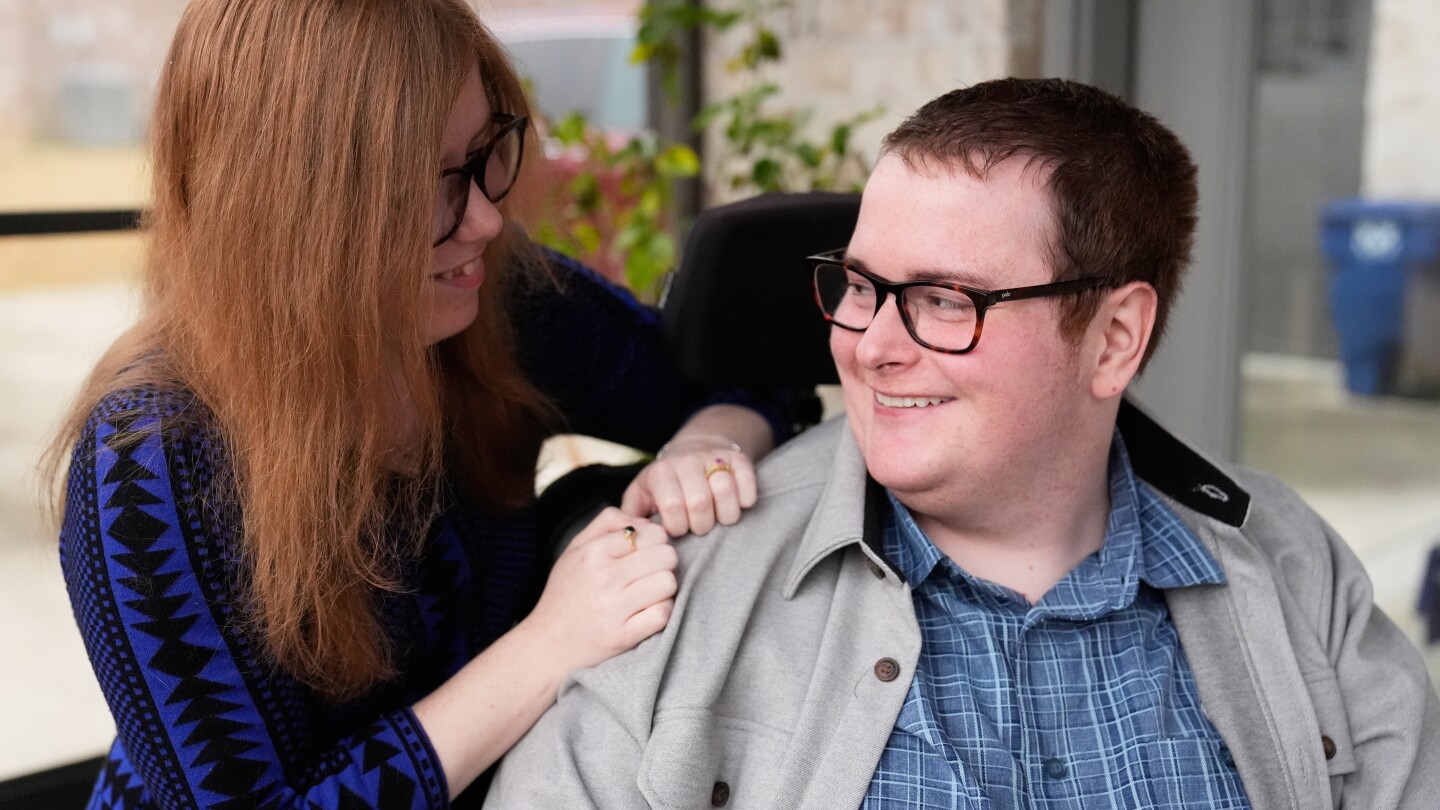
Everything changed when LaFon discovered Dateability, an app specifically designed for disabled and chronically ill individuals. After joining at her mother’s suggestion, she met Collin LaFon, who has cerebral palsy and had experienced similar dating frustrations. The couple married in September.
“We all have the fairy tale of falling in love and meeting our person in our head,” said Collin from their home near Birmingham, Alabama. “But at the end of the day, I don’t have full function in all four of my limbs. There’s an extra piece that goes along with everything.”
The LaFons’ experience exemplifies why sisters Jacqueline and Alexa Child launched Dateability three years ago in Denver, Colorado. Jacqueline, 31, became disabled due to multiple conditions including Ehlers-Danlos, Lupus, and rheumatoid arthritis, requiring a feeding tube to survive.
She recalls months of rejection on mainstream dating platforms. “Any mention of disability was completely negative,” Jacqueline said. “They wouldn’t even give it a chance, had no idea what my life looked like, but they just assumed it would be miserable.”
Today, Dateability serves approximately 40,000 registered users across the United States, Canada, Mexico, and the United Kingdom. The platform offers both free and premium subscription options, with paid users enjoying benefits like seeing all profiles that have expressed interest simultaneously.
“I just wanted an equal playing field of people that I would be interested in, and that other young people would be interested in, too,” Jacqueline explained.
The market for such a service is substantial. According to the Centers for Disease Control and Prevention, more than 70 million U.S. adults—one in four—reported having a disability in 2022, the year Dateability launched. The platform attracted 1,000 users in its first month alone, and its user base has grown tenfold in the past year.
While focused on the disabled community, Dateability also welcomes non-disabled users, particularly those with connections to disability or chronic illness through family, friends, or advocacy work. The founders carefully screen applicants to prevent those who might fetishize disabled individuals from joining.
“We wanted to make it truly inclusive,” Alexa said.
In Pikesville, Maryland, 23-year-old Sophie Brisker found her boyfriend on Dateability after developing debilitating symptoms from chronic fatigue syndrome and other conditions just before turning 18. Often housebound for months, she attends college online and uses a wheelchair for longer distances.
“It’s really exhausting trying to explain to someone all of your limitations and the illnesses you have,” Brisker said. She initially sought companionship, uncertain whether a romantic relationship was feasible.
Her partner, who suffers from long COVID-19 and other chronic illnesses, understood her situation intuitively. The couple now plans to relocate together to Louisville, Kentucky. “We hit it off on everything,” Brisker said. “We understood each other in ways that other people just couldn’t.”
Matthew Shapiro, a 34-year-old disability advocate from Richmond, Virginia, has experimented with both mainstream dating apps and disability-focused platforms. Born with cerebral palsy and using a power chair for mobility, he found that traditional dating services often attracted people with questionable intentions.
“I was looking for a space where it felt like community,” Shapiro said.
Through Dateability, Shapiro met a woman born without fingers on her left hand who fully accepted his challenges. Though their romantic relationship eventually transitioned to friendship, the experience was transformative. “It was the first time I ever felt fully seen and accepted and sort of loved in a relationship,” he said.
Beyond stigma and misconceptions, disabled daters face practical barriers: inaccessible venues, limited assistive technology on dating platforms, and the daunting prospect of discussing personal needs with potential partners. These challenges lead some to abandon dating entirely.
“People with disabilities deserve love and deserve relationships, just like anyone else,” Shapiro emphasized. “Love without worry. Love without hesitation and question. There are a lot of people with disabilities who don’t know what that feels like.”
As Dateability continues to grow, it offers not just a platform for romantic connections, but also validation that everyone deserves companionship, regardless of their physical challenges.
Fact Checker
Verify the accuracy of this article using The Disinformation Commission analysis and real-time sources.

16 Comments
This app sounds like a great solution for the dating challenges that disabled and chronically ill people often face. It’s wonderful that Kaci and Collin found each other through Dateability and were able to build a fulfilling relationship.
You’re right, the app seems to provide a much-needed platform for this community. Connecting with others who understand the unique needs and experiences is so important.
The challenges faced by disabled and chronically ill individuals in the dating world are often overlooked, so an app like Dateability is a welcome solution. The LaFons’ experience highlights the positive impact it can have.
Absolutely. Specialized apps that cater to underrepresented communities are essential for creating more equitable and supportive dating experiences.
It’s heartening to see an app like Dateability empowering disabled and chronically ill individuals to find love and companionship. The LaFons’ story is a wonderful example of the transformative potential of such platforms.
Agreed. Initiatives that address the unique needs and challenges of marginalized groups in the dating space are crucial for fostering more inclusive and accessible opportunities.
The LaFons’ story is a heartwarming example of how an app like Dateability can help disabled and chronically ill people find love and fulfillment in their personal lives. Connecting with understanding partners is so important.
Absolutely. Specialized platforms that cater to underserved communities are essential for creating more inclusive and equitable dating experiences.
Dating can be difficult enough as it is, so I’m glad there are now specialized apps that cater to the disabled and chronically ill community. It’s heartening to see the LaFons’ success story.
Absolutely. Having an app that creates a more inclusive and supportive environment for this often overlooked group is a great step forward.
It’s great to see an app like Dateability providing a dedicated space for disabled and chronically ill individuals to connect and build meaningful relationships. The LaFons’ journey is an inspiring success story.
Agreed. Having a platform that understands and addresses the unique needs of this community is vital for fostering more inclusive and accessible dating opportunities.
I appreciate the app’s focus on addressing the specific challenges faced by disabled and chronically ill individuals in the dating world. It’s so important to have platforms that empower and connect these communities.
Agreed. The LaFons’ story highlights the transformative impact this kind of specialized app can have on people’s lives.
While dating can be difficult for everyone, the additional challenges faced by disabled and chronically ill individuals make an app like Dateability all the more valuable. It’s great to see it facilitating meaningful connections.
Yes, the personalized approach and understanding community this app provides seems crucial for those with unique dating needs. The LaFons’ experience is inspiring.