


Listen to the article
From potatoes to peppers to tomatoes, the food grown by farmers near the western Minnesota town of Detroit Lakes will soon be put to more and better use. Potatoes grown in the Red River Valley could be mashed and diced for school lunches. Peppers could become salsa and hot sauce. Tomato seeds could be harvested for the future.
These possibilities are envisioned by members of Manna Food Co-op with the help of a new commercial kitchen. Funded by a federal grant, the kitchen will strengthen Manna’s connection to local food producers, a core principle for co-ops.
“Farmers can come and process food for themselves and their own separate business, or process something for the co-op,” said Zachary Paige, Manna’s board president.
The concept isn’t entirely new in Minnesota. Bemidji’s Harmony Co-op undertook a similar expansion in 2012. Adding a commercial kitchen was a fairly novel idea at the time, according to Lisa Weiskopf, Harmony’s product manager. Despite a learning curve, the initiative saw early success.
Local entrepreneurs used Harmony’s space to brew beer, building up a business that eventually became Bemidji Brewing. “That’s the archetypal reason that a co-op would want to start a commercial kitchen,” Weiskopf explained.
The Manna team, which visited Harmony to learn from their experience, has similar aspirations for their new space. Its kitchen features professional-grade stainless steel surfaces and walk-in coolers typical of restaurant facilities.
Paige envisions Manna as a launch point for producers in Detroit Lakes. “This could be a beginning step, and then maybe they’re off into Shark Tank land,” he said. “They could start here, hone in on the recipe, get a bunch of sales locally, get a bunch of sales regionally, and maybe they outgrow us.”
Education represents another important component of these kitchen initiatives. University and health care educators use Harmony’s space for nutrition courses, creating additional community value beyond food production.
Weiskopf believes the landscape for commercial kitchen projects is more favorable now than when Harmony built theirs in 2012. Growing concerns about climate change’s impact on food access, empty shelves during COVID-19, and ongoing inflation have exposed vulnerabilities in traditional supply chains.
“The folks at Manna are so deeply enmeshed with the agriculture community in that area,” Weiskopf said. “They’re a warmer region than ours with a larger agricultural base to draw from. I’m hoping that all aids them in this project.”
Manna grew out of a local farmers market, where Ryan Pesch has been a staple vegetable vendor. He and other locals started the co-op as an outlet for selling products outside of the market’s limited schedule.
As Manna’s co-general manager, Pesch describes the co-op as a “boot-strappy, grassroots” operation. Though the co-op has grown since its 2017 founding, that approach continues alongside its mission of connecting local producers to consumers.
“To me, a grower, the idea of having local products from local people in a retail establishment open seven days per week does a lot for positioning of local products in front of people in a daily kind of way. Otherwise, it’s a novelty,” he said. “A co-op allows people to engage with food on main street in a way that I think is meaningful.”
Manna’s commercial kitchen was funded through the federal Resilient Food Systems Infrastructure (RSFI) program. The Biden-era initiative, administered by the U.S. Department of Agriculture, funds infrastructure projects that strengthen local or regional food systems.
The co-op received approximately $304,198. Despite a recent freeze on the funding by President Donald Trump’s administration, Manna’s allocation has so far been delivered.
The kitchen is part of Manna’s broader expansion into a larger downtown location. The co-op used a local fundraising campaign to cover additional costs beyond the federal grant. The new location opened on November 1, offering significantly more retail space than their previous facility.
In the cooperative spirit, Manna’s team is sharing what they learned from Harmony with Madison Mercantile, which is developing its own commercial kitchen project.
In a city surrounded by farmland, Madison Mercantile owner Kris Shelstad sees clear benefits in promoting local products. “We have the best dirt in the world, but we don’t grow a lot of food for locals,” she said. “We wanted to start learning more about local foods and local products because during COVID we learned most of our food doesn’t come from here.”
Shelstad initially conceived the kitchen as a way to supply her coffee shop and cafe with local products. She later realized that storage was a major obstacle preventing producers from selling at the local level. Madison Mercantile’s kitchen will address this by offering both storage and processing space.
Though Madison Mercantile didn’t receive RSFI funding, Shelstad secured $40,000 through the Regional Food Business Centers program. Despite this program’s termination by the Trump administration in July, she expects to receive the promised reimbursements.
Madison’s commercial kitchen is targeted to open by early 2026. “I hope to be cranking out the first loaf of bread by the end of January,” Shelstad said.
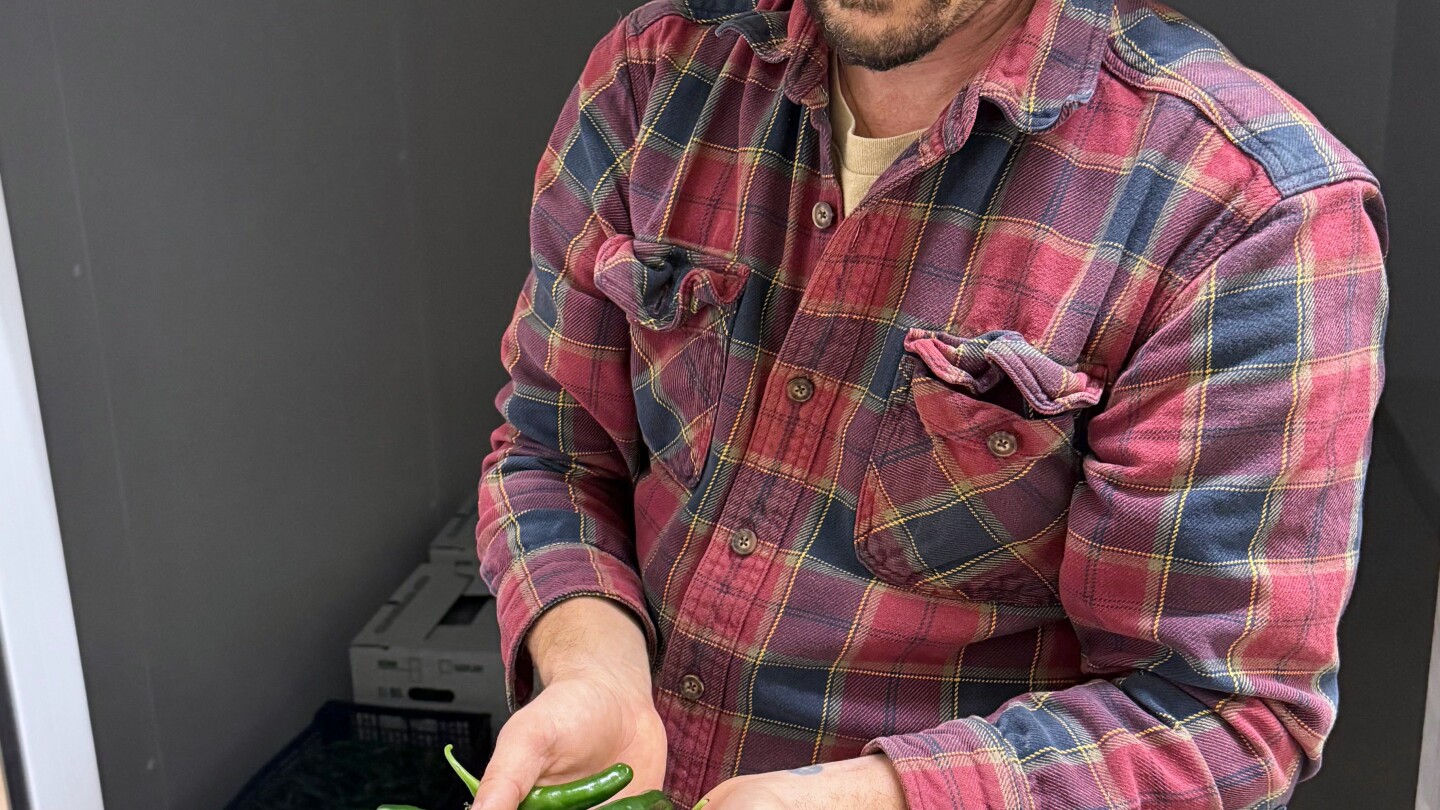
At Manna, a local potato grower will be among the first producers using the new kitchen. The co-op will provide light processing that makes it easier for farmers to deliver their products to buyers. Paige, who farms organically in nearby Vergas, also plans to use the facility to transform his peppers into hot sauce that will be sold on the co-op’s shelves – a perfect example of the farm-to-table model these kitchens aim to support.
Fact Checker
Verify the accuracy of this article using The Disinformation Commission analysis and real-time sources.

18 Comments
I’m curious to learn more about how the Manna Food Co-op plans to manage and coordinate access to this new commercial kitchen. Balancing the needs of different producers will likely be a challenge.
Good point. They’ll need to establish clear policies and schedules to ensure fair and efficient use of the shared facility. Transparent communication with members will be key.
Expanding access to commercial kitchen space is a clever way for co-ops to support their local food producers. It will be interesting to see if this model spreads to other regions.
Absolutely. Co-ops are well-positioned to take on this kind of infrastructure role and help small food businesses scale up their operations.
I’m curious to see what kinds of innovative food products come out of this new co-op kitchen in Minnesota. The possibilities for adding value to locally grown crops seem quite promising.
Agreed. Turning potatoes, peppers, and tomatoes into things like school lunches, salsa, and seed stocks could really boost the local food economy.
I’m skeptical that a single commercial kitchen can really make a big dent in the challenges facing small food producers. But it’s certainly a step in the right direction to support local food systems.
That’s a fair point. Shared infrastructure alone may not be enough, but it’s still a valuable resource that could unlock new opportunities for local businesses.
This is an interesting development in the local food movement. Providing co-op kitchen access seems like a creative way to help small producers scale up and reach new markets.
Absolutely. Overcoming the barriers to commercial food production is a major challenge for many small farms and startups, so this kind of shared facility could make a big difference.
This is an interesting model for strengthening regional food systems. I’m curious to see what kinds of new food products and businesses emerge from this co-op kitchen initiative.
Agreed, it will be exciting to follow the progress and see how this shared resource helps catalyze innovation and growth in the local food economy.
This is a great example of how co-ops can foster innovation and entrepreneurship in the local food system. Giving producers access to commercial kitchens seems like a win-win.
Agree, it’s a smart model that empowers local food entrepreneurs and helps build stronger regional food supply chains.
Expanding access to commercial kitchen space is a smart strategy for supporting local food entrepreneurs. But I wonder how they’ll ensure the kitchen remains financially sustainable over the long term.
That’s a valid concern. The co-op will likely need to find the right balance between affordable access for members and generating enough revenue to cover operating costs.
This is a great example of how co-ops can support local food producers and foster entrepreneurship. Providing access to commercial kitchen facilities is a smart way to help small businesses get started and grow.
Definitely. Shared infrastructure like this can be a game-changer for food startups that might not have the resources to build their own facilities from scratch.