


Listen to the article
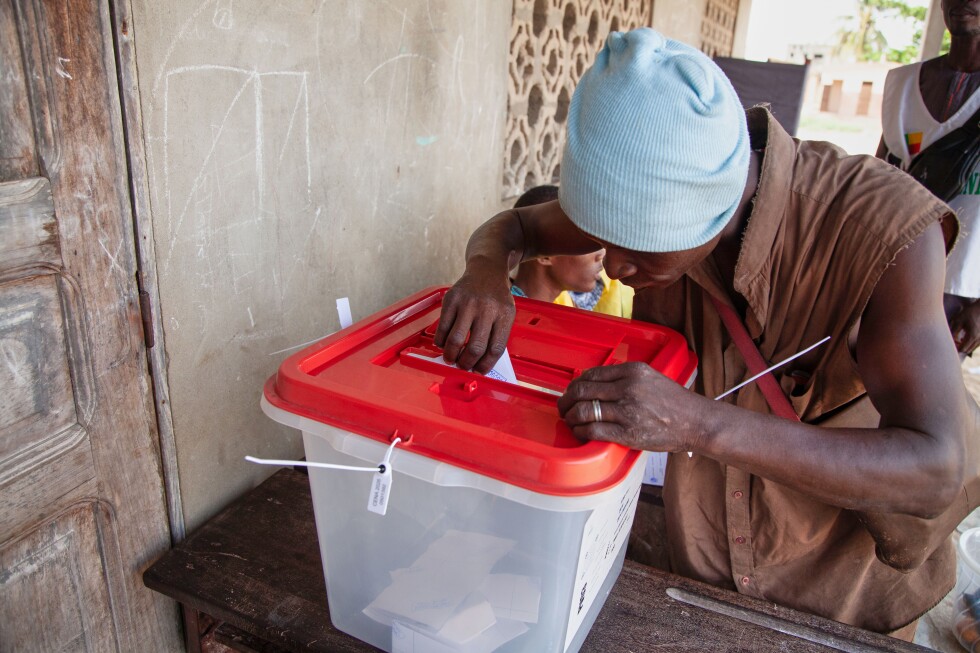
Polls closed Sunday in Benin as voters selected a successor to President Patrice Talon, who is stepping down after serving a decade in power. The election marks a significant transition for the West African nation of over 15 million people, with nearly 8 million registered voters casting ballots at more than 17,000 polling stations across the country.
Finance Minister Romuald Wadagni, 49, widely considered Talon’s handpicked successor, emerged as the frontrunner in the race for the seven-year presidential term. He faced a single opposition challenger, Paul Hounkpè, in what analysts describe as a heavily tilted electoral landscape. Vote counting began Sunday afternoon with results expected within 48 hours.
“Ten years at the Finance Ministry have given him something rare in African politics: a quantified record — verifiable and difficult to dismantle in a serious debate,” said Fiacre Vidjingninou, a political analyst at the Lagos-based Béhanzin Institute, commenting on Wadagni’s campaign advantage.
Turnout remained low throughout election day, particularly in Cotonou, the country’s largest city, where polling stations saw sparse attendance. While public demonstrations were banned during the election, stores remained open and city streets functioned normally throughout the day.
Wadagni campaigned heavily on Benin’s economic achievements under Talon’s administration, where he served as finance minister. The country’s economy grew by an impressive 7% last year, making it one of West Africa’s strongest economic performers. This growth record forms the cornerstone of his pitch to voters as he seeks to continue the economic policies of the outgoing administration.
After casting his ballot, President Talon reflected on his tenure, saying, “I’m leaving office with the feeling of having given my best, of having led the country to take some steps forward in all areas. Whatever the outcome of the vote, Benin has reached a milestone in its history.”
However, Talon leaves behind a complicated legacy. While once celebrated as one of Africa’s most robust democracies, Benin has experienced democratic backsliding under his leadership. Opposition leaders and human rights organizations, including Amnesty International and Human Rights Watch, have consistently criticized his administration for using the justice system to sideline political opponents, arbitrarily detaining critics, restricting public demonstrations, and pressuring independent media outlets.
This democratic regression was evident in January’s parliamentary elections, where opposition parties failed to cross the 20% threshold required to win seats, leaving Talon’s two allied parties in control of all 109 seats in the National Assembly. Critics argue this threshold was deliberately designed to exclude opposition representation.
The election’s restricted field of candidates further illustrates these concerns. Renaud Agbodjo, leader of the Democrats, was barred from competing after failing to secure sufficient parliamentary endorsements, a requirement critics claim was engineered specifically to keep rivals out of the race.
After polls closed, opposition candidate Hounkpè stated he would accept the results conditionally: “As for transparency and fairness, it is normal that, if it is done properly, we will accept the results.”
Beyond political concerns, Benin faces mounting security challenges, particularly in its northern regions. The country has experienced spillover violence from neighboring Burkina Faso and Niger, where the al-Qaida-affiliated extremist group Jama’at Nusrat al-Islam wal-Muslimin (JNIM) has been active. This deteriorating security situation was among the grievances cited during a failed military coup attempt in December, the latest in a series of such incidents across West Africa.
Security cooperation with neighboring countries has become increasingly complicated as both Niger and Burkina Faso are now led by military juntas, creating additional challenges in coordinating regional counterterrorism efforts in the volatile tri-border area.
Beverly Ochieng, an analyst at the Control Risks Group consulting firm, predicted that a Wadagni victory would likely continue Talon’s economic policies aimed at positioning Benin as a stable investment environment. However, she suggested the new president might seek to ease tensions with opponents.
“Wadagni may want to avert a crisis in confidence by first consolidating power then engaging in dialogue with opponents to demonstrate goodwill,” Ochieng noted.
As Benin awaits the election results, the country stands at a crossroads between continuing the economic growth achieved under Talon and addressing the democratic and security challenges that have emerged during his tenure.
Fact Checker
Verify the accuracy of this article using The Disinformation Commission analysis and real-time sources.

9 Comments
The low voter turnout is a bit concerning, as it suggests some potential apathy or disengagement from the political process. It will be important for the new president to work on increasing civic participation and restoring confidence in the democratic system.
While the electoral landscape may have been tilted, the peaceful transfer of power is still an important milestone for Benin. I’ll be interested to see how the new president addresses the country’s challenges and works to strengthen democratic institutions.
The election in Benin is a significant event, and I’ll be following the results closely. I hope the new president will be able to build on the country’s democratic progress and work to create a more prosperous and inclusive future for all Beninese.
The low voter turnout is a bit worrying, as it suggests that some Beninese may feel disengaged from the political process. The new president will need to make a concerted effort to re-engage citizens and address their concerns.
It’s interesting to see the transition of power in Benin, with the incumbent president stepping down after a decade in office. The election of a new leader will be important for the country’s future direction. I’m curious to see how the finance minister’s background and platform resonate with voters.
Benin’s election is an important milestone for democracy in the region, and I hope the new president will prioritize strengthening democratic institutions, fighting corruption, and improving economic opportunities for all citizens.
Benin’s election is an important milestone for democracy in West Africa. While the playing field may have been tilted, the peaceful transfer of power is still a positive sign. I hope the new president will focus on economic development, strengthening institutions, and improving living standards for all Beninese.
The finance minister’s background could be a double-edged sword. On one hand, his experience in government may provide valuable expertise. On the other, voters may be wary of a candidate seen as too close to the outgoing administration. It will be interesting to see how he navigates this dynamic.
This election is a significant moment for Benin, as the country transitions to a new leader after a decade under President Talon. I’m curious to see how the new president will address the country’s challenges and work to improve the lives of its citizens.