


Listen to the article
France Sidelined as Israel-Lebanon Talks Begin Under U.S. Mediation
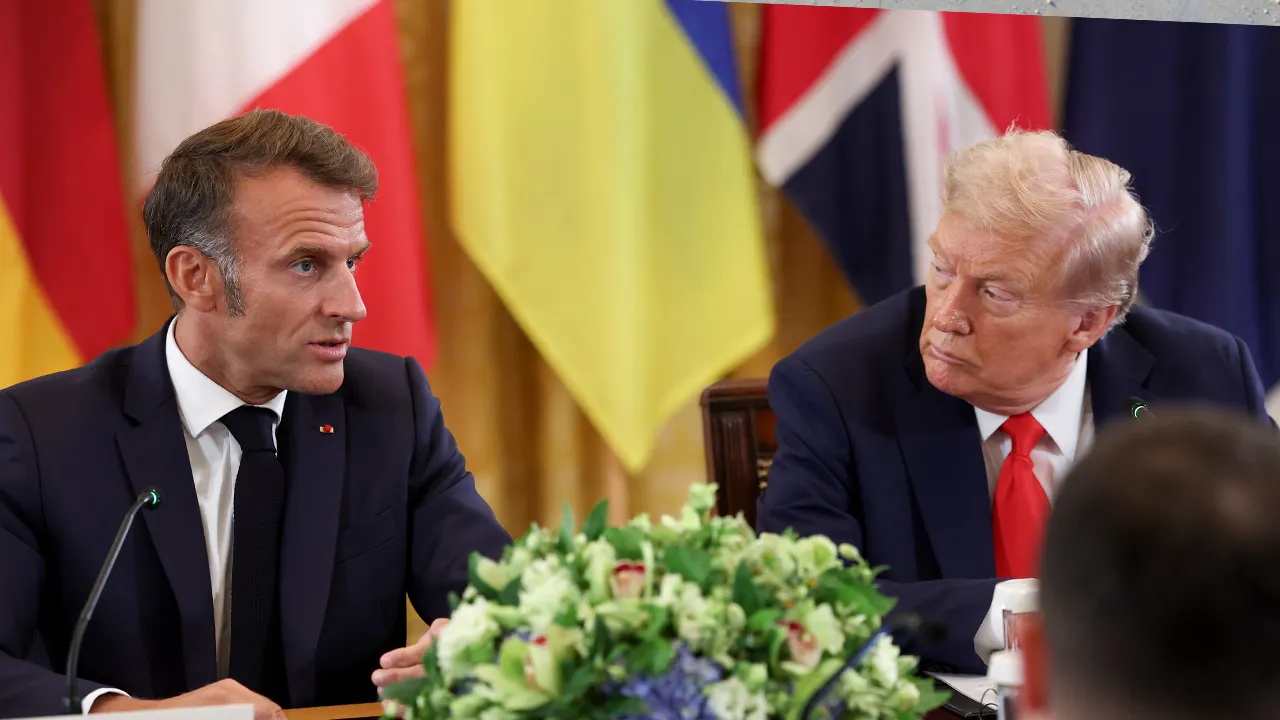
France’s President Emmanuel Macron is facing mounting criticism for his diplomatic stance as historic U.S.-brokered talks between Israel and Lebanon are set to begin Tuesday without French participation.
The ambassador-level meeting, to be hosted by Secretary of State Marco Rubio, represents a potential breakthrough in relations between the neighboring countries. However, according to The Jerusalem Post, Israel specifically requested that France be excluded from the negotiations.
An Israeli official told the newspaper that “France’s conduct over the past year – including initiatives aimed at limiting Israel’s ability to fight in Iran, and a complete lack of willingness to take concrete steps to help Lebanon disarm Hezbollah – has led Israel to view France as an unfair mediator.”
The talks come amid significant tensions in the region. On Monday, Hezbollah chief Naim Qassem called on the Lebanese government to cancel the Washington meeting, describing it as pointless. In a televised address, Qassem declared that the armed group would continue confronting Israeli attacks on Lebanon.
The terrorist organization violated an earlier ceasefire in March when it launched rockets into Israel following the joint U.S.-Israel military action against Iran. Despite this aggression, Macron has demanded Israel cease attacking Hezbollah’s infrastructure in Lebanon.
Israeli Brig. General (Res.) Yosef Kuperwasser told Fox News Digital that Macron was “working against the best interests of the Lebanese state and government,” adding that the French president was “taking the side of Hezbollah and normalizing Hezbollah” due to “narrow interests.”
Kuperwasser, former head of research for the Israel Defense Forces’ Military Intelligence Directorate, emphasized that Israel and the United States share similar expectations from the talks. “We want to see Lebanon do something about Hezbollah, something real, not just issue statements and pledges,” he said. “We believe we have helped them by weakening Hezbollah militarily since they decided to launch missiles on March 2.”
France’s approach to Hezbollah has long been controversial. Unlike Germany, the United States, Canada, the Netherlands, Japan, Austria, and many other countries, France has refused to designate Hezbollah’s entire organization as a terrorist entity. Instead, it classifies only Hezbollah’s “military wing” as terrorist while declining to ban what it calls the “political wing” – a distinction Hezbollah itself does not recognize.
François-Xavier Bellamy, a French member of the European Parliament for the Republicans Party, stated last week on French television that “France must stop normalizing Hezbollah.” Macron previously sparked outrage in 2020 when he reportedly held a private conversation with a top elected Hezbollah official, according to the Paris-based daily Le Figaro.
Edy Cohen, an Israeli security expert on Hezbollah who was born in Lebanon, told Fox News Digital that “France is forced not to come out against Hezbollah in order to legitimize its involvement in Lebanon.”
A French diplomat told the Times of Israel that “what we are hoping for is not a ticket to the meeting, but that Israel stops its offensive on Lebanon.” When asked if France would pressure Lebanon to recognize Israel as a state, Pascal Confavreux, a spokesman for France’s Foreign Ministry, told “Fox News Sunday” that “Iran has to stop terrorizing Israel through Hezbollah because Hezbollah chose to bring Lebanon into a war which is not Lebanon’s war.”
On Saturday, Macron reiterated his desire for a ceasefire, writing on X after discussions with Iran’s President Massoud Pezeshkian: “I stressed the importance of full respect for the ceasefire, including in Lebanon. France extends its full support to the actions of the Lebanese authorities, who alone are legitimate to exercise the sovereignty of the State and decide the destiny of Lebanon.”
Walid Phares, an expert on Lebanon, cautioned that while the talks are important, they face significant challenges. “It is at ambassadors’ level, which means it is not destined to reach a top level of decision-making,” he noted. He also pointed out that “the Lebanese president and prime minister declined to invite the Lebanese foreign minister to the Washington talks,” suggesting “Hezbollah still has a strong influence on the Lebanese government” despite being “rejected by the population on the ground.”
The diplomatic developments unfold against a backdrop of complex regional dynamics, with Lebanon caught between its formal state institutions and the powerful, Iran-backed Hezbollah militia that has effectively operated as a state within a state for decades.
Fact Checker
Verify the accuracy of this article using The Disinformation Commission analysis and real-time sources.

20 Comments
Production mix shifting toward World might help margins if metals stay firm.
Good point. Watching costs and grades closely.
Nice to see insider buying—usually a good signal in this space.
Good point. Watching costs and grades closely.
Good point. Watching costs and grades closely.
Silver leverage is strong here; beta cuts both ways though.
Silver leverage is strong here; beta cuts both ways though.
Good point. Watching costs and grades closely.
I like the balance sheet here—less leverage than peers.
Exploration results look promising, but permitting will be the key risk.
Good point. Watching costs and grades closely.
Good point. Watching costs and grades closely.
If AISC keeps dropping, this becomes investable for me.
Good point. Watching costs and grades closely.
Silver leverage is strong here; beta cuts both ways though.
Good point. Watching costs and grades closely.
Good point. Watching costs and grades closely.
Silver leverage is strong here; beta cuts both ways though.
If AISC keeps dropping, this becomes investable for me.
Interesting update on Macron Faces Criticism Over Iran, Hezbollah Policy Amid US-Led Israel-Lebanon Talks. Curious how the grades will trend next quarter.