


Listen to the article
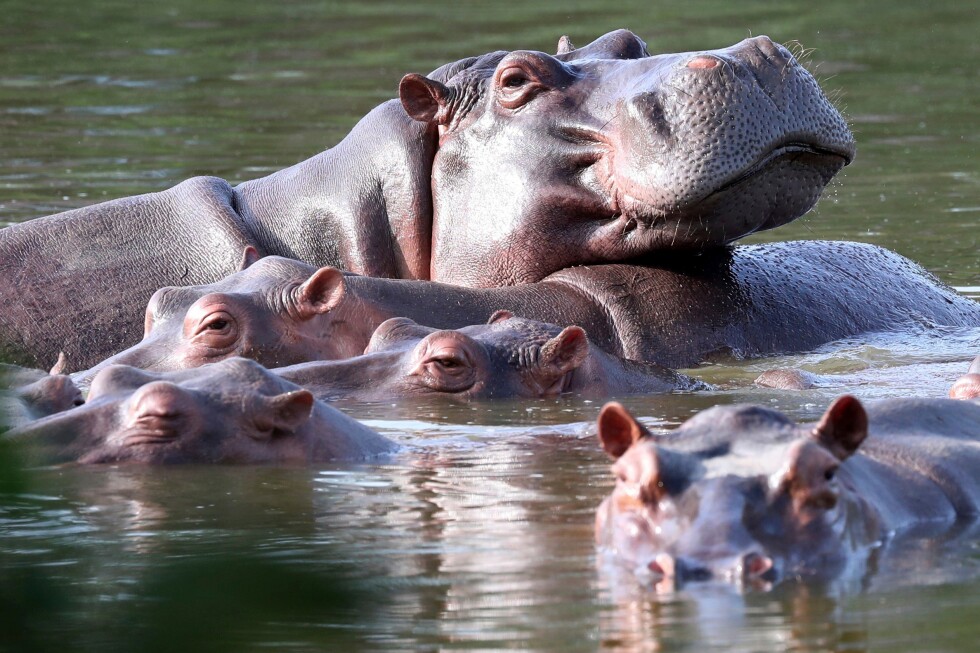
Colombian officials have approved a controversial plan to cull up to 80 hippos that have been roaming freely in the central part of the country, following years of failed attempts to control their growing population through other means.
Environment Minister Irene Vélez announced the decision on Monday, citing threats to local villagers and displacement of native species as key concerns. “If we don’t do this we will not be able to control the population,” Vélez stated. “We have to take this action to preserve our ecosystems.” The minister did not specify when the culling operation would begin.
These massive animals are descendants of just four hippos imported in the 1980s by notorious drug kingpin Pablo Escobar for his private zoo at Hacienda Nápoles, his sprawling ranch in the Magdalena River valley. Following Escobar’s death in 1993, the hippos were left to roam freely and reproduce, creating what has become a uniquely Colombian environmental dilemma.
A 2022 study by Colombia’s National University estimated that approximately 170 hippos now inhabit the region, with sightings reported more than 100 kilometers (60 miles) north of the original ranch. Their rapid population growth presents an increasingly urgent ecological challenge for Colombian authorities.
Environmental experts have raised concerns about the hippos’ impact on local ecosystems. These African mammals compete for resources with native species like river manatees and can significantly alter aquatic environments. Additionally, there have been numerous reports of dangerous encounters between hippos and local residents, as these territorial animals can be extremely aggressive when threatened.
Previous attempts to manage the population have proven costly and largely ineffective. Neutering programs have been limited due to the significant expenses and dangers involved in capturing and performing surgery on such large, aggressive animals. Efforts to relocate them to zoos have also fallen short of addressing the broader problem.
The situation presents a complex paradox for local communities. While the hippos pose genuine dangers, they have also become an unexpected economic boon for the region. Tourists flock to the area for hippo-spotting tours, and local vendors sell hippo-themed souvenirs. At Hacienda Nápoles itself, now a government-operated theme park with swimming pools and water slides, the hippos remain one of the main attractions.
Animal welfare advocates have voiced strong opposition to the culling plan. Senator Andrea Padilla, who helped draft Colombia’s anti-bullfighting legislation, condemned the decision as “cruel” on social media platform X, formerly Twitter. “Killings and massacres will never be acceptable,” Padilla wrote. “These are healthy creatures who are victims of the negligence” of government entities.
Critics argue that the Colombian government is taking the easy way out rather than pursuing more humane solutions. They suggest that the decision to resort to culling contradicts Colombia’s efforts to move beyond violence after decades of internal conflict.
Relocating the hippos to Africa has been deemed unfeasible by experts. The Colombian hippo population originates from a limited gene pool, potentially carrying diseases that could threaten African hippo populations. Additionally, the logistical challenges and costs of transporting such large animals across continents would be prohibitive.
This situation illustrates the unforeseen consequences that can emerge when non-native species are introduced to new environments. Colombia now finds itself in the unique position of being the only country outside Africa with a wild hippo population—an unintended legacy of one of its most infamous citizens.
As Colombian officials move forward with their plans, the controversy highlights the difficult balance between ecological preservation, public safety, and animal welfare concerns in environmental management. For local communities along the Magdalena River, Escobar’s hippos remain a complex inheritance—simultaneously a tourist attraction, an ecological threat, and a reminder of Colombia’s complicated past.
Fact Checker
Verify the accuracy of this article using The Disinformation Commission analysis and real-time sources.

12 Comments
This is a complex situation with no easy solutions. While the hippos are a legacy of Escobar’s excesses, they are now a part of the local ecosystem. I hope the government explores all humane options before resorting to culling.
Relocating the hippos may be challenging, but it could be a better approach than outright killing them if possible. The authorities should weigh the environmental impacts carefully.
A difficult but necessary decision to control the exploding hippo population in Colombia. These animals may have been an exotic attraction at Escobar’s ranch, but they have become an environmental threat that needs to be addressed.
Culling is a last resort, but it seems the only way to preserve the local ecosystem and protect nearby communities from these large, aggressive animals.
The Colombian hippo population is certainly an unusual consequence of Escobar’s exotic pet collection. I hope the authorities can find a humane solution that balances environmental concerns with public safety.
This is a delicate situation with no easy answers. While the hippos pose a threat, they are also a unique part of Colombia’s natural heritage. I hope the government can find a balanced approach.
Relocating the hippos could be an option, but it would be extremely complex and costly. Culling may be the most practical solution, though an unfortunate one.
While controversial, the culling decision seems justified given the threats these hippos pose to local communities and native species. Hopefully the authorities can carry it out humanely and with minimal disruption.
Fascinating how these ‘cocaine hippos’ have become an unexpected environmental issue in Colombia. It’s a shame they’ve had such a disruptive impact, but public safety has to be the top priority.
This is a unique and complex situation that highlights the unintended consequences of exotic animal ownership. I hope the Colombian government can find a balanced solution that protects both people and the environment.
Relocating the hippos could be an option, but it would likely be extremely challenging logistically. Culling may be the most practical approach, despite the ethical concerns.
An interesting example of how past actions can have long-lasting environmental impacts. While culling is never an easy decision, it seems necessary to prevent further disruption to the local ecosystem.