


Listen to the article
Israel-Turkey Tensions Escalate as Leaders Exchange Harsh Rhetoric
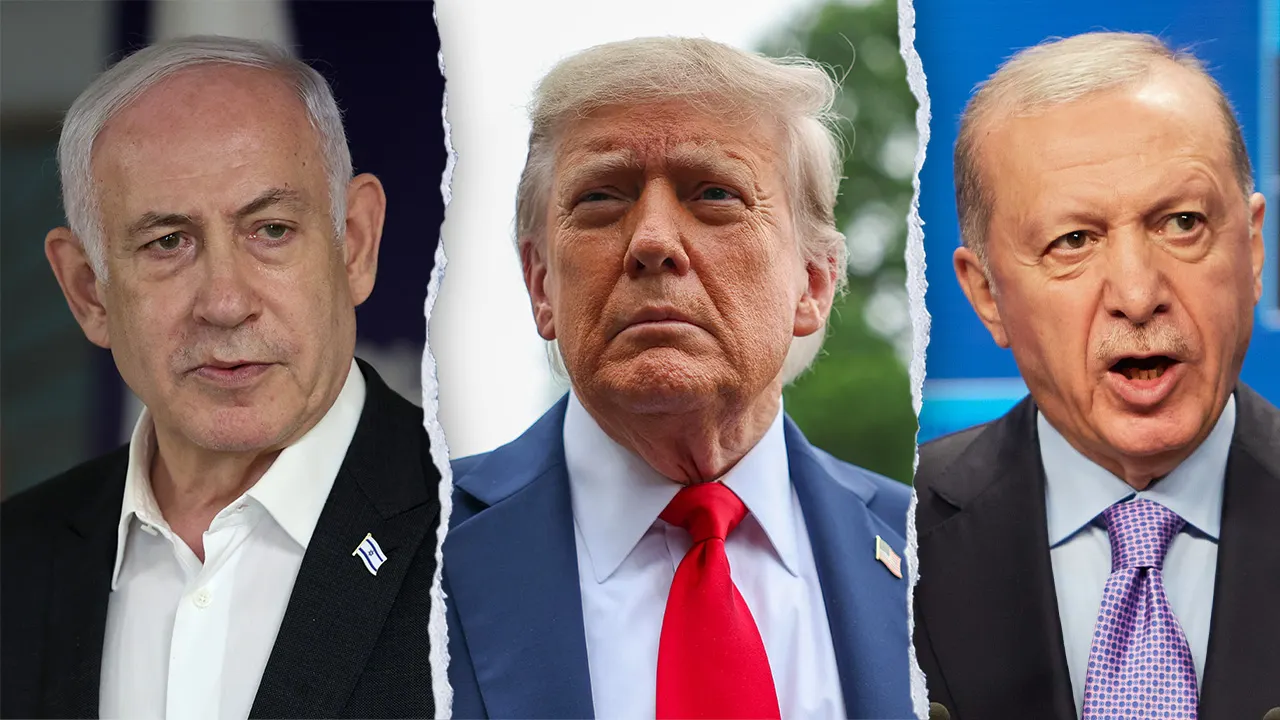
Tensions between Israel and Turkey are reaching unprecedented levels, with a bitter war of words between Israeli Prime Minister Benjamin Netanyahu and Turkish President Recep Tayyip Erdoğan placing President Donald Trump in an increasingly precarious diplomatic position between two key regional allies.
The latest escalation underscores deepening geopolitical divisions regarding Iran, Gaza, and broader Middle Eastern influence, even as Washington attempts to maintain critical cooperation with both nations.
Turkey’s Foreign Minister Hakan Fidan recently accused Israel of deliberately manufacturing a new adversary following its confrontation with Iran. “After Iran, Israel cannot live without an enemy,” Fidan said in a televised interview with Turkey’s state-run Anadolu news agency. “We see that not only Netanyahu’s administration but also some figures in the opposition are seeking to declare Turkey the new enemy.”
The rhetoric has grown increasingly inflammatory. Netanyahu accused Erdoğan of siding with Iran and its proxies, writing on social media platform X that Israel “will continue to fight Iran’s terror regime… unlike Erdogan who accommodates them and massacred his own Kurdish citizens.”
Turkey’s Foreign Ministry responded with a blistering statement, calling Netanyahu “the Hitler of our time” and highlighting that the International Criminal Court has issued an arrest warrant against him on charges of war crimes and crimes against humanity.
These exchanges come against the backdrop of the ongoing conflict in Gaza, which began with Hamas’s October 7, 2023 attack on Israel. Since then, Erdoğan has intensified criticism of Israel’s military campaign, accusing its leadership of war crimes and supporting international legal action against Israeli officials.
The escalation extends beyond rhetoric. Erdoğan has previously suggested Turkey could take more assertive military action in the region, referencing past interventions – remarks that have alarmed Israeli security officials. Israeli Defense Minister Israel Katz dismissed Erdoğan’s threats as bluster, though officials warn that Turkey’s regional posture, particularly its engagement in Syria, is under close scrutiny.
For President Trump, the deteriorating relationship presents a significant diplomatic challenge. His administration relies on Israel as a central partner in confronting Iran, while simultaneously depending on Turkey, a NATO ally, for regional diplomacy and mediation efforts related to ceasefire negotiations and broader Middle East strategy. This balancing act has grown increasingly difficult as tensions between Jerusalem and Ankara intensify.
Experts suggest domestic political considerations are driving both leaders’ aggressive posturing. “For both Netanyahu and Erdoğan, escalating rhetoric serves a domestic purpose,” said Gönül Tol, senior fellow at the Middle East Institute. “Anti-Israeli and pro-Palestinian sentiment in Turkey is very strong. At a time when Erdoğan is struggling to resolve the country’s growing economic problems, responding to Netanyahu’s statements harshly scores points domestically and burnishes his strong leader image.”
However, Tol believes the heated exchanges are unlikely to escalate into direct military confrontation: “Despite their military presence and clashing interests, Turkey and Israel have a quiet understanding where each accepts the other’s sphere of influence in the country and try to deconflict.”
Turkish academic Hüseyin Bağcı similarly argued that Turkey’s ties with Washington limit the likelihood of direct conflict. “The Turkish state is not interested in fighting with Israel because the Turkish government has very good relations with the United States of America,” he said during a policy webinar hosted by the Jerusalem Institute for Strategy and Security. “You cannot be good with America and then be in conflict with Israel.”
Israeli concerns, however, focus more on actions than rhetoric. Retired Israeli strategist Gabi Siboni pointed to Turkey’s behavior in Syria as shaping threat perceptions. “There are true security concerns when we’re talking about what is happening in Syria… Israel is not going to accept any type of military entrenchment of foreign actors,” Siboni noted.
Adding to the tensions is a new Turkish-linked aid flotilla that departed from Barcelona on Monday, raising concerns about a repeat of past confrontations. The issue carries historical weight: in 2010, Israeli commandos boarded a Gaza-bound flotilla, resulting in ten deaths and triggering a years-long diplomatic rupture between the two countries. Recent reports that Turkish prosecutors are seeking prison sentences for Israeli officials, including Netanyahu, over flotilla-related incidents have further inflamed tensions.
While the confrontation remains largely rhetorical for now, the sharp escalation in language and competing regional interests highlight the fragility of the Middle Eastern geopolitical landscape – and the limits of Washington’s ability to keep both crucial allies aligned as they pursue increasingly divergent paths.
Fact Checker
Verify the accuracy of this article using The Disinformation Commission analysis and real-time sources.

11 Comments
This feud between Israel and Turkey seems to be escalating rapidly. It’s concerning to see such strong rhetoric being exchanged, especially with Trump caught in the middle. I wonder how this will impact the geopolitical dynamics in the region.
You’re right, this puts Trump in a difficult position trying to balance relations with both countries. It will be interesting to see how the administration navigates this escalating situation.
The mining and energy sectors will be watching this situation closely, as any further escalation could impact geopolitical stability and trade in the region. Investors will be looking for signs of how this might affect key commodities and projects.
The accusations of deliberately manufacturing new adversaries are quite inflammatory. It’s clear there are deep divisions between Israel and Turkey over Iran, Gaza, and regional influence. This will be a delicate diplomatic challenge for the US to manage.
Absolutely, the US will need to tread carefully to try to reduce tensions and maintain cooperation with both sides. These types of public feuds can be tricky to resolve behind the scenes.
The mining and energy sectors will be watching this situation closely, as any further escalation could impact geopolitical stability and trade in the region. Investors will be looking for signs of how this might affect key commodities and projects.
That’s a good point. Tensions between major powers in the Middle East can certainly have ripple effects on the global commodities markets, particularly for critical resources like oil and minerals. Navigating those challenges will be crucial.
This feud between Israel and Turkey seems to be escalating rapidly, with both sides using increasingly inflammatory rhetoric. It’s concerning to see such strong words being exchanged, especially with Trump caught in the middle. I wonder how this will impact the geopolitical dynamics in the region and the mining/energy sectors.
This dispute between Netanyahu and Erdogan seems to be escalating rapidly, putting Trump in a difficult position. The accusations of deliberately manufacturing new adversaries are quite inflammatory and suggest deep divisions over Iran, Gaza, and regional influence.
Agreed, this is a delicate diplomatic challenge for the US to manage. Maintaining cooperation with both Israel and Turkey will be crucial, especially given the potential impacts on global commodity markets and regional stability.
It’s concerning to see Israel and Turkey exchanging such harsh rhetoric, especially with the US caught in the middle. This feud could have broader implications for regional security and stability that the mining and energy sectors will be monitoring closely.