


Listen to the article
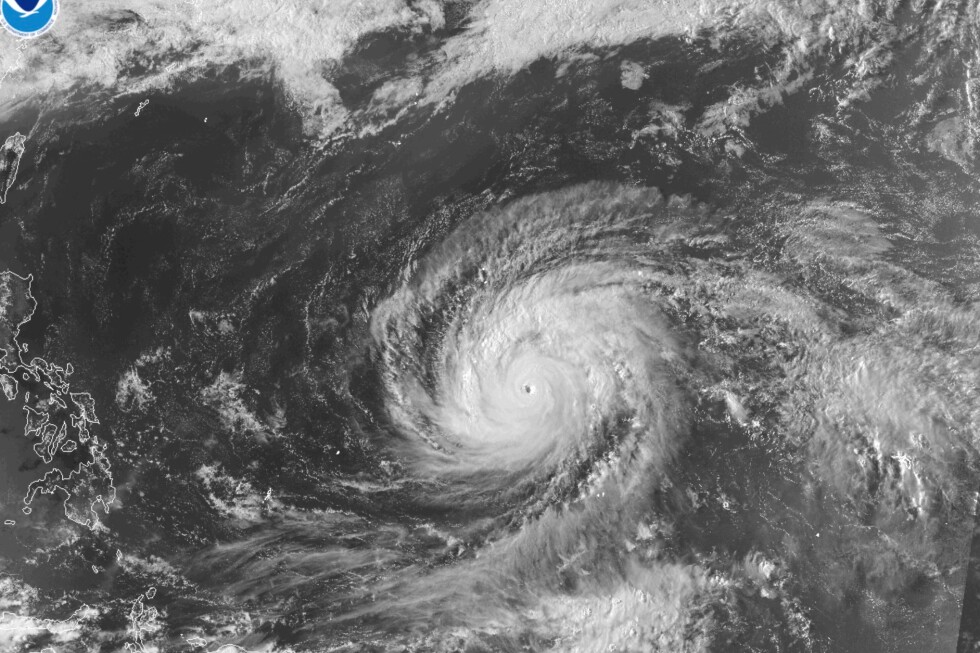
Super Typhoon Sinlaku, the strongest tropical cyclone on Earth this year, is bearing down on several remote U.S. islands in the Pacific Ocean, prompting emergency preparations and evacuations. With sustained winds reaching 173 mph (278 kph), the powerful storm is expected to make landfall in the Northern Mariana Islands late Tuesday local time.
The typhoon is forecast to pass directly over or dangerously close to the islands of Rota, Tinian, and Saipan as a Category 4 or 5 storm, according to the Joint Typhoon Warning Center. Meteorologists warn of widespread flooding, destructive winds, and potentially lengthy power outages across the region.
While Guam isn’t expected to take a direct hit, the U.S. territory of approximately 170,000 residents was already experiencing tropical storm-force wind gusts and heavy rainfall early Tuesday. Most businesses on the island closed in anticipation of deteriorating conditions, and residents were advised to remain indoors.
“We’re seeing wind gusts up to 60 mph already,” said Joshua Schank, a lead meteorologist with the National Weather Service in Guam. “The main impacts are still hours away.”
About 50,000 people live across the three islands most at risk, with the majority residing on Saipan. Known for its resorts, snorkeling, and golf courses, Saipan serves as the capital of the Northern Mariana Islands and has significant historical importance as the site of one of World War II’s bloodiest Pacific battles, where more than 50,000 Japanese and American soldiers and civilians perished.
Local resident Glen Hunter described the region as sitting in “Typhoon Alley” and expressed concern about potentially going weeks or months without electricity and running water. “We’re remote, beautiful islands in the Pacific, which is a plus, but in times of recovery it becomes a massive negative to getting things into our damaged ports,” Hunter said.
The storm has already caused significant damage to the outer islands and atolls of Chuuk in the Federated States of Micronesia before turning toward U.S. territories, according to Landon Aydlett, a meteorologist with the weather service on Guam.
The economic implications for the region could be severe. Saipan’s tourism-dependent economy was still recovering from 2018’s Super Typhoon Yutu when the COVID-19 pandemic struck in 2020, dealing another blow to local businesses. This latest natural disaster threatens to further delay economic recovery efforts.
U.S. military officials on Guam, which serves as a critical hub for American forces in the Pacific and controls about one-third of the island’s land, warned personnel to prepare for the storm and shelter in place. The island experienced extended power outages last year when Typhoon Mawar struck the territory.
In anticipation of significant damage, President Donald Trump approved emergency disaster declarations for both Guam and the Northern Mariana Islands on Saturday, enabling additional federal emergency assistance. The Federal Emergency Management Agency (FEMA) has coordinated a multi-agency response, deploying nearly 100 staff members along with personnel from the Environmental Protection Agency, Department of Transportation, and U.S. Army Corps of Engineers.
“We are ready to respond to this event,” said Robert Fenton, a FEMA regional administrator, speaking from Guam on Monday. The agency began mobilizing supplies and staff late last week in preparation for the storm’s arrival.
FEMA’s response comes during the record-long Department of Homeland Security shutdown. However, the agency’s emergency response functions remain operational during funding impasses, with over 10,000 disaster personnel still receiving pay. FEMA’s disaster relief fund, which reportedly held about $3.6 billion in late March, remains available until exhausted.
Super typhoons, the strongest tropical cyclones in the northwestern Pacific Ocean, typically produce winds equivalent to Category 4 or 5 Atlantic hurricanes, exceeding 150 mph (240 kph). The Joint Typhoon Warning Center in Guam has identified more than 300 super typhoons since beginning to track these powerful storms nearly eight decades ago.
As residents brace for impact, local authorities continue to urge those in vulnerable housing to seek shelter with family or in government facilities. Most permanent residents live in sturdy concrete structures built to withstand the region’s frequent typhoons, though many temporary or older structures remain at high risk of catastrophic damage.
Fact Checker
Verify the accuracy of this article using The Disinformation Commission analysis and real-time sources.

8 Comments
Wow, that’s a really powerful storm headed towards those remote Pacific islands. I hope the residents are able to get to safe shelter in time and that the damage is not too severe. Mother Nature can be so unpredictable and destructive.
Absolutely, these remote areas can be especially vulnerable when major storms hit. Let’s hope the emergency preparations and evacuations are effective in protecting lives and property.
I’ll be keeping an eye on the news for updates on the typhoon’s impact. With winds over 170 mph, this is a very dangerous situation for those islands. Hopefully the forecasting and evacuation efforts will minimize the damage.
Yes, monitoring the situation closely will be key. The remote location and powerful winds make this a particularly concerning storm event for the affected communities.
It’s remarkable how powerful these Pacific typhoons can be. I hope the people in the path of this storm are able to find safe shelter and that the recovery efforts are swift once it passes. Events like this really underscore the need for robust emergency planning in vulnerable regions.
It’s concerning to see such a strong typhoon threatening these small, isolated U.S. territories. I wonder how well prepared the local infrastructure and emergency response systems are to handle a storm of this magnitude.
That’s a good point. Maintaining critical infrastructure in remote island communities can be very challenging, especially when extreme weather events become more frequent due to climate change.
This is a timely reminder of the importance of disaster preparedness and resilience, especially for populations living in remote, high-risk areas. I hope the authorities are able to mobilize the necessary resources to keep people safe.