


Listen to the article
China Denounces U.S. Blockade of Strait of Hormuz as “Dangerous and Irresponsible”
China has strongly condemned the United States’ military blockade of the Strait of Hormuz, calling it a “dangerous and irresponsible move” that threatens to escalate tensions in the strategically vital waterway.
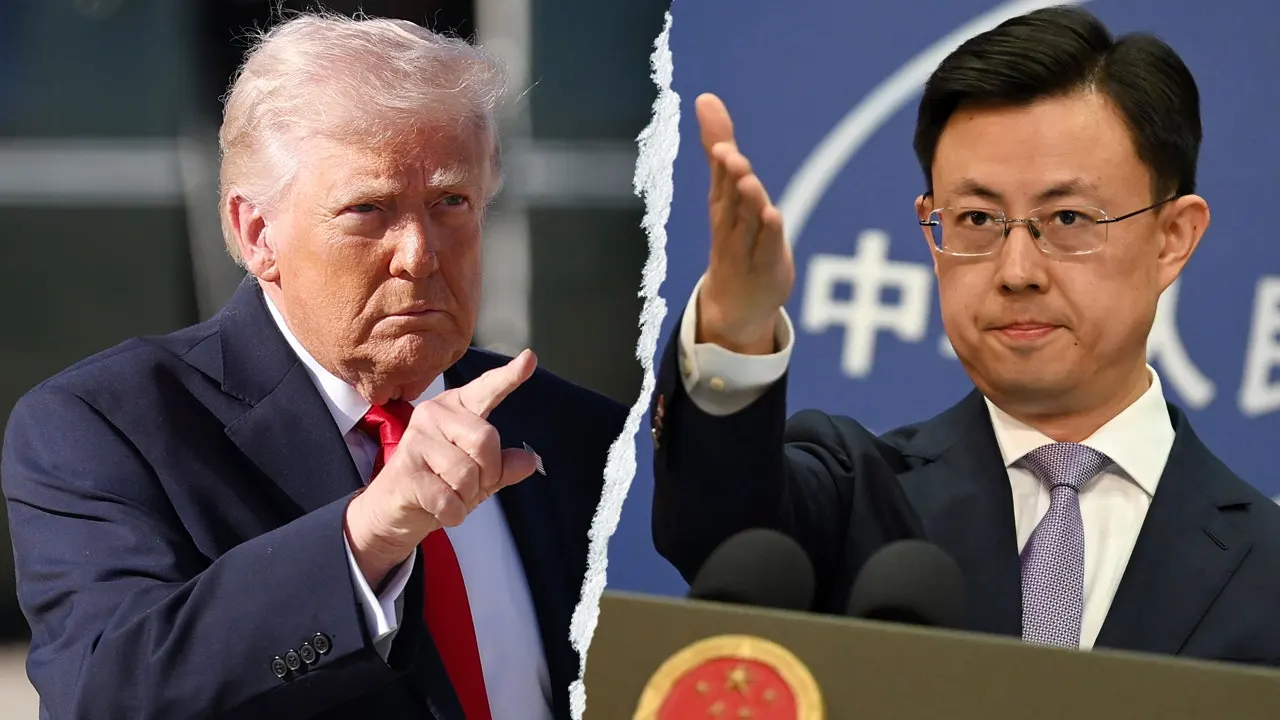
The criticism came from Chinese Foreign Ministry spokesperson Guo Jiakun on Tuesday, just one day after the U.S. began enforcing the blockade on Iranian ports. President Donald Trump ordered the military action after peace negotiations with Tehran collapsed over the weekend.
“With the temporary ceasefire agreement still in place, the United States ramped up military deployment and resorted to a targeted blockade,” Guo stated. “This will only aggravate confrontation, escalate tension, undermine the already fragile ceasefire and further jeopardize safe passage through the Strait of Hormuz.”
The Chinese government emphasized that only a complete ceasefire could create conditions for de-escalation in the region. “We urge relevant parties to honor the ceasefire agreement, stick to the direction of peace talks and take concrete actions to deescalate the situation so that normal traffic via the Strait will be able to resume as soon as possible,” Guo added.
The White House was quick to respond to China’s criticism. Spokeswoman Olivia Wales told Fox News Digital that “The Iranians’ desperation for a deal is only increasing with President Trump’s highly effective naval blockade in effect.”
Wales defended the blockade as necessary to “ensure freedom of navigation for all ships traveling to non-Iranian ports” and to end what she described as “Iranian extortion of the world.” She also emphasized that the Trump administration has made clear its position that Iran will never be allowed to possess nuclear weapons.
The Strait of Hormuz represents one of the world’s most critical maritime chokepoints. Located between Iran, Oman, and the United Arab Emirates, the narrow waterway facilitates the transport of approximately 20 million barrels of oil daily—roughly 20% of global oil trade—and about one-fifth of the world’s liquefied natural gas shipments. Any disruption to this flow could have severe implications for global energy markets and economies dependent on Middle Eastern energy supplies.
U.S. Central Command formalized the blockade on Monday with a notice to seafarers that explicitly warned, “Any vessel entering or departing the blockaded area without authorization is subject to interception, diversion, and capture.” The enforcement officially began at 10 a.m. ET on Monday.
The Iranian government has responded to the blockade with strong rhetoric, labeling it as “piracy” and threatening to respond with force—a move that could potentially end the fragile ceasefire currently in place between the United States and Iran.
The blockade comes at a particularly sensitive time in U.S.-Iran relations. Despite the current tensions, there are indications that fresh talks between the two nations could begin this week, even as the U.S. maintains its naval presence in the strait.
The situation has drawn international attention not only because of its potential impact on global energy security, but also for its implications for regional stability in the Middle East. The strait has been a flashpoint for conflicts in the past, and military activities in the area are closely monitored by regional and global powers alike.
Analysts note that China’s vocal opposition to the blockade reflects Beijing’s growing concerns about potential disruptions to its energy supply chains, as well as its broader strategic interests in maintaining stability in the Middle East, where it has expanded its diplomatic and economic footprint in recent years.
As tensions continue to simmer, the international community remains watchful of developments that could either lead to renewed diplomatic engagement or a dangerous escalation in one of the world’s most strategically important waterways.
Fact Checker
Verify the accuracy of this article using The Disinformation Commission analysis and real-time sources.

8 Comments
Tensions in the Strait of Hormuz are worrying for the mining and commodities sectors. All sides need to exercise restraint and pursue diplomatic solutions to ease the crisis.
China has a point – a military blockade will likely only inflame the situation further. Maintaining open shipping lanes in the Strait of Hormuz should be the priority for all sides.
Yes, the stability of energy markets and global supply chains depends on free passage through this chokepoint. Reckless military actions could have severe economic consequences.
This is a concerning development that could impact commodity and energy prices globally. I hope the parties can find a diplomatic resolution to avoid further escalation.
This blockade could have serious consequences for global trade and energy supplies. It’s concerning to see the U.S. and China escalating tensions in this vital waterway.
Agreed, the risk of miscalculation and unintended escalation is high. All parties need to show restraint and focus on diplomatic solutions to ease the tensions.
The Strait of Hormuz is a critical maritime chokepoint. A military blockade by the U.S. would be a risky move that could disrupt vital energy and trade flows.
Absolutely, this waterway is essential for global energy security. China is right to condemn unilateral actions that threaten the free flow of commerce in the region.