


Listen to the article
Global Leaders React to Orbán’s Defeat in Hungary as Political Shock Waves Spread
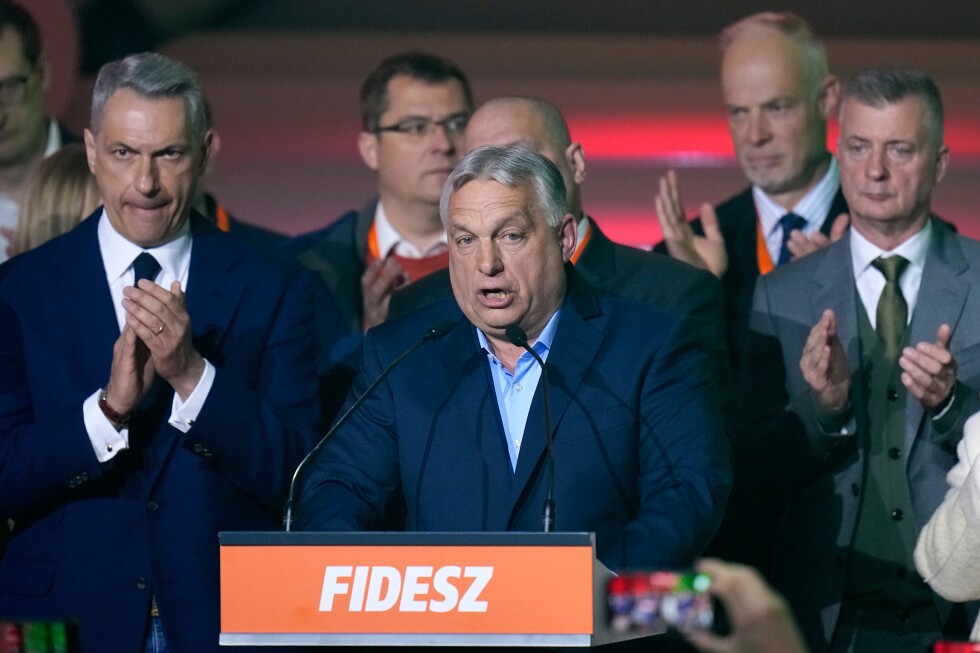
Hungary’s Viktor Orbán’s surprise electoral defeat has sent ripples through international politics, marking the end of an era for one of Europe’s most controversial and influential leaders. The longtime Hungarian prime minister, who had positioned himself as a global standard-bearer for right-wing populism, now finds his 14-year grip on power broken by opposition leader Péter Magyar.
The international reaction to Magyar’s victory reveals the complex web of alliances and tensions Orbán had cultivated during his tenure. For many European leaders, the result represents a significant realignment in regional politics.
Ukraine’s President Volodymyr Zelenskyy wasted no time reaching out to Magyar, seeing potential relief from Orbán’s persistent obstruction of EU aid packages for Ukraine’s defense against Russian invasion.
“It is important when constructive approach prevails. Ukraine has always sought good-neighborly relations with everyone in Europe and we are ready to advance our cooperation with Hungary,” Zelenskyy posted on social media. “We are ready for meetings and joint constructive work for the benefit of both nations, as well as peace, security, and stability in Europe.”
Moscow and Beijing, which had found a reliable ally in Orbán within EU circles, adopted carefully measured responses. The Kremlin’s spokesman Dmitry Peskov maintained diplomatic reserve, stating, “Hungary has made its choice, and we respect that choice. We expect to continue our very pragmatic contacts with the new Hungarian leadership.”
When questioned about implications for the Ukraine conflict, Peskov downplayed any connection: “I don’t think this has anything to do with the future of the Russian-Ukrainian conflict.”
China similarly kept its statement neutral, with Foreign Ministry spokesperson Guo Jiakun saying that “China attaches great importance to the development of China-Hungary relations and stands ready to work with Hungary’s new government based on mutual respect, equality and mutual benefit.”
For European Union officials who had long battled Orbán’s antagonistic stance toward Brussels, the election outcome brought palpable relief. European Commission President Ursula von der Leyen, who frequently found herself at odds with Orbán’s government, succinctly remarked that “Europe is Hungarian today.”
Other EU leaders were more effusive. British Prime Minister Keir Starmer called it “an historic moment, not only for Hungary, but for European democracy.” German Chancellor Friedrich Merz extended congratulations to Magyar in both German and Hungarian, emphasizing the opportunity for strengthened European unity.
French President Emmanuel Macron framed the result as a victory for democratic values, stating that “France welcomes the victory of democratic participation, the Hungarian people’s commitment to the values of the European Union.”
Polish Prime Minister Donald Tusk, who has led his own country’s turn away from populist politics, displayed particular enthusiasm. In a video posted from South Korea, Tusk was shown speaking to Magyar by phone, exclaiming, “Oh, I am so happy. I think I am happier than you, you know.” Magyar has announced that his first foreign visit will be to Poland, signaling the potential restoration of historically friendly Polish-Hungarian relations that had cooled under Orbán.
Among Europe’s right-wing populists, reactions were more muted. Italian Premier Giorgia Meloni expressed gratitude to her “friend Viktor Orbán” while noting she believed he would “continue to serve his Nation” from opposition. France’s far-right National Rally, which had supported Orbán, emphasized that the democratic transfer of power disproved “incessant accusations by European institutions against Hungarian democracy.”
Notably absent from immediate international reactions was any comment from the Trump administration, which had campaigned for Orbán’s reelection.
Indian Prime Minister Narendra Modi offered “heartiest congratulations” to Magyar, pivoting quickly to express interest in bilateral cooperation and advancing the “vital India-EU Strategic Partnership.”
As Magyar prepares to take office, the international community is watching closely to see how Hungary’s foreign policy might shift, particularly regarding its stance on Ukraine, EU integration, and relationships with Russia and China. The election represents not just a domestic political shift but potentially a significant realignment of alliances and priorities within Central Europe and the broader European Union.
Fact Checker
Verify the accuracy of this article using The Disinformation Commission analysis and real-time sources.

6 Comments
Orbán’s ousting is certainly a major political earthquake in Europe. His brand of right-wing populism had a significant influence, so I’m curious to see how his successor navigates the complex web of alliances and tensions. A constructive approach with Ukraine could be a positive step.
Agreed, the new Hungarian government’s stance on the Ukraine war will be critical. Zelenskyy’s outreach is a promising sign, but there’s a lot of history to overcome. Cautious optimism seems warranted as this unfolds.
Fascinating development in Hungarian politics. Orbán’s defeat signals a potential shift in regional dynamics, especially with regards to the Ukraine conflict. It will be interesting to see how the new leadership approaches foreign relations and policies.
Orbán’s defeat is certainly a seismic event, with ripple effects across the region. The new government’s policies on mining, energy, and trade will be crucial. I hope they take a more balanced, constructive approach compared to Orbán’s confrontational style.
While Orbán’s brand of populism had its supporters, this result suggests a desire for change among Hungarian voters. The implications for Hungary’s economic and geopolitical positioning are unclear, but it will be an important dynamic to monitor going forward.
This election result is quite surprising given Orbán’s long tenure. I wonder how it will impact Hungary’s stance on energy and commodity issues, which have major geopolitical implications. It’s an important shift worth watching closely.