


Listen to the article
British Prime Minister’s Naval Defense Claims Face Scrutiny
UK Prime Minister Keir Starmer has drawn criticism for claiming credit for naval defense initiatives that were largely initiated under the previous Conservative government. During a parliamentary session following his Middle East diplomatic visit on April 13, Starmer highlighted his administration’s commitment to naval defense, contrasting it with the previous government’s approach.
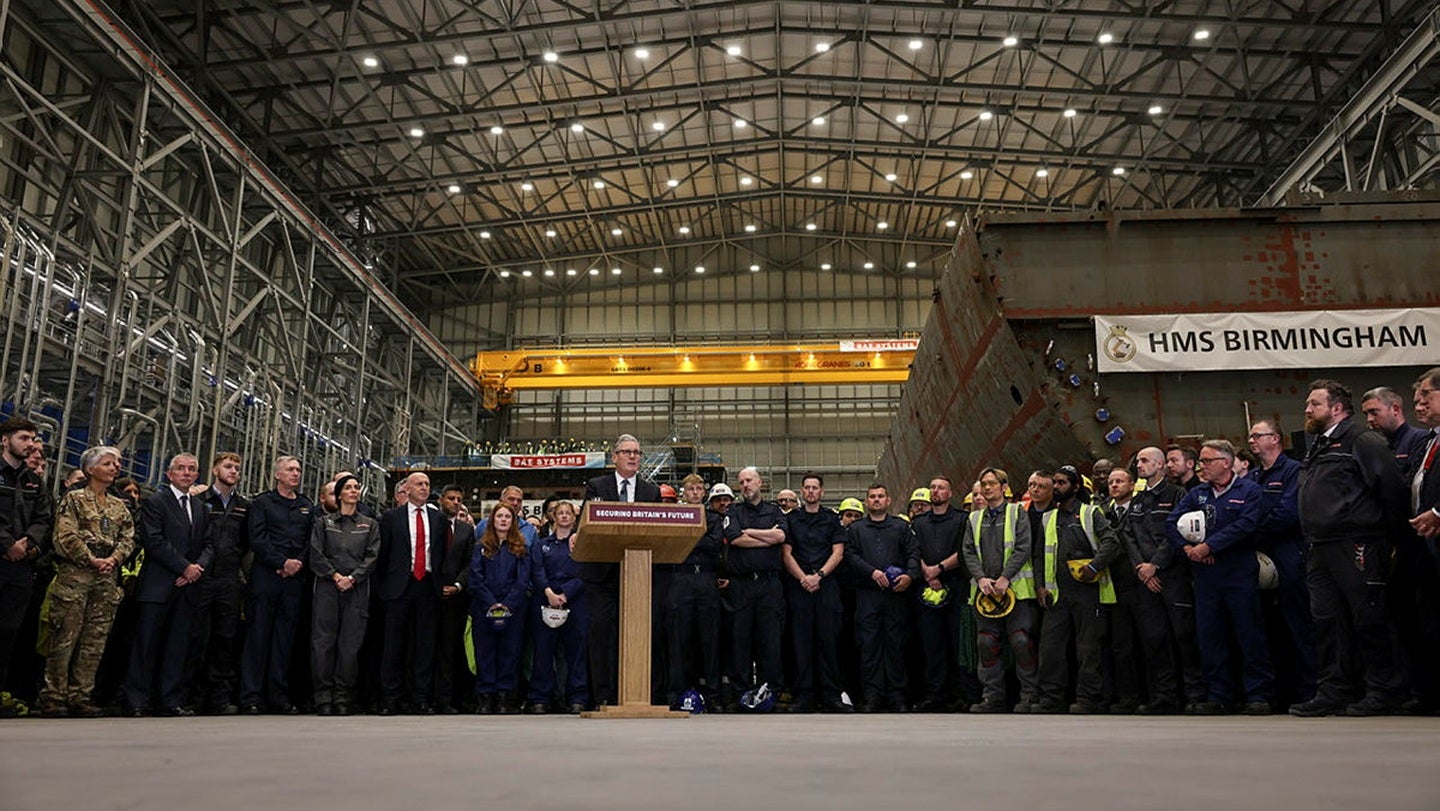
“On the Conservatives’ watch, frigates and destroyers were reduced by 25%. Minehunting ships were reduced by 50% on their watch,” Starmer told Parliament in response to opposition leader Kemi Badenoch. “We are investing £300 million more in shipbuilding, and we have 13 ships on order. That is the difference between the two parties.”
The Prime Minister’s reference to “13 ships on order” specifically pertains to the ongoing Type 26 and Type 31 frigate programs that will replace the aging Type 23 fleet. However, analysis shows these vessels were ordered during Conservative governments between 2017 and 2022.
The Type 26 frigate program began with a £3.7 billion contract for three vessels awarded to BAE Systems in July 2017, followed by a £4.2 billion order for five additional ships in November 2022. Construction started on four of these vessels during Conservative rule, with only HMS Sheffield beginning construction under the current Labour government in November 2024.
Similarly, the five-vessel Type 31 frigate contract was awarded to Babcock in November 2019 for £1.25 billion during Conservative governance. Of these ships, construction began on two during Conservative rule and two during Labour’s tenure, with the fifth vessel yet to begin production.
The Royal Navy’s fleet composition has undergone significant changes over recent years. When the Conservative-Liberal Democrat coalition took power in 2010, the Navy operated 13 Type 23 frigates. By the time Labour assumed governance in July 2024, only nine remained in service—a 30% reduction. Under Starmer’s premiership, two more Type 23 frigates have been decommissioned, with a third scheduled for retirement this year.
Regarding destroyers, the transition from Type 42 to Type 45 vessels has maintained relatively stable numbers. During the Conservative government, five Type 42 destroyers were decommissioned while five Type 45 destroyers entered service. Under previous Labour administrations, seven Type 42 destroyers were retired with only one Type 45 commissioned.
The Royal Navy’s mine countermeasure capabilities have indeed diminished significantly. Starmer’s claim that minehunting vessels were reduced by 50% under Conservative rule is broadly accurate, with numbers falling from approximately 15 vessels in 2010 to seven in July 2024. However, the current Labour government is continuing the Conservative’s strategy of developing uncrewed minehunting capabilities under the MHC program, which isn’t expected to deliver operational systems until 2028.
Defence analysts note that both parties have contributed to the Royal Navy’s current state. While the Conservative government initiated the frigate replacement programs, they also oversaw significant reductions in fleet numbers. The Labour government, meanwhile, has continued some decommissioning while following through on previously established shipbuilding plans.
The naval shipbuilding industry remains a critical component of Britain’s defense industrial base, providing thousands of jobs across the country, particularly in Scotland where the Type 26 frigates are being built by BAE Systems, and in England where Babcock is constructing the Type 31 vessels.
As global maritime security challenges intensify, particularly in regions like the Middle East where mine threats have recently emerged in the Strait of Hormuz, Britain’s naval capabilities and procurement strategies remain under close scrutiny from defense experts and political opponents alike.
Fact Checker
Verify the accuracy of this article using The Disinformation Commission analysis and real-time sources.

12 Comments
Shipbuilding is an interesting intersection of defense, industrial policy, and commodity markets. I’m glad to see this issue getting robust, impartial scrutiny from journalists. Nuance and context are important when evaluating political claims.
Interesting fact check on the shipbuilding claims. Seems like Starmer is trying to take credit for programs initiated under the previous administration. It’s important to look at the full context and timeline rather than making sweeping partisan statements.
You’re right, the details matter here. Fact-checking is crucial to avoid political spin and hold leaders accountable, regardless of party affiliation.
Curious to see how this naval shipbuilding program might impact the broader UK economy, beyond just defense. The ripple effects on suppliers, manufacturers, and related industries could be significant.
Good point. The economic multiplier effects of major defense contracts can be substantial. Understanding the full scope of the program’s impacts would provide valuable context.
I appreciate the fact-based approach to evaluating Starmer’s claims. It’s easy for politicians to take credit, but the details matter. Looking forward to more analysis on the actual progress and impacts of the UK’s naval programs.
The shipbuilding industry is critical for the UK’s naval defense capabilities. I appreciate the analysis looking at the timeline and facts behind the claims. It’s good to see objective reporting on these important issues.
Absolutely, unbiased analysis of defense spending and procurement is important for public understanding. Kudos to the journalists for digging into the details here.
While the political back-and-forth is understandable, I think the real story here is the long-term strategic importance of the UK’s naval capabilities. Maintaining a strong shipbuilding industry is crucial for national security.
Kudos to the Disinformation Commission for this fact check. Separating political spin from reality is crucial, especially on high-stakes defense and security issues. Looking forward to more of this type of rigorous, non-partisan analysis.
As someone interested in the mining and commodities sectors, I’m curious how this naval shipbuilding program might impact the demand for key materials like steel, aluminum, and specialty metals. The supply chain implications could be worth exploring further.
That’s a good point. The raw material needs for naval shipbuilding are substantial. It would be interesting to see analysis on how this program might affect global metal markets and prices.