


Listen to the article
Mexico Confronts U.S. Over Deaths of Citizens in Immigration Custody
The Mexican government raised formal objections Tuesday over the mounting deaths of its citizens in U.S. immigration detention, marking a significant shift in President Claudia Sheinbaum’s approach to relations with the Trump administration.
Mexico’s protest came after 49-year-old Mexican citizen Alejandro Cabrera Clemente died in a Louisiana detention facility operated by Immigration and Customs Enforcement (ICE). His death brings the total to fifteen Mexican citizens who have died in U.S. custody in just over a year.
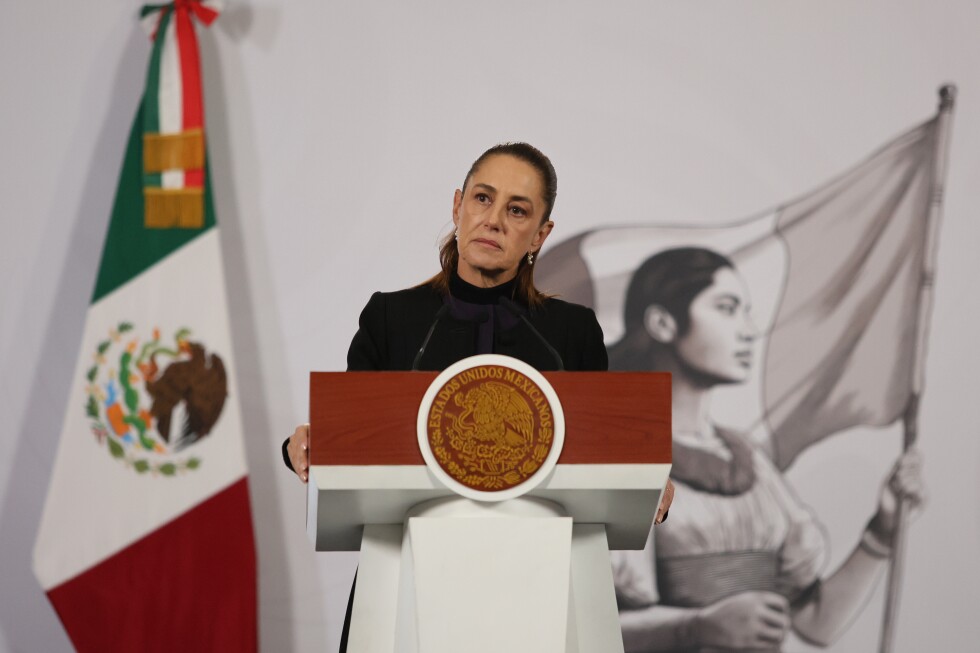
“We are going to defend Mexicans at every level,” Sheinbaum declared during her Tuesday press briefing, describing the detention conditions as “incompatible with human rights standards and the protection of life.” She added that “there are many Mexicans whose only crime is not having papers.”
The Mexican president has directed consulates to conduct daily visits to detention centers and instructed her government to pursue investigations into all fifteen deaths. In an escalation of diplomatic pressure, Mexico will bring these cases before the Inter-American Commission on Human Rights and is considering appeals to the United Nations. The government has also pledged support for U.S. lawsuits filed by detainees over poor conditions.
This more assertive stance represents a calculated shift for Sheinbaum, who has previously maintained what she describes as a “cool head” in response to provocations from the Trump administration.
“We’ve seen the president raise her tone,” said Palmira Tapia, an analyst for Mexico’s Center for Economic Research and Teaching. “There’s been a shift, and we’ve seen Sheinbaum be more vocal than before.”
Since taking office, Sheinbaum has walked a fine line, balancing firm defense of Mexican sovereignty with pragmatic cooperation with the U.S. Her administration has cracked down on cartels more aggressively than her predecessor and worked to strengthen trade relations ahead of planned renegotiations of the United States-Mexico-Canada Agreement (USMCA).
The rising death toll in ICE facilities coincides with growing U.S. public concern about immigration enforcement. A February AP-NORC poll found about six in ten American adults believe Trump has “gone too far” in deploying federal immigration agents in U.S. cities.
“Growing dissatisfaction around ICE activities in the United States creates a more comfortable platform for members of the Mexican government to raise concerns about the fate of Mexican citizens,” explained Carin Zissis, vice president of content strategy for the Council of the Americas.
Another significant point of contention between the two countries is Cuba. Mexico’s solidarity with the island nation has been a cornerstone of its foreign policy since the Cuban Revolution, which was famously planned in Mexico City by Fidel Castro and his comrades. This relationship holds particular importance for Sheinbaum’s progressive Morena party.
The issue came to a head in January when Trump announced tariffs on any country sending oil to Cuba. While Sheinbaum reluctantly paused oil shipments, she has continued to challenge the U.S. approach, describing Trump’s energy blockade as “unjust” and accusing Washington of “suffocating” Cubans with sanctions. Mexico has sent food and humanitarian aid to Cuba, and Sheinbaum personally donated $1,000 to relief efforts in a symbolic gesture.
“This is a Rubicon issue for her,” said Arturo Sarukhan, former Mexican ambassador to the U.S.
Mexico’s decision to continue hosting Cuban doctors, contrary to other Central American nations that have ended their programs under U.S. pressure, has drawn veiled threats from the Trump administration. U.S. Secretary of State Marco Rubio referenced visa restrictions imposed on officials with ties to what he called a “forced labor scheme.”
Analysts suggest Sheinbaum’s bolder approach reflects a calculation that Mexico can push back on politically important issues while continuing cooperation on trade, security, and migration. Global energy market disruptions due to conflicts in the Middle East have also strengthened Mexico’s position.
“We’re at a moment where, due to global events, we’re facing different economic uncertainties. That gives the U.S. and Mexico more reason to work together,” Zissis noted.
However, Sarukhan cautioned that Sheinbaum must be careful not to jeopardize upcoming USMCA renegotiations, for which her government has meticulously laid groundwork.
“What’s going to be interesting going forward is whether she can continue to have her cake and eat it too,” he concluded.
Fact Checker
Verify the accuracy of this article using The Disinformation Commission analysis and real-time sources.

10 Comments
The loss of life is deeply concerning. Mexico is right to demand justice and improved conditions for its citizens in US detention facilities. This is a complex issue requiring nuanced diplomacy.
Concerning to hear about the rising death toll of Mexican citizens in US immigration detention. Protecting the human rights and dignity of all migrants should be a priority for both nations.
Agreed. Mexico is right to demand accountability and press the US on this critical issue. Diplomatic pressure may be needed to enact meaningful reforms.
Kudos to President Sheinbaum for taking a firm stance to protect Mexican citizens. The US must investigate these deaths thoroughly and implement reforms to prevent further tragedies.
Claudia Sheinbaum seems to be taking a more assertive stance with the Trump administration on this issue. Upholding the sanctity of life should transcend political differences.
Absolutely. Mexico is justified in seeking justice for its citizens who have died in custody. The US must address these unacceptable human rights violations.
This is an important issue that highlights the need for humane and accountable immigration policies on both sides of the border. Constructive dialogue is key to finding solutions.
Absolutely. The protection of human life should be the top priority, transcending political divisions. Meaningful reforms are needed to uphold the dignity of all migrants.
This is a complex and sensitive geopolitical issue. Both countries have valid concerns, but the loss of life is the most tragic aspect that demands urgent resolution.
Agreed. Diplomatic dialogue and adherence to international human rights standards should guide the path forward, rather than political posturing.