


Listen to the article
Hungarian Voters End Orbán’s 16-Year Rule as Magyar Wins Landslide Victory
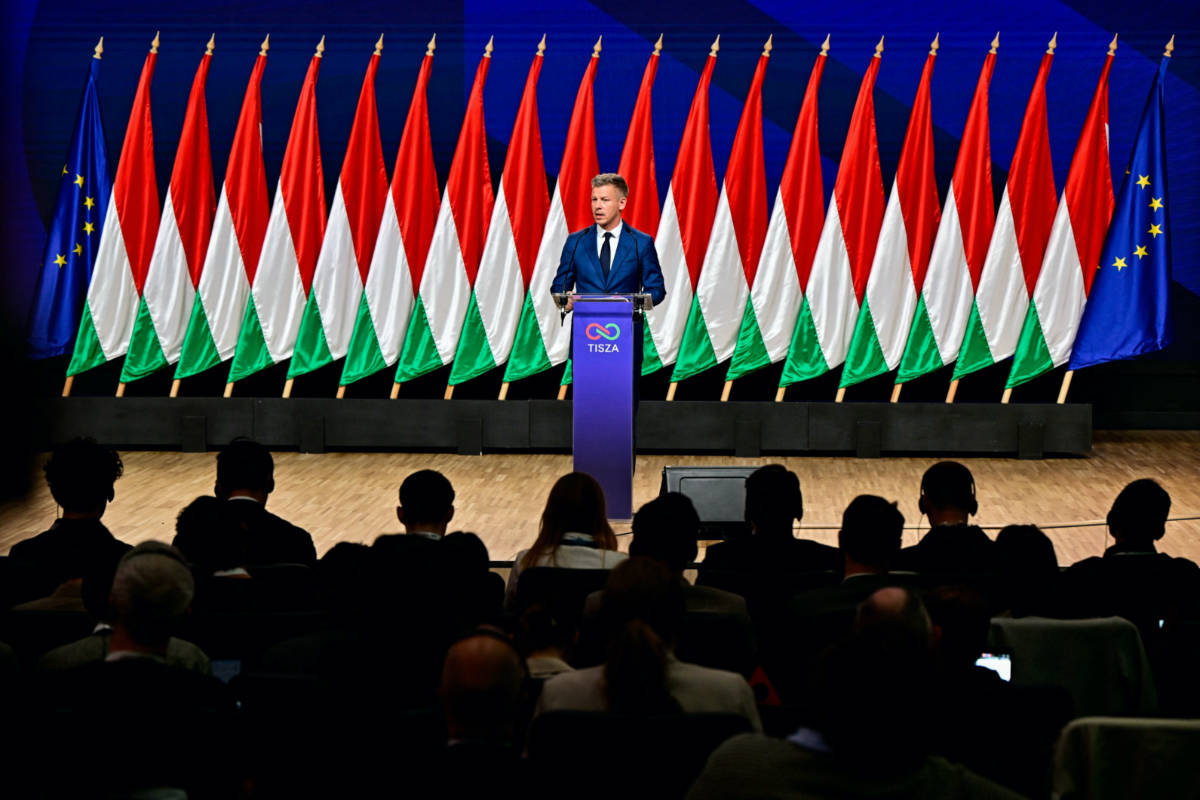
Hungarian voters have delivered a decisive rejection of Viktor Orbán’s 16-year authoritarian rule, electing former ally Peter Magyar and his Tisza party with a commanding two-thirds parliamentary majority. The historic outcome grants Magyar’s government the supermajority needed to reverse many of the illiberal policies implemented during Orbán’s tenure.
Magyar has pledged to create a “free, European” Hungary, signaling a significant shift from his predecessor’s antagonistic stance toward Brussels. Among his key campaign promises is the restoration of press freedom and reform of state-run media, which under Orbán had evolved into a powerful vehicle for government propaganda and disinformation.
The scale of Tisza’s victory surprised many observers who believed that in “information autocracies” like Hungary, where news access and political discourse are tightly controlled, ruling parties could easily manipulate election results. Orbán, widely considered a textbook example of an information autocrat, deployed a formidable propaganda arsenal throughout the campaign.
Pro-government election billboards dominated public spaces across Hungary, funded not only by Orbán’s Fidesz party but also by government entities, state-owned companies like energy conglomerate MVM, and even the Magyar Nemzeti Bank (Hungary’s central bank). Additionally, numerous government-aligned NGOs contributed to the messaging effort.
The campaign saw Fidesz repurpose state communication channels for partisan messaging, while pro-government media and troll networks amplified warnings about existential threats posed by the opposition. Fidesz’s tactics extended beyond messaging to elaborate theatrics designed to influence voters, including claims of a defused bomb in Serbia allegedly targeting Hungarian election infrastructure and the seizure of Ukrainian assets under dubious pretexts.
These spectacles appeared calculated to reinforce Fidesz’s warnings about external interference, framing the election as an existential struggle for Hungary itself—a strategy that had served the party well since it first gained power in 2010. However, this traditional playbook proved insufficient against changing circumstances.
Two major factors contributed to Orbán’s defeat. First, Hungary’s economy has essentially stagnated since 2022, with near-zero real GDP growth and the highest inflation rate in the European Union. Second, the political landscape shifted dramatically with the consolidation of opposition forces behind Magyar, a credible challenger, unlike the fragmented coalitions Fidesz had easily defeated in previous elections.
Despite Orbán’s extensive information manipulation tools, his election pitch appears to have been broadly rejected. His annual “state of the nation” address in February promised merely to protect Hungary from change and external threats, particularly from Brussels—a message that resonated only with true believers rather than wavering or undecided voters.
The voter manipulation system built by Fidesz over years proved poorly suited for expanding its electoral coalition. Persuading new voters requires credibility, compelling arguments, and strong messaging—elements the government had lost. Instead, Fidesz relied on fear tactics, slander, misinformation, and moral panic.
Public opinion surveys revealed the failure of this approach. In February, only 23 percent of Hungarians believed the government’s central claim that Magyar’s victory would drag Hungary into a foreign war—a theme Orbán emphasized in his national address. Even among Fidesz voters, nearly half rejected this narrative.
Political science research on negative campaigning explains why this strategy backfired. While attack messages can capture attention, their effectiveness depends on credibility. Dishonest attacks can boomerang, eroding trust in the attacker rather than the target—precisely what happened during Hungary’s election campaign.
The outcome offers a broader lesson about information control in illiberal regimes: its effectiveness can be overstated. Hungary’s 2026 election demonstrates that information autocracies have their limits, particularly when confronted with economic struggles and a united, credible opposition—conditions that ultimately proved insurmountable for Orbán’s campaign machinery.
Fact Checker
Verify the accuracy of this article using The Disinformation Commission analysis and real-time sources.

7 Comments
I’m curious to see how Magyar will follow through on his promises to restore press freedom and reform state media. Undoing the damage of Orbán’s disinformation efforts will be a major challenge.
While Orbán was able to control the narrative for years, this election result suggests he overestimated the power of his propaganda. Voters clearly wanted change and a more European-oriented direction for Hungary.
This election result is a significant setback for the populist, anti-EU agenda that Orbán championed. It will be interesting to see how Hungary’s relationship with the EU evolves under the new government.
Interesting to see how Orbán’s propaganda machine ultimately failed to sway voters. It shows the resilience of the democratic process, even in challenging information environments.
The ability of voters to see through Orbán’s propaganda machine is an encouraging sign. Restoring a free and independent media will be crucial to strengthening Hungary’s democratic institutions.
While the scale of Orbán’s defeat is surprising, it underscores the limits of information autocracy. Voters still have the power to reject propaganda and demand real change.
This election is a win for democracy, though the scale of Orbán’s loss is quite surprising. It will be important to monitor how the new government navigates Hungary’s relationship with the EU going forward.