


Listen to the article
Global Police Leaders Unite Against Antisemitism at Auschwitz March of Living
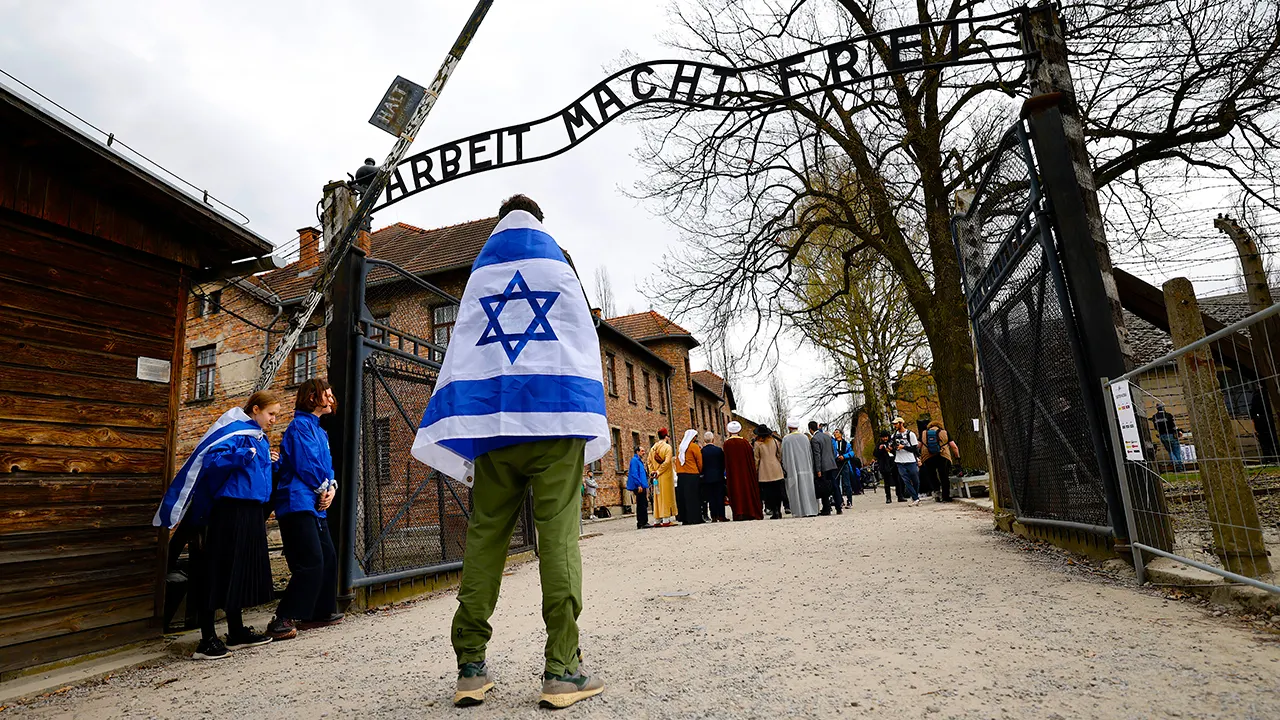
AUSCHWITZ — In a landmark initiative amid rising global antisemitism, approximately 130 police leaders from around the world gathered in Kraków, Poland this week to participate in the March of the Living, an annual event that brings thousands to Germany and Poland to learn about the Holocaust through direct engagement with survivors and visits to former Nazi death camps.
The three-day program, organized by the Rutgers Miller Center on Policing and Community Resilience and the University of Virginia’s Center for Public Safety and Justice, included a walking tour of Kraków’s Jewish Quarter, guided tours of Auschwitz, testimonies from Holocaust survivors and victims of antisemitic attacks, culminating in Tuesday’s March of the Living at Auschwitz-Birkenau.
“Being here is a testament to who these officers are and to the oath they have taken to protect all communities, regardless of identity,” Paul Goldenberg, a 37-year law enforcement veteran and deputy director of the Rutgers Miller Center, told Fox News Digital. “It is a commitment not only to ourselves, but to the people we serve. These are very challenging times, and police, in all their forms, can play a significant role in sustaining democratic values.”
The initiative comes at a critical moment when antisemitism has surged to unprecedented levels since the Hamas-led massacre in Israel on October 7, 2023. This rising tide of hate has led to armed military units guarding synagogues in Western countries, with specialized police forces deployed to protect Jewish institutions across North America.
Goldenberg emphasized the historical significance of law enforcement’s role during the Holocaust, noting it was a state-directed campaign in which police forces played a central part. A key lesson participants are taking away is understanding how the Nazis’ systematic dehumanization of Jews and other targeted groups enabled the genocide.
“What is deeply concerning is the erosion of safety and security for vulnerable communities,” Goldenberg explained. “It is a deeply alarming scenario — one that, in some respects, echoes patterns seen in the 1930s.”
The program featured powerful testimonials from survivors of recent antisemitic attacks. Abbie Talmoud, director for Jewish Community Affairs at the Embassy of Israel to the United States, survived a terror attack outside the Capital Jewish Museum in Washington, D.C., in May 2025, where two Israeli embassy staff members were killed.
“Amid rising antisemitism, feeling safe in the United States is really difficult and would require systematic change,” Talmoud shared. She noted she has stopped attending some events where she feels security precautions are inadequate. “There needs to be an understanding that the way we don’t allow racism for other races and ethnicities, we can’t allow antisemitism. It needs to come from the top — the school system, parents, governments.”
Catherine Szkop, who also survived the Washington D.C. attack, reflected on her experience at Auschwitz: “In the Book of Names, I looked up ‘Szkop’ and saw a page taller than me filled with that name, along with dates and locations of those who were murdered. I realized my own name could have appeared there, with ‘murdered in Washington, D.C.’ written next to it.”
Law enforcement leaders participating in the program emphasized the importance of early intervention and community engagement. Jeanne Hengemuhle, superintendent of the New Jersey State Police, explained that her agency works closely with community leaders to address hate-related concerns before they escalate.
“We are law enforcement, but we are also part of the communities we serve, and we must recognize that role as the first line of defense,” she said. “The Holocaust did not happen overnight. There were small, incremental changes that ultimately led to what took place.”
The gathering coincides with a new transnational initiative called “Not on Our Watch – The Democratic Policing Initiative.” Earlier this month in Berlin, senior police officials and associations from Europe and North America signed a memorandum of understanding to formalize cooperation in strengthening early threat detection and intelligence-sharing across borders to combat extremist threats.
Jim Skinner, sheriff of Collin County, Texas, and incoming vice president of the National Sheriffs’ Association, emphasized the non-partisan nature of protecting vulnerable communities. “We all have an obligation to dig deep and make sure hate doesn’t happen on our watch, and to recognize that we have a fundamental responsibility to think critically about how to keep our communities safe,” he said.
Reflecting on his experience visiting Israel after the October 7 attack, Skinner added, “I think about the march – it honors Holocaust victims and serves as a reminder of the consequences of hate and the importance of standing against violence and intolerance. That’s the message I want everyone I have influence over to understand.”
The law enforcement participants will return to their departments with deeper understanding that will help them better train officers, support hate crime victims, and recognize the critical importance of their responsibilities in preventing history from repeating itself.
Fact Checker
Verify the accuracy of this article using The Disinformation Commission analysis and real-time sources.

11 Comments
Bringing together global law enforcement leaders to confront the painful history of the Holocaust is a meaningful way to strengthen their commitment to combating hate crimes in the present day. Engaging directly with survivors adds an important personal dimension.
This is an important initiative to combat the rising tide of hate crimes and antisemitism globally. Bringing together law enforcement leaders from around the world to learn about the Holocaust firsthand at Auschwitz is a powerful way to recommit to protecting all communities, no matter their identity.
Seeing the horrors of the past up close can be a profoundly impactful experience. I hope this leads to tangible actions and policies to better prevent and respond to hate crimes moving forward.
Kudos to the organizers for putting together this impactful program. Giving law enforcement leaders a direct connection to the history of the Holocaust is a smart approach to bolstering their capacity to respond to hate crimes and extremism today.
Policing and community resilience are so critical, especially when it comes to protecting vulnerable populations from targeted violence. This program seems like a valuable way for law enforcement to deepen their understanding and commitment to these issues.
Visiting Auschwitz and hearing from Holocaust survivors must be an incredibly sobering and emotional experience. It’s admirable that these leaders are taking the time for this important training and reflection.
This initiative underscores the importance of sustained, collaborative efforts to address the root causes of hate and intolerance. Exposing law enforcement leaders to the lived experiences of victims is a powerful way to build empathy and spur concrete policy changes.
Visiting sites like Auschwitz is a visceral reminder of the horrific consequences of unchecked bigotry and extremism. I hope this training translates to tangible improvements in how law enforcement protects vulnerable communities.
It’s heartening to see global law enforcement come together to combat the scourge of antisemitism and hate crimes. Educating officers on the lessons of the Holocaust is a smart approach to strengthening their ability to respond effectively and compassionately.
This program seems like an invaluable opportunity for law enforcement to deepen their understanding of antisemitism, extremism, and the tragic consequences of unchecked hate. Hands-on training at Auschwitz is a powerful way to drive home the urgency of this work.
Hearing firsthand accounts from Holocaust survivors must leave a profound impact. I hope this experience galvanizes these leaders to redouble their efforts to protect all communities, regardless of identity or background.