


Listen to the article
Global Markets Rise on Hopes for Iran War Ceasefire Talks as Oil Prices Retreat
Global shares traded higher Tuesday as investors responded positively to the prospect of renewed diplomatic efforts to end the seven-week Iran war. Markets across Europe and Asia registered gains, tracking Wall Street’s upward momentum from Monday’s session.
European markets opened with notable advances, with Germany’s DAX leading the way, up 1% to 23,980.13. France’s CAC 40 gained 0.6% to 8,285.37, while Britain’s FTSE 100 edged up 0.1% to 10,591.45.
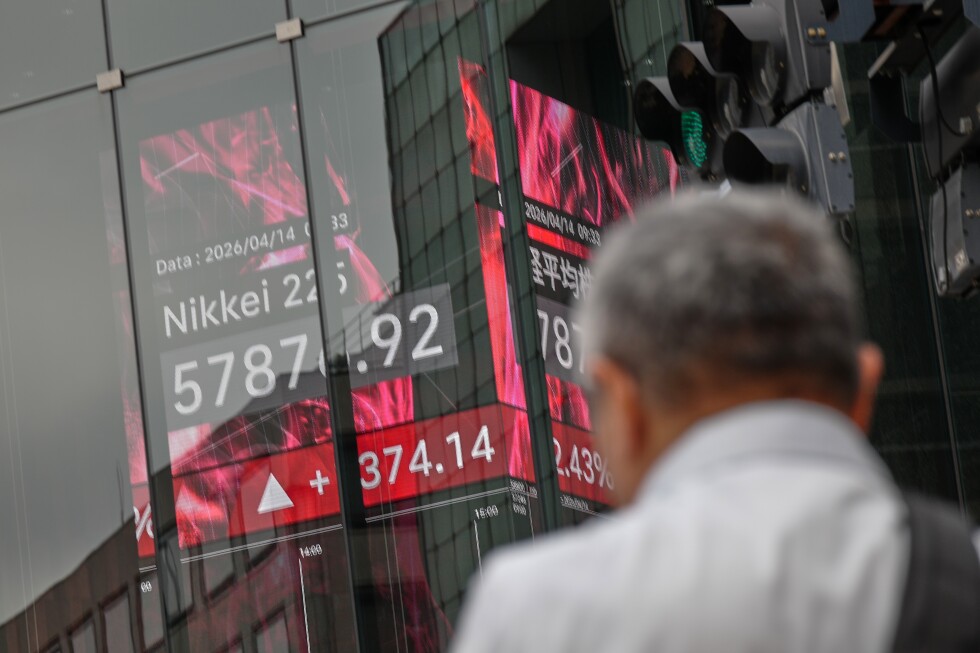
Asian markets posted even stronger performances, with Japan’s Nikkei 225 surging 2.4% to close at 57,877.39. South Korea’s Kospi jumped 2.7% to 5,967.75, briefly crossing the 6,000 mark during intraday trading—a psychologically significant threshold for investors in the region.
Chinese markets also finished higher, with the Shanghai Composite index climbing 1% to 4,026.63 and Hong Kong’s Hang Seng rising 0.8% to 25,872.32. However, China reported weaker-than-expected export growth of just 2.5% in March, the first full month since the Iran war began. Despite this disappointing figure, analysts remain optimistic that Chinese exports related to artificial intelligence and renewable energy technologies will continue to bolster overall export momentum throughout the year.
Elsewhere in the Asia-Pacific region, Australia’s S&P/ASX 200 gained 0.5%, while Taiwan’s Taiex rose an impressive 2.4%.
Market sentiment has been buoyed by indications that the United States and Iran may engage in a second round of talks before the current temporary ceasefire agreement expires next week. Despite the U.S. military beginning a blockade of Iranian ports on Monday—a significant escalation in pressure on Tehran—diplomatic channels appear to remain open. This comes after weekend ceasefire negotiations ended without a formal agreement.
U.S. President Donald Trump indicated that diplomatic engagement continues, stating, “I can tell you that we’ve been called by the other side,” though he refrained from providing specific details about these communications.
The prospect of diplomatic progress has helped ease oil prices, which had spiked earlier in the week due to concerns about supply disruptions. Brent crude, the international benchmark, declined 0.4% to $98.93 per barrel on Tuesday, retreating from Monday’s early spike that saw prices approach $104. U.S. benchmark crude fell more substantially, down 2% to $97.09 per barrel.
The ongoing conflict has caused significant disruptions to maritime traffic in the Strait of Hormuz, a critical chokepoint through which approximately one-fifth of the world’s oil typically passes. This energy shock has driven fuel prices higher globally, threatening to accelerate inflation and potentially hampering economic growth across numerous countries.
Wall Street responded positively to the diplomatic developments on Monday, with the S&P 500 gaining 1% to close at 6,886.24. The tech-heavy Nasdaq composite added 1.2% to finish at 23,183.74, while the Dow Jones Industrial Average climbed 0.6% to 48,218.25. However, investment banking giant Goldman Sachs saw its shares drop 1.9% despite reporting better-than-expected quarterly profits.
In other market movements, precious metals continued their upward trajectory, with gold prices rising 0.8% to $4,806.20 an ounce and silver surging 2.9% to $77.82 per ounce. These gains reflect ongoing investor interest in traditional safe-haven assets amid geopolitical uncertainty.
Currency markets also saw movement, with the U.S. dollar weakening against major counterparts. The dollar fell to 158.86 Japanese yen from 159.45 yen, while the euro strengthened to $1.1793 from $1.1759, indicating a shift in currency trader sentiment as risk appetite improved.
As the temporary ceasefire deadline approaches, market participants will be closely monitoring diplomatic developments for signs of either escalation or resolution, with implications for global energy markets and broader economic stability remaining significant.
Fact Checker
Verify the accuracy of this article using The Disinformation Commission analysis and real-time sources.

12 Comments
The weaker-than-expected export growth from China is a concerning sign, given the country’s importance in global supply chains. However, the overall gains in Asian and European markets suggest investors are cautiously optimistic about the potential for diplomatic solutions to the Iran conflict.
You make a good point. China’s export numbers will be critical to watch as the global economy navigates the fallout from the Iran war. Diplomatic progress could help restore confidence, but the situation remains quite fluid.
I’m curious to see how the mining and commodities sectors react to these market movements. The Iran conflict has created a lot of volatility, and investors will be looking for signs of stability or potential opportunities in areas like gold, copper, and other key resources.
That’s a good observation. The mining and commodities space is likely to be heavily influenced by the geopolitical dynamics around the Iran war. Any progress towards a ceasefire or diplomatic resolution could have a significant impact on commodity prices and related equities.
The retreat in oil prices is certainly a positive development, but the broader economic impacts of the Iran war remain a concern. Investors will be closely watching for any signs of disruptions to global supply chains, particularly in the mining and commodities sectors, which could offset the benefits of lower energy costs.
Well said. The complex interconnections between geopolitics, energy, and global trade make the current situation highly uncertain. Navigating these challenges will require careful analysis and a nuanced understanding of the various factors at play.
It’s encouraging to see markets regain some ground, but the weaker Chinese export data serves as a reminder that the global economy remains fragile. The mining and commodities sectors will be crucial barometers of how the situation in Iran is impacting broader economic trends and trade flows.
Absolutely. The interplay between geopolitical tensions, commodity prices, and trade patterns will be critical to monitor. Investors will need to stay nimble and adaptable as the situation continues to evolve.
The fact that Asian markets posted even stronger gains than their European counterparts is an interesting dynamic to note. It suggests that investors in the Asia-Pacific region may be more optimistic about the potential for a diplomatic solution to the Iran conflict and its implications for regional trade and economic growth.
That’s a fair point. Asia’s proximity to the Iran conflict, as well as its role as a major trading partner, could be shaping a more nuanced view of the situation compared to European or North American markets. Regional dynamics will be crucial to monitor going forward.
Interesting to see global markets bounce back as oil prices retreat. The prospect of diplomatic efforts to end the Iran conflict seems to be boosting investor sentiment. It will be important to monitor how the situation develops and impacts commodity prices going forward.
Agreed. The drop in oil prices could provide some relief for consumers and businesses, though the broader economic impacts of the Iran war remain concerning.