


Listen to the article
Pope Leo XIV Traces St. Augustine’s North African Roots on Historic Algeria Visit
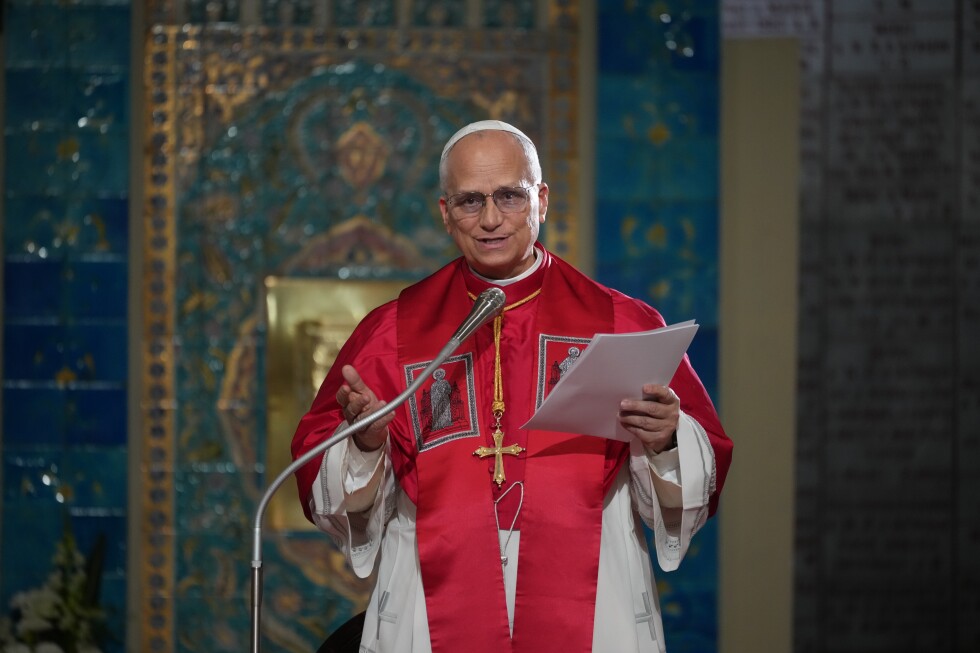
Pope Leo XIV embarked on a deeply personal pilgrimage to the archaeological ruins of Hippo in eastern Algeria, where St. Augustine—one of Christianity’s most influential early thinkers—lived, wrote, and died in the fifth century. The visit to modern-day Annaba marks a spiritual homecoming for the American pontiff, who has proclaimed himself a “son of St. Augustine” and frequently cites the saint as the guiding inspiration of his papacy.
Arriving Monday on the first-ever papal visit to Algeria, Leo’s journey comes amid heightened tensions in the Middle East, with the ongoing U.S.-Israel conflict in Iran serving as a backdrop to his message of peace and Christian-Muslim coexistence. The pope’s calls for peace have recently sparked a public disagreement with U.S. President Donald Trump.
For Pope Leo, who previously led the Augustinian religious order founded in Italy in the 13th century, this visit represents an opportunity to highlight Augustine as a bridge-builder between cultures and faiths. The pope had intended this journey to be his first international trip after his election, underscoring its significance.
“This journey truly represents a valuable opportunity to continue with the same voice, with the same message, that we wish to convey: to promote peace, reconciliation, respect and consideration for all peoples,” Leo told reporters aboard the papal plane.
The visit also serves to reclaim Augustine’s North African identity, often overlooked in Western historical narratives that tend to view him primarily through a European lens despite his brief five-year stay in Italy. Born in 354 in Thagaste (now Souk Ahras, Algeria) to a Berber mother and Roman father, Augustine spent the majority of his life in North Africa.
Catherine Conybeare, an Augustine scholar at Pennsylvania’s Bryn Mawr College, explores this perspective in her new book “Augustine the African,” emphasizing the saint’s North African roots and perspective. “One of the most important thinkers in the Western intellectual tradition actually came from Africa, spent almost his whole life in Africa,” Conybeare told The Associated Press. “How does that change things?”
“Of course, because his successors—the people who carried on his heritage—were in Europe, they got to tell the story,” she added, noting that after Augustine’s death in Hippo, his remains were eventually transferred to Pavia, Italy, though a forearm relic remains in Annaba’s basilica.
Algerian President Abdelmadjid Tebboune expressed “immense pride” in welcoming the pope, referring to Augustine as a “cherished son of this land, which having been his first cradle, proudly became his initial resting place.”
Augustine’s life journey took him from North Africa to Rome and Milan, where he converted to Christianity before returning to his homeland. In Hippo, he founded a monastery, became bishop, and authored seminal works including “Confessions” and “The City of God” that profoundly shaped Western Christianity and philosophy.
During his visit to Annaba, Pope Leo toured the archaeological ruins of ancient Hippo, including its theater, market, thermal baths, and the remains of the basilica where Augustine preached. The papal itinerary also included visits to an order of nuns and the small community of Augustinians in the area.
The day culminated with the pope celebrating Mass at the Basilica of St. Augustine, constructed in the late 19th century, which houses the saint’s relic and attracts thousands of pilgrims annually, including Muslims—a living testament to Augustine’s enduring legacy as a bridge between cultures and religions.
For Pope Leo XIV, this journey represents more than diplomatic outreach; it’s a pilgrimage to the spiritual wellspring of his own faith and leadership, emphasizing Augustine’s continued relevance as a symbol of dialogue and reconciliation across cultural and religious divides.
Fact Checker
Verify the accuracy of this article using The Disinformation Commission analysis and real-time sources.

8 Comments
I’m curious to learn more about the Pope’s disagreement with President Trump over his message of peace. It would be interesting to understand the different perspectives at play.
Yes, the tension between the Pope’s calls for peace and the ongoing U.S.-Israel conflict in Iran is a complex issue worth exploring further. It highlights the challenge of reconciling different political and religious agendas.
I’m glad to see the Pope prioritizing this trip to Algeria, especially as his first international journey after being elected. It underscores the significance he places on this pilgrimage and its broader implications.
It’s admirable that the Pope is using this trip to highlight St. Augustine as a bridge-builder between cultures and faiths. That’s a powerful legacy to uphold in today’s divided world.
The Pope’s message of peace and Christian-Muslim coexistence is timely and important, especially given the tensions in the region. I hope his visit can help foster greater understanding between faiths.
Agreed. As an influential religious leader, the Pope’s voice carries a lot of weight. His calls for peace are critical during these turbulent times.
Fascinating to see the Pope following in the footsteps of St. Augustine, one of the great early Christian thinkers. Exploring the archaeological ruins in Algeria must be a deeply meaningful spiritual journey for him.
The Pope’s personal connection to St. Augustine and the Augustinian order adds an extra layer of meaning to this visit. It’s a meaningful homecoming for him as the leader of the Catholic Church.