


Listen to the article
Germany Leads Fight Against Disinformation Through School-Based Education
Germany has launched an ambitious educational initiative to combat the rising threat of disinformation by integrating media literacy and digital resilience skills into its national school curriculum. The comprehensive program targets not only students of all ages but also extends to parents and professionals, providing them with tools to identify and counter false information in an increasingly complex digital landscape.
The initiative comes at a critical time when misinformation campaigns and digital manipulation have become sophisticated global challenges, threatening democratic processes and societal cohesion across Europe and beyond. Germany’s approach positions education as the frontline defense against these threats.
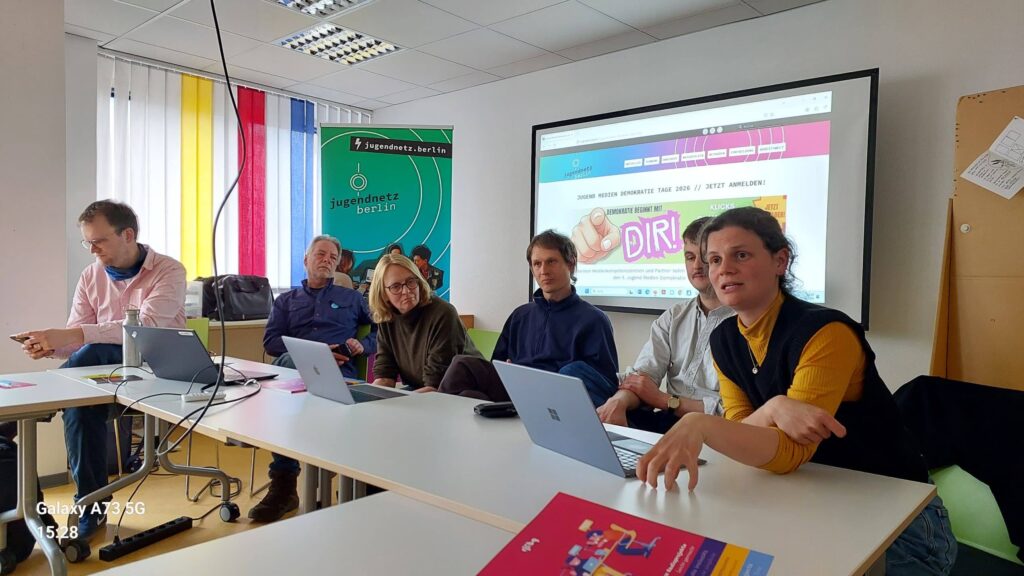
“We designed this program specifically to build critical thinking capabilities and strengthen society’s overall resistance to disinformation,” explained Susanne Bohmig of the Media Literacy Centre at the Foundation for Youth and Family during a recent presentation to international journalists in Berlin.
The program’s details were shared during the Willkommen Visitor Programme, organized by the German government and facilitated by the Goethe Institute. Journalists from 16 countries participated in specialized training focused on media professionals’ roles and responsibilities in addressing disinformation, foreign information manipulation, and interference in the digital age.
A distinguishing feature of Germany’s approach is its commitment to inclusivity. Bohmig emphasized that the curriculum has been specially designed to accommodate children with different learning abilities, including those with disabilities.
“For children with special needs, learning plans are individually tailored. This allows them to learn in a more conducive manner, and their curriculum is structured for half a year based on the goals each child should achieve within the stipulated time frame,” Bohmig said. “For children without disabilities, their curriculum is designed within a shorter time frame to achieve set goals. This ensures every child becomes media literate regarding disinformation.”
The program recognizes that media literacy is not a one-size-fits-all proposition, acknowledging that the pace of assimilation varies depending on individual learning needs and capabilities.
Professor Gernot Wolfram of the Federal Agency for Civic Education highlighted how artificial intelligence has dramatically complicated the disinformation landscape. During the training sessions, he urged journalists to adapt to these evolving challenges and develop new skills to identify AI-generated content.
“Mainstream media must respond by not just reporting on false narratives but by analyzing and contextualizing them to enable the public to make informed choices,” Wolfram explained. He advocated for a shift in focus from merely identifying what is true or false to educating audiences on the mechanics of how AI-generated fake content is created and spread across digital platforms.
The training program included practical sessions where participants learned firsthand about the creation of fake news and developed strategies for reducing its effectiveness and reach. These hands-on exercises provided valuable insights into the tactics used by those spreading disinformation and how to counter them effectively.
Germany’s initiative reflects a growing recognition among European nations that combating disinformation requires a multi-faceted approach that begins with education. By instilling critical media literacy skills from an early age, German authorities hope to create a more resilient population that can withstand manipulation attempts and make informed judgments about the information they consume.
The program also represents part of a broader European strategy to protect democratic institutions from foreign information manipulation and interference, particularly as concerns grow about targeted campaigns from hostile state actors seeking to influence elections and undermine public trust in institutions.
As digital technologies continue to evolve and artificial intelligence makes fake content increasingly difficult to identify, Germany’s educational approach could serve as a model for other countries grappling with similar challenges in the global fight against disinformation.
Fact Checker
Verify the accuracy of this article using The Disinformation Commission analysis and real-time sources.

12 Comments
This initiative comes at a crucial time when disinformation is a global challenge. I’m curious to see how Germany’s comprehensive approach fares and whether other countries might adopt similar programs.
Yes, it will be interesting to monitor the impact and see if this model could be replicated elsewhere to strengthen democratic resilience.
It’s encouraging to see Germany taking such a comprehensive approach to addressing disinformation. Integrating media literacy into the national curriculum is a bold and necessary step.
The details of Germany’s school-based initiative to combat disinformation are quite impressive. I’m particularly intrigued by the focus on building critical thinking skills and strengthening societal resilience.
Yes, this holistic approach targeting students, parents, and professionals could set a new standard for how countries approach the growing threat of online misinformation.
While the details of the program are still emerging, the focus on building critical thinking skills is a smart approach. Disinformation can be difficult to identify, so equipping people with the right tools is key.
Germany’s initiative to integrate media literacy into schools is a proactive step to address the growing threat of disinformation. Equipping young people with critical thinking skills is crucial for fostering a more resilient and informed society.
I agree, this program could have a significant long-term impact by building digital resilience from an early age.
Tackling disinformation through education is a smart approach. It’s important that parents and professionals are also included to create a comprehensive defense against false information campaigns.
Absolutely, a whole-of-society effort is needed to effectively counter the spread of misinformation.
Germany’s decision to position education as the frontline defense against disinformation is commendable. Nurturing digital literacy from an early age could have far-reaching positive effects on society.
Agreed, this proactive stance could serve as a model for other countries grappling with the complex challenges of online misinformation.