


Listen to the article
South Korean Prime Minister Calls for Crackdown on AI-Generated Election Disinformation
South Korean Prime Minister Kim Min-seok has directed government agencies to take decisive action against the spread of disinformation ahead of the upcoming June 3 local elections, characterizing such activities as “a challenge to democracy and a clear crime.”
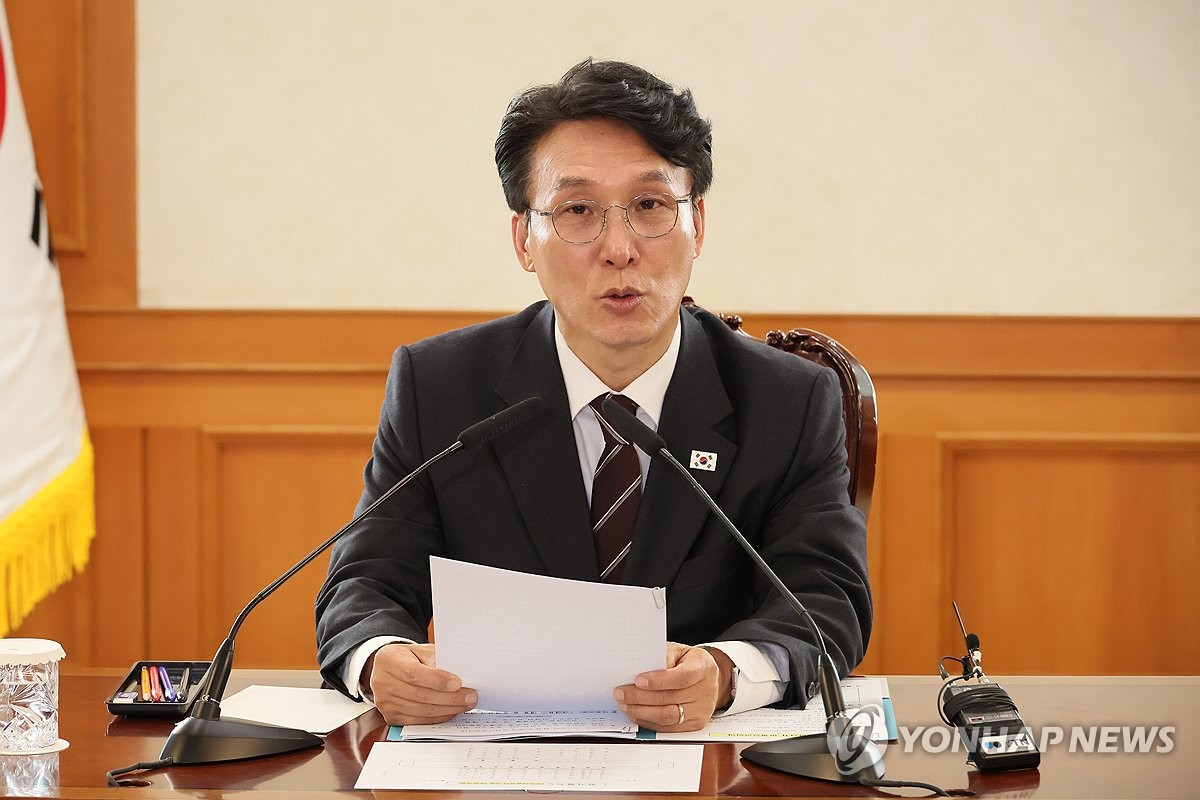
Speaking at a high-level meeting with ministers and officials on Tuesday, Kim emphasized the urgency of addressing this issue, noting that the gathering was convened more than a month earlier than customary for pre-election coordination. With elections just 50 days away, authorities are increasingly concerned about the potential impact of sophisticated misinformation campaigns on voter decision-making.
“The reason is that with the rapid development of generative artificial intelligence technology, disinformation, such as fake news, and deepfake videos and voice recordings, is becoming increasingly sophisticated and spreading wide within short periods of time, posing a large threat to a fair election environment,” Kim stated during the meeting.
The Prime Minister’s concerns reflect growing global anxiety about the role of AI in political campaigns. South Korea, one of the world’s most technologically advanced nations with high internet penetration rates, faces particular vulnerability to digital disinformation campaigns that can rapidly reach millions of citizens through social media and messaging platforms.
Kim specifically instructed the National Police Agency to conduct “intensive crackdowns” on pseudo-media outlets that distribute false information. Additionally, he called on the Ministry of Science and ICT and the Korea Media and Communications Commission to work closely with major platform operators to block disinformation at its earliest stages of dissemination.
“Fake news is not freedom of expression,” Kim declared firmly, drawing a clear line between protected speech and deliberate misinformation designed to manipulate electoral outcomes.
The government’s pre-emptive approach comes as electoral authorities worldwide struggle with the proliferation of deepfake technology, which uses artificial intelligence to create convincing but fabricated images, videos, and audio recordings that can falsely portray candidates saying or doing things they never did.
South Korea’s June 3 local elections will determine leadership positions in regional governments across the country, including mayors, governors, and local council members. These elections are seen as an important barometer of public sentiment ahead of the next presidential election.
Electoral integrity experts have warned that local elections can be particularly vulnerable to disinformation campaigns, as they often receive less media scrutiny than national contests, making it harder for voters to distinguish between genuine and manipulated content.
The South Korean government’s initiative also highlights the evolving regulatory challenges facing democracies in the AI era. While the country has existing laws against election interference and defamation, the speed and sophistication of AI-generated content creates new enforcement difficulties for authorities.
Platform companies operating in South Korea, including both domestic and international tech giants, will likely face increased pressure to implement more robust content moderation policies as the election approaches. Several have already announced enhanced measures to label AI-generated content and detect deepfakes, though critics question whether these efforts will be sufficient to prevent electoral manipulation.
As democracies worldwide contend with similar challenges, South Korea’s approach to combating AI-enhanced disinformation during this electoral cycle could provide valuable lessons for other nations facing the intersection of artificial intelligence and democratic processes.
Fact Checker
Verify the accuracy of this article using The Disinformation Commission analysis and real-time sources.

20 Comments
Disinformation campaigns can have devastating consequences for the democratic process. I’m encouraged to see the South Korean government taking a strong stance against this threat ahead of the upcoming local elections.
The rapid development of AI technology has amplified the challenge of combating disinformation. Decisive action is needed to protect the integrity of elections and maintain public trust in the democratic system.
The Prime Minister’s call to action highlights the growing threat of AI-powered disinformation. This is an issue that transcends borders and requires a coordinated global response.
Safeguarding the electoral process from the influence of disinformation should be a top priority for all democratic governments. I commend the South Korean leadership for taking this stance.
Kudos to the South Korean government for recognizing the gravity of the disinformation threat and taking decisive action. This is a step in the right direction for protecting the democratic process.
Deepfakes and other AI-generated content can be highly convincing and difficult to detect. Proactive measures to combat these threats are essential for ensuring fair and transparent elections.
Disinformation campaigns can have a devastating impact on public trust and the integrity of elections. It’s encouraging to see the South Korean government taking proactive measures to address this challenge.
The rapid development of AI technology has made the task of identifying and countering disinformation much more complex. Strengthening electoral safeguards is crucial to upholding democratic values.
The Prime Minister’s concerns about the potential impact of AI-generated disinformation on voter decision-making are well-founded. Strengthening safeguards against these threats is crucial for upholding democratic values.
Proactive measures to address the spread of disinformation should be a top priority for all democratic governments. I hope the South Korean government’s efforts will serve as a model for others to follow.
Sophisticated AI-powered misinformation campaigns are a growing concern globally. It’s encouraging to see the Prime Minister taking this issue seriously and directing agencies to take decisive action.
Deepfakes and other AI-generated content can be extremely difficult for the average voter to detect. Strengthening safeguards against these threats is essential for protecting democracy.
Combating disinformation is essential for preserving the integrity of the democratic process. I’m glad to see the South Korean government taking proactive steps to address this threat ahead of the upcoming local elections.
The rapid advancement of AI technology has made the task of detecting and countering disinformation much more challenging. Decisive action is needed to protect the fairness and transparency of elections.
The Prime Minister’s call to action is a timely and necessary response to the growing challenge of AI-powered disinformation. Protecting the integrity of elections should be a top priority for all democratic nations.
Strengthening safeguards against the spread of misinformation is crucial for maintaining public trust in the electoral process. I commend the South Korean government for taking this issue seriously.
Addressing disinformation ahead of elections is a complex challenge, but a necessary one. I hope the South Korean government’s efforts will serve as a model for other countries facing similar issues.
The rapid advancement of AI technology has amplified the spread of misinformation. Proactive steps to counter this trend are critical to ensuring fair and transparent elections.
Disinformation is a serious threat to democracy. I’m glad to see the South Korean government taking proactive steps to address the challenge posed by AI-generated fake content ahead of local elections.
Cracking down on disinformation is crucial to preserving the integrity of the electoral process. Voters need to have access to accurate, reliable information to make informed decisions.